


General Knowledge (253)
Slipknot and Sid Wilson Part Ways After Nearly 30 Years: What Happened and What It Means for the Band
Written by Sounds Space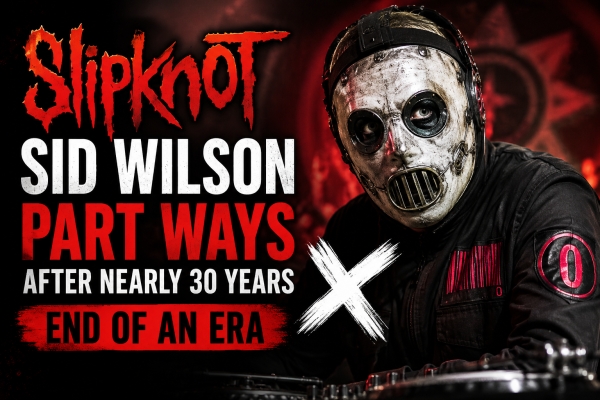
Slipknot and Sid Wilson Part Ways After Nearly 30 Years: What Happened and What It Means for the Band
Slipknot and Sid Wilson have officially parted ways after nearly three decades together, bringing an unexpected end to one of the longest-running partnerships in modern heavy metal. Wilson, better known to Slipknot fans as #0, had been a defining member of the masked Iowa metal band since 1998, contributing turntables, keyboards, percussion and backing vocals to the group’s distinctive sound.
The news marks another major lineup change for Slipknot, a band whose history has been shaped as much by its internal evolution as by its music. Wilson’s departure is particularly significant because he was part of the lineup that helped transform Slipknot from an underground Iowa act into one of the biggest metal bands in the world.
Slipknot confirmed the split in August 2026, saying that, effective immediately, the band would no longer be associated with Wilson and wishing him well in his future endeavors. The announcement followed weeks of speculation after reports first surfaced that Wilson had been removed from the group. (Variety)
Slipknot Confirms Sid Wilson’s Departure
For fans, the biggest development is that what initially appeared to be a rumor is now official.
Slipknot’s statement was notably brief. The band said that it was “no longer associated” with Wilson and wished him the best in his future endeavors. The statement appeared on the band’s social media accounts and was subsequently deleted, adding another layer of uncertainty to an already surprising announcement. A similar statement was shared through Knotfest. (Variety)
The lack of a detailed explanation has left fans with more questions than answers. The band has not publicly provided a specific reason for Wilson’s departure, and Wilson has not released a detailed public statement explaining his side of the story.
That distinction is important. Earlier reports described Wilson as having been fired, while the band’s eventual public wording described the situation as a parting of ways. Until Slipknot or Wilson provides additional information, claims about the precise circumstances should be treated as reports rather than established facts.
Who Is Sid Wilson and Why Is He Important to Slipknot?
Sid Wilson joined Slipknot in 1998, before the release of the band's self-titled debut album in 1999. He quickly became one of the most recognizable personalities within the group's infamous nine-member lineup.
Unlike a conventional rock band, Slipknot built its identity around a combination of heavy guitars, extreme vocals, percussion, sampling, electronic textures and turntablism. Wilson's role was therefore far more than a visual gimmick.
His turntables helped provide some of the scratching, electronic manipulation and rhythmic textures that distinguished Slipknot from many of its contemporaries. He also contributed keyboards, percussion and backing vocals, making him a versatile part of the band's live and studio operation. (Rock Revival)
Wilson also developed a reputation for his highly physical stage presence. His aggressive movements, acrobatics and unpredictable energy became an important part of Slipknot's live spectacle.
For almost 30 years, #0 was therefore more than the person standing behind the turntables. He was part of the visual and musical identity of Slipknot.
A Nearly Three-Decade Run Comes to an End
Wilson's tenure lasted from 1998 until 2026, meaning he spent virtually the entire history of Slipknot as a major international act with the group.
He appeared on the band's landmark self-titled album, Iowa, Vol. 3: The Subliminal Verses, All Hope Is Gone, .5: The Gray Chapter and We Are Not Your Kind, among other releases. He was also part of the band's most important tours and festival appearances.
His contributions extended through the band's 2022 album The End, So Far. Wilson was also associated with Slipknot's long-awaited Look Outside Your Window, a project recorded during the All Hope Is Gone era and eventually released in 2026. (Louder)
That longevity makes his exit especially significant.
Members have come and gone throughout Slipknot's history, but Wilson survived multiple generations of the band's lineup. His departure is consequently not simply another personnel change; it represents the end of an era for one of heavy music's most recognizable groups.
Why Did Sid Wilson Leave Slipknot?
This is currently the biggest unanswered question surrounding the story.
Initial reports in late July 2026 claimed that Wilson had been permanently removed from Slipknot. Those reports did not provide a publicly confirmed reason for the decision. Slipknot did not immediately confirm the news, and Wilson did not publicly address it at the time. (Stereogum)
The situation became more complicated when guitarist Jim Root appeared to respond indirectly to the speculation. Root encouraged fans not to believe everything they read and suggested that people should wait for more information before reaching conclusions. He did not explicitly name Wilson in the message. (Louder)
That response generated considerable discussion among Slipknot fans because it appeared to acknowledge that the situation was more complicated than the initial reports suggested.
Now that Slipknot has confirmed that Wilson is no longer with the band, the central fact is established: Sid Wilson is out of Slipknot.
However, the precise reason remains unclear from the band's official statement.
Some media reports have cited alleged behavioral conflicts and tensions within the group, but those claims have not been fully explained or independently established by Slipknot. It would therefore be premature to present any particular allegation as the definitive reason for the split.
Another Major Change to Slipknot's Classic Lineup
Wilson's departure carries additional weight because Slipknot has experienced substantial personnel changes during the past decade.
The band's classic lineup included Corey Taylor, Shawn “Clown” Crahan, Joey Jordison, Paul Gray, Mick Thomson, Jim Root, Craig Jones, Chris Fehn and Sid Wilson.
That lineup helped create some of the most influential albums in modern metal.
But it has gradually disappeared.
Bassist Paul Gray died in 2010. Drummer Joey Jordison left the band in 2013 and died in 2021. Percussionist Chris Fehn departed in 2019 following a dispute involving compensation. Craig Jones left Slipknot in 2023. (Stereogum)
Other members have subsequently joined the group, including bassist Alessandro Venturella, percussionist Michael Pfaff and drummer Eloy Casagrande.
With Wilson now gone, Corey Taylor, Shawn Crahan, Mick Thomson and Jim Root are the four remaining members from the classic nine-member lineup associated with Slipknot's breakthrough era. (Hollywood Life)
That makes Wilson's exit another milestone in the continuing transformation of Slipknot.
What Does Sid Wilson's Departure Mean for Slipknot's Sound?
The immediate musical impact could be significant.
Turntables were an essential component of Slipknot's early sonic identity. The band blended elements of heavy metal, hardcore punk, industrial music and hip-hop culture, and Wilson's turntable work helped connect those influences.
Modern Slipknot has evolved considerably beyond its earliest sound, however. The band now incorporates a broader range of textures and arrangements, while other members contribute electronic, percussion and keyboard elements.
The group could therefore replace Wilson's functions with another musician, redistribute his responsibilities among existing members or introduce a new permanent member.
The decision could also depend on where Slipknot goes musically next.
The band has spent years evolving its lineup while maintaining a recognizable identity. A new turntablist or multi-instrumentalist could bring a different approach to the group's electronic elements, potentially changing how those sounds function in future recordings and live performances.
What Happens to Slipknot's Live Shows?
Another major question is how Slipknot will handle its future concerts.
Wilson was an important part of the band's live presentation, and his absence will be immediately noticeable to longtime fans. Slipknot's concerts have always been highly theatrical, with each member occupying a distinct role within the visual chaos.
The band has not yet announced a permanent replacement for Wilson.
That leaves several possibilities. Slipknot could recruit a new turntablist, bring in a touring musician, or temporarily perform with a modified arrangement while determining its long-term plans.
The group has experience adapting to lineup changes, so its ability to continue performing is unlikely to be seriously questioned. The bigger issue is how the band chooses to present its next chapter.
Sid Wilson's Legacy With Slipknot
Regardless of the circumstances surrounding his departure, Wilson leaves behind a remarkable legacy.
He joined Slipknot before the band's breakthrough and remained with the group through decades of musical changes, global tours and lineup upheaval.
He helped establish the importance of turntablism within an extreme-metal context and became one of the genre's most recognizable performers.
His #0 persona was also integral to Slipknot's mythology. The band's numbered identities helped turn its members into larger-than-life characters, and Wilson's aggressive stage personality made #0 instantly recognizable.
For many fans, hearing Slipknot without Wilson will therefore feel fundamentally different.
Could Sid Wilson Continue His Career Outside Slipknot?
Wilson's musical career does not necessarily end with Slipknot.
Outside the band, he has performed under the name DJ Starscream and has worked on solo projects and other musical ventures. He has also performed with his own band, SID, and has been involved with Vomit Face Records. (Stereogum)
That background gives him several potential paths after Slipknot.
He could return to solo electronic work, pursue DJ performances, develop new collaborations or focus on his own projects. His decades of experience also give him considerable recognition outside Slipknot.
At this stage, however, Wilson has not publicly announced his next major move.
What Comes Next for Slipknot?
The biggest question for Slipknot is whether Wilson's departure represents an isolated personnel change or another step in a larger restructuring.
The band has already demonstrated that it can survive significant lineup changes without abandoning its identity. Yet Wilson's departure is different because of his longevity and his connection to the band's original breakthrough era.
Slipknot's next recording and live performances will therefore receive unusually intense attention.
Fans will want to know who replaces Wilson, whether the band changes its approach to turntables and electronics, and whether new music reflects the group's latest lineup.
The band's future ultimately depends on its ability to preserve what makes Slipknot distinctive while continuing to evolve.
Why the Sid Wilson Story Matters to the Music Industry
The story extends beyond Slipknot.
Long-running bands face a difficult challenge: maintaining their identity while individual members inevitably leave, retire or die. Slipknot has experienced this process repeatedly, making its history an unusually clear example of how a successful rock band can evolve without completely losing its identity.
Wilson's departure also highlights the difference between a founding-era lineup and a band's broader brand. Slipknot is now much larger than any individual member. Its music, masks, stage production, mythology and fan community have become a global cultural identity.
At the same time, longtime members matter enormously to that identity.
That tension is what makes this departure so compelling.
Final Thoughts: The End of an Era for Slipknot
The Slipknot and Sid Wilson split is one of the most consequential lineup stories in heavy music in 2026.
After approximately 28 years with the band, Wilson is no longer a member of Slipknot. The band's official confirmation ends weeks of uncertainty, although important questions about the circumstances surrounding the departure remain unanswered. (Variety)
Whatever happens next, Wilson's contribution to Slipknot's history is undeniable.
He was there before the world knew the masked musicians from Iowa. He helped define the band's unique fusion of metal, electronics, turntablism and theatrical performance. He remained through multiple albums, countless concerts and some of the most dramatic lineup changes in modern metal.
Now, that chapter has closed.
The next chapter will be just as fascinating: Who replaces Sid Wilson? What will Slipknot sound like without #0? And can the band continue evolving while preserving the identity that made it one of metal's biggest acts?
Those questions will likely dominate Slipknot news as the band moves toward its next era.
Spotify Hits 300 Million Subscribers: What It Means for Music
Written by Sounds Space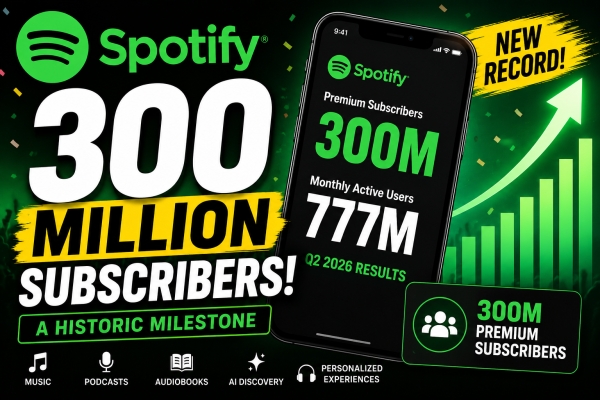
Spotify Hits 300 Million Premium Subscribers: What It Means for the Future of Music Streaming
Spotify has reached a remarkable milestone that highlights just how dramatically music consumption has changed over the past two decades. In its second-quarter 2026 results, Spotify announced that it had reached 300 million Premium subscribers worldwide, making it the first audio streaming service to reach that level.
The company also reported 777 million monthly active users, representing 12% year-over-year growth. Revenue increased 14% year over year to €4.8 billion, while gross margin reached a record 33.4%.
These numbers demonstrate that paid music streaming is no longer simply an alternative to CDs, downloads, or radio. It has become the dominant business model for recorded music consumption and an increasingly important part of the broader digital entertainment economy.
But Spotify's latest milestone raises bigger questions. How did the company reach 300 million paying subscribers? What does its growth mean for the music industry? Can Spotify continue expanding at this scale? And, perhaps most importantly, will artists benefit as the streaming economy becomes more profitable?
Spotify Reaches a Historic 300 Million Subscriber Milestone
Spotify's 300 million Premium subscriber milestone is significant because it represents an enormous global audience willing to pay for access to digital audio.
The company reported that Premium subscribers increased 9% year over year, reaching 300 million during the second quarter of 2026. At the same time, total monthly active users climbed 12% to 777 million.
The difference between these numbers is important.
Spotify has both paying Premium customers and users who access its service through free, advertising-supported options. The Premium audience generates recurring subscription revenue, while the free audience helps Spotify maintain enormous reach and creates opportunities for advertising and conversion into paid plans.
Reaching 300 million paying subscribers therefore demonstrates more than popularity. It shows the strength of Spotify's subscription business model.
For comparison, Spotify's Premium subscriber base stood at 293 million at the end of the first quarter of 2026, meaning the company added another 7 million paying subscribers in Q2.
That continued growth is particularly notable because Spotify is already operating at an enormous global scale.
Why Spotify's Streaming Growth Matters
Spotify's growth is important because it reflects a broader transformation in how audiences consume entertainment.
People no longer need to purchase individual albums or download songs to build a personal music collection. Instead, a monthly subscription provides access to an enormous catalog of music, podcasts, audiobooks, and other audio content.
This convenience has changed consumer expectations.
Listeners can move from a new album to a classic record, an emerging independent artist, a podcast, or an audiobook within seconds. Personalized playlists and recommendations also mean users do not necessarily have to know what they want to hear before opening the app.
Spotify has effectively turned music discovery into an ongoing personalized experience.
Its scale also gives the company significant influence over how music is discovered, promoted, and consumed.
As more people use streaming platforms as their primary source of music, Spotify's recommendation systems, editorial playlists, search tools, and personalized experiences can have a major impact on an artist's visibility.
The Business Behind Spotify's 300 Million Subscribers
The 300 million Premium milestone is also a major business achievement.
Spotify reported €4.8 billion in total revenue during Q2 2026, representing 14% year-over-year growth. Gross margin improved by approximately 193 basis points year over year to 33.4%, while operating income reached €655 million.
These figures suggest Spotify is not simply adding users—it is becoming increasingly efficient at converting its enormous audience into a financially stronger business.
Subscription revenue is central to that strategy.
Premium customers provide predictable recurring revenue, allowing Spotify to invest in technology, licensing, product development, marketing, and new forms of audio entertainment.
The company's growing profitability could also give it greater flexibility to experiment with new products.
That matters because Spotify is no longer positioning itself purely as a music streaming service.
It is increasingly becoming a broader audio platform.
Spotify Is Expanding Beyond Music
Music remains at the heart of Spotify's business, but the company has spent years expanding into podcasts and audiobooks.
In Q2 2026, Spotify highlighted several new audio initiatives, including expanded audiobook offerings and additional features designed to make the platform more personalized. It also announced that Audiobooks+ had already reached 1.5 million subscribers and that the service would expand to Family and Student plans later in the year.
This diversification is strategically important.
If Spotify can become the primary destination for music, podcasts, audiobooks, and other forms of audio entertainment, customers may become more deeply connected to the platform.
That can potentially increase engagement and reduce the likelihood that users will cancel their subscriptions.
The company is therefore competing not only with other music streaming services but with the wider entertainment ecosystem.
AI Is Becoming a Major Part of Spotify's Future
One of the most important aspects of Spotify's latest results is not the subscriber number itself. It is what the company is building around that audience.
Spotify is increasingly integrating artificial intelligence into music discovery and personalization.
The company announced that eligible Premium users can now talk to Spotify through Home and Now Playing on mobile. Users can type or speak requests, discover music, revisit listening history, and explore podcasts and audiobooks through a conversational experience.
Spotify is also expanding its AI-powered DJ feature into additional markets and languages.
These developments suggest that the future of music discovery may become increasingly conversational.
Instead of searching for a specific artist or genre, listeners could simply tell Spotify what they want.
For example, a user might request music for a late-night drive, energetic songs for a workout, or relaxing tracks for studying.
The more effectively Spotify understands these requests, the more personalized the listening experience becomes.
Personalization Could Become Spotify's Biggest Competitive Advantage
Spotify's massive user base provides an enormous amount of information about listening behavior.
Every playlist, search, skip, save, replay, and listening session can contribute to a better understanding of individual preferences.
The challenge is turning that data into useful recommendations without making the experience feel repetitive.
Spotify's investment in AI appears designed to address that challenge precisely.
The company's Q2 announcements included Running Mode, which creates personalized running sessions based on a user's goals, music taste, and tempo.
This is an important evolution.
Instead of simply asking, "What song should I play?", Spotify is increasingly attempting to answer, "What audio experience does this person need right now?"
That could become one of the most important competitive advantages in the streaming industry.
What Does Spotify's Growth Mean for Artists?
Spotify's growth presents both opportunities and challenges for musicians.
On one hand, a larger paying audience means more people are participating in the legal streaming economy. Artists can reach listeners around the world without requiring physical distribution or a traditional record deal.
Independent musicians can release music globally and potentially build audiences in markets they have never visited.
Spotify has also continued developing tools intended to connect artists with fans.
For example, its Reserved ticketing initiative with Live Nation had already supported nearly 100,000 reserved concert tickets in the United States by the time of the Q2 announcement.
This demonstrates how streaming can become a gateway to other forms of artist revenue, including concerts and fan experiences.
However, the debate over streaming royalties remains.
A larger streaming economy does not automatically mean every individual artist earns enough to make a living from streams alone.
The distribution of streaming revenue involves platforms, rights holders, record labels, publishers, distributors, songwriters, and performers.
As Spotify becomes more profitable, discussions about how the economic value of streaming should be divided are likely to remain important.
Does More Spotify Growth Mean More Competition for Artists?
There is another side to Spotify's enormous scale.
As streaming becomes easier and more accessible, the amount of music available to listeners continues to grow.
That creates an extraordinary opportunity for artists—but also enormous competition.
An independent musician can potentially reach a global audience without a major label. At the same time, that musician is competing for attention against established superstars, major-label releases, viral tracks, catalog music, podcasts, and an ever-growing number of new songs.
This makes discoverability increasingly important.
Spotify's recommendation algorithms can help connect listeners with music they might otherwise never encounter. But artists have limited control over exactly how those systems determine which songs receive additional exposure.
The future of music promotion may therefore depend increasingly on the relationship between human creativity and algorithmic discovery.
Spotify Is Becoming More Than a Streaming App
The 300 million subscriber milestone also demonstrates how Spotify has evolved from its original concept.
The platform began primarily as a convenient way to listen to music. Today, it is becoming a broader digital ecosystem connecting listeners, artists, creators, authors, advertisers, and live entertainment.
Spotify's latest product announcements illustrate this evolution.
Users can now discover music through conversational interactions, listen to personalized running sessions, explore audiobooks, consume podcasts, and access concert-ticket opportunities through the platform.
This ecosystem approach could make Spotify increasingly difficult to replace.
The more services users integrate into their daily routines, the more valuable the overall platform becomes.
Can Spotify Keep Growing After 300 Million Subscribers?
The biggest question following the 300 million milestone is whether Spotify can maintain its growth trajectory.
Adding millions of subscribers becomes progressively more difficult as a company becomes larger.
The easiest customers to acquire are usually those who are already interested in the product. Reaching the next hundreds of millions may require deeper penetration into emerging markets, more flexible pricing, stronger localization, and additional product innovation.
Spotify has already demonstrated that it can expand internationally.
Its continued growth will likely depend on whether it can balance affordability with profitability while continuing to deliver enough value to convince free users to upgrade to Premium.
AI, podcasts, audiobooks, personalization, and fan experiences could all play a role in that strategy.
What Spotify's 300 Million Milestone Means for the Future of Music Streaming
Spotify's achievement is bigger than a company celebrating another subscriber record.
It demonstrates how deeply streaming has become embedded in modern music consumption.
With 300 million Premium subscribers and 777 million monthly active users, Spotify now operates at a scale that gives it enormous influence over the global audio market. Its €4.8 billion quarterly revenue and record 33.4% gross margin further demonstrate the growing strength of its business model.
But the next stage of the streaming revolution will involve more than simply gaining subscribers.
AI will reshape how people discover music. Personalization will become increasingly sophisticated. Audio services will continue expanding beyond music. Artists will seek new ways to monetize their audiences directly. And debates over royalties, copyright, transparency, and algorithmic influence will remain central to the industry's future.
For Spotify, reaching 300 million Premium subscribers may be a milestone—but it is unlikely to be the destination.
Final Thoughts
Spotify's achievement of 300 million Premium subscribers represents one of the biggest milestones in the history of music streaming.
The company's latest results show a business that is growing in users, revenue, profitability, and product ambitions. At the same time, Spotify is investing heavily in AI, personalization, audiobooks, podcasts, and connections between artists and their most dedicated fans.
For listeners, this could mean a more personalized and intelligent way to experience audio.
For artists, it could create new opportunities to reach global audiences and convert listeners into fans.
For the music industry, however, the challenge will be ensuring that the financial success of streaming translates into a sustainable ecosystem for the creators who produce the content that makes these platforms valuable.
Spotify has reached 300 million paying subscribers. The next question is not simply how many more people will subscribe, but how the company will use this extraordinary scale to shape the future of music.
Music Streaming Growth in 2026: Revenue Soars, Royalties Debated
Written by Sounds Space
Streaming Growth in 2026: Why Global Music Revenue Is Rising While Artists Continue to Fight for Fair Royalties
The global music industry is experiencing another year of impressive growth, with streaming remaining the driving force behind rising recorded music revenue. Paid subscriptions continue to increase across major platforms like Spotify, Apple Music, YouTube Music, Amazon Music, and regional streaming services, demonstrating that consumers are more willing than ever to pay for convenient access to millions of songs.
While these numbers paint a positive picture for the industry, they also reveal a growing divide. Record labels, streaming platforms, and music publishers are reporting healthy financial performance, yet many musicians argue that the current royalty system fails to compensate creators fairly. For independent artists, songwriters, and even some established performers, generating sustainable income from streaming remains a significant challenge.
As streaming reshapes the music business, the conversation has shifted from whether digital platforms can generate revenue to whether that revenue is being distributed equitably. This article explores why streaming continues to fuel industry growth, how subscription models are evolving, the ongoing debate over royalties, and what the future may hold for artists and music streaming services.
The Rise of Streaming as the Music Industry's Largest Revenue Source
Streaming has fundamentally transformed the way people consume music. Over the last decade, digital streaming has replaced physical album sales and music downloads as the primary source of recorded music revenue worldwide.
Millions of listeners now pay monthly subscription fees for unlimited access to vast music catalogs, allowing them to discover new artists, create playlists, and enjoy personalized recommendations across multiple devices.
Unlike the era of CDs and digital downloads, where consumers purchased individual albums or tracks, streaming offers continuous access through subscription-based services. This recurring revenue model has proven highly successful for streaming companies and record labels because it creates predictable monthly income while reducing piracy.
The convenience of streaming has also expanded music consumption. Listeners can instantly access songs from virtually any genre, language, or country without purchasing physical media, making music more accessible than ever before.
As internet connectivity improves and smartphone adoption continues to grow in emerging markets, streaming subscriptions are expected to remain the primary engine of industry growth.
Paid Streaming Subscriptions Continue to Expand
One of the biggest contributors to the music industry's financial success is the steady increase in paid streaming subscribers.
Consumers are increasingly choosing premium plans because they offer benefits such as:
-
Ad-free listening
-
Offline downloads
-
Higher audio quality
-
Unlimited skips
-
Personalized recommendations
-
Multi-device synchronization
-
Family and student subscription plans
These premium features encourage users to move away from free, ad-supported listening experiences.
Streaming services have also introduced flexible pricing options that appeal to different audiences, including individual plans, family memberships, duo subscriptions, and discounted student pricing.
As affordability improves across international markets, streaming platforms continue attracting millions of new paying subscribers each year.
This steady growth provides a stable financial foundation for the music industry while supporting ongoing investments in technology, artificial intelligence, recommendation engines, and exclusive content.
Why Global Recorded Music Revenue Keeps Growing
The continued rise in recorded music revenue reflects several factors beyond subscriber growth alone.
Expanding Global Markets
Emerging markets in Asia, Africa, Latin America, and the Middle East are contributing significantly to streaming adoption. As internet infrastructure improves and mobile payment options become more accessible, millions of first-time subscribers are joining streaming platforms.
Better User Experience
Streaming platforms continue improving their services through AI-powered recommendations, personalized playlists, podcasts, audiobooks, and social sharing features. These enhancements increase user engagement and encourage long-term subscriptions.
Growing Catalogs
Music libraries continue expanding as independent artists, record labels, and distributors upload thousands of new songs every day. Larger catalogs attract diverse audiences while encouraging longer listening sessions.
Cross-Platform Accessibility
Modern listeners can enjoy music across smartphones, smart speakers, connected vehicles, gaming consoles, televisions, smartwatches, and desktop devices, making streaming an integral part of daily life.
Together, these factors contribute to higher subscription retention and sustained industry growth.
How Streaming Platforms Generate Revenue
Many consumers assume streaming platforms earn money only from subscriptions, but their revenue models are much broader.
Primary income sources include:
-
Premium subscriptions
-
Advertising on free-tier accounts
-
Podcast advertising
-
Audiobook subscriptions
-
Brand partnerships
-
Sponsored playlists
-
Data-driven marketing opportunities
-
Licensing agreements
These diversified revenue streams strengthen streaming platforms while creating additional opportunities for future expansion.
However, the way this revenue is shared among artists, labels, publishers, and rights holders remains one of the industry's most debated issues.
Understanding the Music Royalty Debate
Although streaming has increased total industry revenue, many artists argue that their personal earnings have not kept pace.
Streaming royalties are typically divided among multiple parties, including:
-
Streaming platforms
-
Record labels
-
Music publishers
-
Songwriters
-
Performing artists
-
Distribution companies
-
Collection societies
By the time revenue reaches the artist, the final payout may be significantly smaller than many listeners expect.
Independent musicians often face additional expenses such as recording, production, marketing, touring, and management costs, making streaming income alone insufficient to sustain a full-time career.
This has fueled growing calls for greater transparency and fairer royalty distribution models.
Why Independent Artists Feel Left Behind
Independent musicians have benefited from easier access to global audiences through streaming services.
Unlike previous decades, artists no longer need major record label contracts to distribute music internationally.
However, increased accessibility has also created unprecedented competition.
Thousands of new songs are uploaded to streaming platforms every day, making discoverability one of the biggest challenges facing independent artists.
Even when artists achieve respectable streaming numbers, royalty payments may still fall short of covering production and promotional expenses.
As a result, many musicians rely on additional income sources such as:
-
Live performances
-
Merchandise sales
-
Fan memberships
-
Crowdfunding
-
Brand partnerships
-
Music licensing
-
Teaching
-
Session work
Streaming often serves as a promotional tool rather than a primary source of income.
The Role of Algorithms in Artist Success
Recommendation algorithms have become increasingly influential in determining which songs listeners discover.
Platforms use artificial intelligence to analyze listening habits, user preferences, playlists, skips, saves, and engagement patterns.
When a song performs well within these systems, it can quickly reach millions of listeners.
Conversely, artists who fail to trigger algorithmic recommendations may struggle to gain visibility despite producing high-quality music.
This algorithm-driven ecosystem creates both opportunity and uncertainty.
While talented independent musicians can achieve viral success without major label backing, they also become increasingly dependent on recommendation systems they do not fully understand.
Transparency surrounding these algorithms remains a frequent topic of discussion throughout the music industry.
Can Royalty Models Become Fairer?
The growing royalty debate has inspired several proposals aimed at improving artist compensation.
User-Centric Payment Models
Some industry experts support user-centric payment systems, where each subscriber's monthly fee is distributed only among the artists they actually listen to.
Supporters argue this would better reward niche musicians with loyal audiences.
Greater Transparency
Artists increasingly call for clearer reporting regarding how streaming revenue is calculated and distributed.
Improved transparency could strengthen trust between creators and streaming platforms.
Higher Subscription Prices
Some analysts suggest modest subscription price increases could generate additional royalty income without significantly affecting subscriber growth.
Many consumers have already shown a willingness to pay more for premium entertainment services.
Direct Artist Support
Streaming platforms continue experimenting with fan engagement tools that allow listeners to purchase merchandise, concert tickets, or support creators directly through the platform.
These features diversify artist income beyond streaming alone.
Artificial Intelligence Is Reshaping Streaming
Artificial intelligence is becoming increasingly integrated into music streaming platforms.
AI enhances:
-
Personalized playlists
-
Music recommendations
-
Search functionality
-
Mood-based listening
-
Conversational music discovery
-
Fraud detection
-
Content moderation
These innovations improve user experiences while increasing listening time and subscription retention.
However, AI also raises concerns about AI-generated music entering streaming catalogs, increasing competition for human artists.
As platforms refine their AI strategies, balancing innovation with fairness will remain essential.
Challenges Facing the Streaming Industry
Despite impressive revenue growth, streaming services continue facing several challenges.
Royalty Pressure
Artists, advocacy groups, and industry organizations continue demanding improved compensation structures.
Content Saturation
With massive volumes of new music released daily, standing out has become increasingly difficult.
Regulatory Scrutiny
Governments worldwide continue evaluating copyright laws, licensing frameworks, and AI-generated content regulations.
Market Competition
Streaming platforms compete aggressively through exclusive content, improved recommendations, podcasts, audiobooks, and innovative features.
Maintaining subscriber growth requires constant innovation.
What the Future of Music Streaming Looks Like
The next phase of streaming will likely extend beyond simply delivering music.
Future developments may include:
-
More advanced AI recommendations
-
Personalized listening experiences based on mood and activity
-
Enhanced fan-to-artist interactions
-
Virtual concerts
-
Integrated merchandise purchasing
-
Blockchain-based royalty tracking
-
Improved royalty transparency
-
Greater support for independent musicians
Streaming platforms will increasingly position themselves as comprehensive entertainment ecosystems rather than simple music libraries.
At the same time, industry stakeholders must continue addressing the financial sustainability of music creation.
Healthy streaming growth ultimately depends on ensuring artists remain motivated and fairly compensated for their work.
Why Fair Royalties Matter for the Entire Industry
Supporting artists is not simply a moral issue—it is also an economic necessity.
Without sustainable income opportunities, fewer musicians may be able to dedicate themselves to creating new music.
Record labels, streaming services, publishers, and technology companies all depend on a thriving creative community.
Fair royalty systems encourage artistic innovation, improve long-term industry stability, and strengthen relationships between creators and platforms.
Consumers also benefit when artists have the resources to continue producing high-quality music.
Achieving this balance will require ongoing collaboration among streaming services, governments, industry organizations, record labels, publishers, and artists themselves.
Final Thoughts
The global music industry is enjoying remarkable growth, driven largely by the continued expansion of paid streaming subscriptions. Streaming has revolutionized how audiences discover, consume, and share music while creating a sustainable recurring revenue model that continues to fuel industry success.
Yet beneath these encouraging financial results lies a more complicated reality. Many artists—particularly independent musicians and songwriters—continue to question whether the current royalty system fairly rewards the people whose creativity powers the entire ecosystem.
The future of music streaming will depend not only on technological innovation but also on building a fairer and more transparent economic model. As subscription numbers rise, artificial intelligence evolves, and global audiences continue to grow, the industry has an opportunity to create a system where streaming platforms prosper while artists receive compensation that reflects the true value of their work.
Finding that balance will shape the next chapter of the global music business and determine whether streaming remains a sustainable model for creators, companies, and listeners alike.
Spotify's AI Strategy: How AI Is Transforming Music Streaming
Written by Sounds Space
Spotify's AI Strategy in 2026: How Artificial Intelligence Is Changing Music Discovery, Artist Success, and the Future of Streaming
Artificial intelligence has become one of the biggest forces shaping the music industry, and Spotify is at the center of this transformation. As the world's leading music streaming platform continues expanding its AI-powered features, listeners are discovering music in entirely new ways while artists and industry professionals debate what these changes mean for the future.
From conversational music discovery to increasingly sophisticated recommendation algorithms, Spotify's investment in artificial intelligence aims to make finding the perfect song easier than ever. However, these innovations also raise important questions. Will AI improve the listening experience without sacrificing human creativity? Can independent artists still compete in an algorithm-driven ecosystem? And what role will human curators play as AI becomes smarter?
In this article, we'll explore Spotify's evolving AI strategy, how it benefits listeners, the challenges facing artists, and what the future of music streaming may look like.
Spotify's Growing Investment in Artificial Intelligence
Artificial intelligence has quietly powered Spotify for years. Every personalized playlist, song recommendation, and artist suggestion has relied on machine learning to understand user preferences.
Today, Spotify is taking AI much further.
Recent developments include conversational music discovery, where users can describe the type of music they're looking for in natural language rather than searching by artist or genre. Instead of typing "rock playlist," users can ask for something like:
-
Songs similar to early 2000s indie rock
-
Relaxing jazz for studying
-
Upbeat music for a morning workout
-
Emotional acoustic songs for rainy days
This conversational approach mirrors the growing popularity of AI assistants across many digital platforms and represents a significant shift in how people interact with streaming services.
Rather than expecting users to know exactly what they want, Spotify's AI attempts to understand moods, activities, emotions, and preferences through natural conversation.
How AI Recommendation Algorithms Continue to Improve
Spotify's recommendation engine has long been considered one of the most sophisticated in the streaming industry.
Modern AI systems analyze thousands of listening signals, including:
-
Listening history
-
Songs skipped
-
Songs replayed
-
Time of day
-
Playlist additions
-
Favorite genres
-
Device usage
-
Listening duration
-
Regional trends
Instead of recommending music based solely on genre, Spotify's AI creates highly personalized listening experiences unique to every user.
For example, two listeners who enjoy pop music may receive completely different recommendations because their broader listening habits reveal different tastes.
One listener may also enjoy electronic dance music, while another frequently listens to indie folk. AI recognizes these subtle differences and adapts recommendations accordingly.
As these algorithms improve, discovering new artists becomes easier and more personalized than ever before.
Conversational Music Discovery Could Change Everything
One of Spotify's most exciting developments is conversational AI.
Traditional music searches require users to know what they're looking for.
AI changes that experience completely.
Imagine saying:
"Play relaxing music that feels like watching the sunset on the beach."
Or:
"Find songs with powerful female vocals similar to Adele but less mainstream."
Instead of searching by keyword alone, AI interprets meaning, mood, context, and musical characteristics.
This represents a major evolution in music discovery because people often know how they want to feel but struggle to describe music using conventional categories.
Natural language search removes that barrier.
As AI becomes increasingly accurate, users may spend less time searching and more time listening.
The Benefits of AI for Music Listeners
For everyday listeners, Spotify's AI offers several advantages.
Better Personalization
Recommendations become more accurate over time as AI learns listening habits.
Instead of generic playlists, users receive suggestions tailored specifically to their preferences.
Faster Music Discovery
Finding new artists traditionally required browsing playlists or relying on recommendations from friends.
AI dramatically shortens that process.
Listeners can discover emerging artists within seconds.
Mood-Based Listening
Many users don't search for specific songs.
Instead, they search for experiences.
Whether exercising, studying, relaxing, or commuting, AI helps build playlists around activities and emotions rather than artist names.
Reduced Search Friction
Conversational AI eliminates the need to remember song titles or artist names.
Users simply describe what they want.
This creates a smoother and more intuitive experience.
Will AI Replace Human Music Curators?
One of the biggest debates surrounding Spotify's AI expansion concerns the future of human curation.
For years, editorial playlists created by music experts have played an important role in helping artists gain exposure.
Playlists such as "New Music Friday" or genre-specific collections are carefully assembled by experienced curators who understand musical trends and cultural moments.
AI now performs many similar tasks automatically.
This raises an important question:
Can algorithms replace human taste?
The answer is likely more complex than a simple yes or no.
Human curators understand storytelling, cultural relevance, and emotional context in ways that AI still struggles to replicate.
Algorithms excel at analyzing data, but they cannot fully understand why a particular song resonates with society during a specific moment.
Rather than replacing curators entirely, AI will likely become a powerful tool that supports human decision-making.
The future may involve collaboration rather than competition.
Independent Artists Face New Opportunities and New Challenges
Spotify's AI ecosystem creates both exciting opportunities and significant concerns for independent musicians.
Greater Discoverability
In theory, AI can help unknown artists reach audiences that genuinely enjoy their music.
Rather than relying solely on record labels, talented musicians can be matched with listeners based on listening behavior.
This levels the playing field to some extent.
Increased Competition
However, AI also introduces enormous competition.
Every day, thousands of new songs are uploaded to streaming platforms.
As AI becomes more efficient at generating music, the volume of available content could increase dramatically.
Independent artists may find it harder to stand out in an increasingly crowded marketplace.
Algorithm Dependence
Many musicians already worry about becoming overly dependent on recommendation algorithms.
Small changes to Spotify's ranking systems could significantly affect streams, revenue, and audience growth.
Artists have little visibility into how these systems operate, making algorithm updates both influential and unpredictable.
Could AI-Generated Music Flood Streaming Platforms?
One of the industry's greatest concerns is the rapid growth of AI-generated music.
Today's AI tools can produce instrumental tracks, lyrics, melodies, and even realistic vocal performances.
As these technologies improve, millions of AI-generated songs could be uploaded to streaming services.
This raises several important questions.
How will Spotify distinguish between human-created and AI-generated music?
Should AI-generated songs compete directly with human artists?
Will listeners care whether music was created by a person or an algorithm?
Some industry experts argue that AI democratizes music creation by giving more people access to creative tools.
Others worry that an overwhelming amount of synthetic music could make genuine artistic expression harder to discover.
The challenge for Spotify will be balancing innovation with authenticity.
Artist Compensation Remains a Major Concern
Spotify's AI strategy intersects with an ongoing debate about artist compensation.
Many musicians already believe streaming royalties do not adequately reflect the value of their work.
If AI-generated music becomes widespread, concerns may grow even further.
Questions include:
-
Will AI-created tracks receive royalty payments?
-
How should copyright apply to AI-generated songs?
-
Who owns music created with artificial intelligence?
-
Could AI reduce opportunities for professional musicians?
These issues remain unresolved across much of the music industry.
Governments, record labels, technology companies, and artists continue discussing how copyright and royalty systems should evolve alongside AI.
The Evolution of Music Recommendation Algorithms
Spotify's recommendation system is becoming increasingly sophisticated.
Future AI models may consider factors beyond listening history, including:
-
Current mood
-
Voice interactions
-
Fitness activities
-
Weather conditions
-
Travel habits
-
Smart home devices
-
Social interactions
-
Live event preferences
Imagine opening Spotify after finishing a workout.
Instead of manually choosing music, AI automatically recommends recovery playlists based on your recent activity.
Or during a rainy evening, Spotify could suggest mellow acoustic songs that match your environment.
These contextual recommendations could redefine personalized entertainment.
Privacy Considerations in AI-Powered Music Streaming
As AI becomes smarter, it also requires more data.
Spotify already analyzes listening habits to personalize recommendations.
Future AI features may rely on additional contextual information to deliver even better suggestions.
While many users appreciate personalization, others remain concerned about privacy and transparency.
Streaming platforms will need to clearly explain how user data is collected, stored, and used.
Building trust will become increasingly important as AI systems become more sophisticated.
The Future of AI and Human Creativity
Artificial intelligence is unlikely to replace musicians altogether.
Instead, it is becoming another creative tool.
Many artists already use AI for brainstorming lyrics, generating melodies, improving production workflows, and experimenting with new sounds.
Throughout history, technology has repeatedly changed music production.
From synthesizers and drum machines to digital audio workstations, each innovation initially sparked concerns before eventually becoming part of mainstream music creation.
AI may follow a similar path.
Rather than replacing creativity, it may enhance it.
The musicians who learn to combine human imagination with AI tools could unlock entirely new forms of artistic expression.
What Spotify's AI Strategy Means for the Music Industry
Spotify's expanding AI strategy represents more than a technological upgrade.
It signals a broader shift in how music is created, discovered, recommended, and consumed.
Listeners will enjoy increasingly personalized experiences.
Independent artists may gain new discovery opportunities while facing greater competition.
Human curators will likely work alongside AI instead of disappearing altogether.
Meanwhile, debates around copyright, artist compensation, transparency, and AI-generated music will continue shaping industry policy for years to come.
The companies that succeed will be those that strike the right balance between innovation and fairness.
Final Thoughts
Spotify's AI-powered future offers enormous possibilities. Smarter recommendations, conversational music discovery, and highly personalized listening experiences have the potential to make streaming more engaging than ever before.
Yet these innovations also bring complex challenges. Independent artists need fair opportunities to be discovered, human creativity must continue to be valued, and streaming platforms will need transparent policies regarding AI-generated content and royalties.
The future of music will likely be neither fully human nor fully artificial. Instead, it will be a collaboration where technology enhances creativity without replacing the artists who inspire it.
As Spotify continues refining its AI capabilities, one thing is certain: the relationship between listeners, musicians, and streaming platforms is entering a new era. Those who understand and adapt to these changes will be best positioned to thrive in the rapidly evolving music industry.
AI Music Chart Rules: Major Labels Set New Global Standards
Written by Sounds Space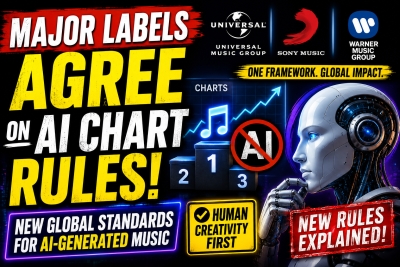
Major Labels Agree on New AI Music Chart Rules: What the New Global Framework Means for Artists
Artificial intelligence is rapidly changing the music industry, and now the world’s biggest record companies are taking a major step toward defining how AI-created music should compete on official music charts.
On July 30, 2026, the International Federation of the Phonographic Industry (IFPI) announced the rollout of new global principles governing the eligibility of recordings developed with generative artificial intelligence for official music charts. The framework was developed by a coalition including Sony Music, Universal Music Group and Warner Music Group, alongside major independent companies and labels.
The headline is easy to misunderstand. This is not a blanket ban on music made with AI.
Instead, the new AI music chart rules attempt to establish a boundary between music that is substantially created by humans with legitimate AI assistance and music that is purely synthetic, generated by unauthorized AI systems, or connected to chart manipulation.
That distinction could have major consequences for artists, producers, songwriters, labels, streaming services and fans.
What Are the New AI Music Chart Rules?
The new framework establishes principles for determining when an AI-assisted recording should be eligible for an official music chart.
According to IFPI, an AI-developed recording must satisfy several requirements. The AI service used must be properly authorized and lawful, the recording must be substantially human-made, and the track must not raise concerns about streaming or chart manipulation. It must also comply with applicable copyright, related-rights and personality-rights laws.
There is another important requirement: the use of generative AI must be appropriately signaled to consumers on downstream services such as digital streaming platforms, in accordance with applicable legislation and industry labeling standards.
In simple terms, the music industry is moving toward a system where AI assistance can be acceptable, but human creativity must remain at the center of chart-eligible music.
That is a significant distinction as AI music generators become increasingly capable of producing complete songs from relatively simple prompts.
Which Major Record Labels Are Behind the Framework?
The initiative includes the three largest global record companies: Sony Music, Universal Music Group and Warner Music Group.
However, the coalition is broader than the major labels alone. Music Business Worldwide reported that participating companies also include Believe, BMG, Concord, Dirty Hit, Glassnote Records, HYBE Corp., Mom+Pop Music and Partisan Records.
That broad participation is important because AI-generated music is not exclusively a major-label issue.
Independent artists and labels face many of the same challenges. If automated systems can generate thousands of tracks and distribute them through streaming platforms, the resulting competition for attention, streams and chart positions affects the entire music ecosystem.
The coalition's objective is therefore bigger than simply protecting major-label releases. The stated aim is to provide a consistent roadmap that official chart compilers and music-industry organizations can use when evaluating recordings created with generative AI.
Does This Mean AI Music Is Banned From the Charts?
No—and this is one of the most important points to understand.
The new AI music chart rules do not prohibit all music involving artificial intelligence.
Instead, the framework allows appropriate AI use when the recording remains substantially human-made and the technology being used is authorized and lawful.
That means an artist could potentially use AI as part of a creative workflow without automatically making a song ineligible for a chart.
For example, AI could potentially be used as a creative tool during songwriting, sound design, editing, arrangement or production while humans remain responsible for the substantial creative work.
The difficult question is where that line should be drawn.
What happens when an artist writes the lyrics but an AI system generates the vocal? What if a producer creates the instrumental but uses AI to generate several musical elements? What if an artist records a performance and then uses generative AI to substantially transform it?
These gray areas are likely to become some of the industry's biggest debates.
What Does “Substantially Human-Made” Actually Mean?
The phrase “substantially human-made” may become one of the most important concepts in the future of music charts.
The framework clearly favors music where human creativity remains the driving force. But determining exactly how much human involvement is enough is much harder than writing the principle itself.
Music production has always involved technology.
Drum machines, samplers, synthesizers, pitch correction, digital audio workstations, MIDI programming and software instruments have all changed the definition of what it means to “make” a record.
Generative AI introduces a different challenge because the technology can potentially create large portions of a finished recording.
A producer using AI to brainstorm a chord progression is not necessarily doing the same thing as someone entering a prompt and receiving an entire finished song.
That distinction matters.
The new rules appear designed to preserve room for AI as a creative tool while preventing official charts from becoming dominated by fully synthetic recordings with little or no meaningful human authorship.
Why Are Music Charts So Important in the AI Debate?
Music charts are more than lists of popular songs.
For artists, reaching a major chart can influence visibility, career opportunities, media coverage, bookings, label negotiations and public perception.
That makes chart eligibility particularly important in the AI era.
If automated systems can generate huge numbers of tracks at extremely low cost, there is a potential risk that human artists could be competing against an enormous volume of machine-generated content.
The industry is also concerned about fraudulent streaming activity.
IFPI's framework specifically says recordings should not be eligible where there are concerns about stream or chart manipulation.
This is especially relevant because AI makes large-scale music creation easier. A person could theoretically generate huge catalogs of songs and use automated distribution or promotional systems to flood platforms with content.
The concern isn't simply that AI music exists. It is the possibility of industrial-scale automated music production combined with artificial streaming or manipulation.
The AI Music Flood Is Already Happening
The chart debate comes at a time when AI-generated music is becoming increasingly common across streaming services.
Deezer has been particularly vocal about the scale of the issue. In July 2026, the platform said more than half of its new daily music uploads were AI-generated, up from 44% in April and just over 30% at the end of 2025.
That rapid growth illustrates why the music industry is trying to establish rules now rather than waiting until AI-generated content becomes even more dominant.
Deezer has also spent years developing technology to identify AI-generated music. Its research team says it can detect markers associated with AI generation, although determining exactly which elements of a hybrid human-AI track were created by humans remains much more complicated.
That limitation is critical.
It is relatively straightforward to ask whether a track appears to have been generated by AI. It is considerably harder to determine how AI was used and how much human creativity went into the final recording.
AI Detection Could Become a Major Part of Music Distribution
As chart rules become more specific, the ability to identify AI-generated music could become increasingly important.
But AI detection isn't perfect.
Deezer's head of research, Manuel Moussallam, explained that its current technology identifies markers associated with AI generation rather than perfectly determining every element of human and machine involvement. The company is researching more detailed, stem-level analysis because hybrid human-AI music creates additional challenges.
That could eventually change the production and distribution process.
Artists and labels may need to provide more information about how AI was used during production. Distributors may introduce additional metadata requirements. Streaming platforms could display AI-related labels. Chart companies may increasingly rely on technical systems to identify questionable recordings.
The industry could therefore be heading toward a future where AI disclosure becomes a standard part of music metadata.
Fans Are Asking for More Transparency Around AI Music
The industry's move toward AI labeling is also supported by growing consumer interest in transparency.
A survey reported by the Official Charts Company found that 81.5% of 1,750 UK music consumers polled agreed that music generated solely by AI should be clearly labeled. Meanwhile, 82.7% said human creativity is essential to music creation, and 80.1% said human-created music is more valuable to them than AI-generated music.
The same survey found that 78.5% believed an artist's music or vocals should not be used by AI without permission from the artist or record label, while 72.7% wanted AI systems to clearly identify music used for training.
These numbers help explain why labeling is becoming such an important part of the industry's AI strategy.
Listeners may not necessarily reject AI technology altogether. Instead, they increasingly want to know when AI is involved and how it was used.
The Copyright Question Is Still Critical
Chart eligibility is only one piece of the larger AI music debate.
Another major issue is whether the AI systems used to create music were trained legally and whether creators gave permission for their work to be used.
IFPI's new principles specifically require AI services involved in chart-eligible recordings to be properly authorized and lawful. They also require compliance with applicable copyright, related-rights and personality-rights laws.
That is significant because the legal status of AI training remains one of the biggest unresolved issues in the music industry.
A music generator can produce a new song, but questions remain about the datasets used to train the underlying model, the rights of musicians whose work may have been included, and whether artists should receive compensation when their work contributes to AI training.
The chart rules don't resolve all of those questions. Instead, they establish a principle: unauthorized AI systems should not automatically receive the same pathway into official charts as legitimate, licensed technologies.
What the New Rules Mean for Music Producers
For producers, the message isn't “stop using AI.”
Instead, it is becoming increasingly important to understand how you're using it.
Producers who incorporate AI into their workflow should pay attention to the licensing terms of the tools they use. They should also understand whether an AI service permits commercial exploitation of generated material and whether the service has appropriate agreements concerning training data.
Keeping records of how AI was used could eventually become useful as well.
If music distribution increasingly requires AI disclosures, producers may need to know whether AI was used for vocals, instruments, lyrics, arrangement, mixing, mastering or other elements.
For producers who want long-term careers, transparency could become an advantage rather than a burden.
Using AI responsibly while maintaining strong human authorship could allow artists to benefit from new technology without losing the identity and creative control that make their music unique.
Why AI-Assisted Music Is Different From Fully AI-Generated Music
The biggest conceptual shift in the new chart rules is the distinction between AI-assisted and AI-generated music.
AI-assisted music can involve humans using artificial intelligence as one tool among many.
Fully synthetic music is different because the creative process can be largely automated.
That difference is becoming increasingly important as AI music systems improve.
The technology itself isn't necessarily the industry's enemy. IFPI explicitly acknowledges that properly licensed AI can provide exciting opportunities for creators and expand the creative toolkit available to musicians.
The concern is what happens when AI moves from being a tool used by musicians to becoming a mechanism for producing enormous quantities of music with minimal human involvement.
That is the line the new framework is attempting to draw.
What Happens Next for AI Music and Official Charts?
The new principles are already being rolled out.
IFPI says it has applied the framework to official charts it directly manages across regions including Latin America, the Middle East, Africa and Southeast Asia, while working with its national network to expand the program to more than 20 additional official chart programs.
That means the rules could eventually influence chart eligibility across a much larger portion of the global music market.
The next challenge will be implementation.
Chart companies will need to determine how to evaluate human involvement. Streaming services will need reliable labeling and metadata systems. Labels and distributors will have to provide accurate information. AI companies may need to demonstrate that their services are properly licensed and lawful.
And artists will continue experimenting with the technology.
The rules therefore aren't the end of the AI music debate. They are the beginning of a much more structured phase.
The Future of AI Music Will Still Belong to Human Creativity
The music industry has reached a significant turning point.
Major labels and independent music companies are not simply trying to eliminate AI from music. Instead, the new global chart framework attempts to create a system where human creativity remains at the heart of chart success while responsible AI use is allowed to develop.
The difference matters.
AI can help musicians experiment, generate ideas and expand their production capabilities. But the industry increasingly wants a clear distinction between an artist using technology creatively and automated systems producing huge quantities of music with little meaningful human involvement.
The new IFPI principles provide an initial framework for making that distinction.
For artists, producers and songwriters, the message is straightforward: AI isn't necessarily disqualifying, but transparency, authorization, copyright compliance, human creativity and responsible use are becoming increasingly important.
As AI-generated music continues to grow, official charts will likely become one of the most visible battlegrounds for defining what music created with artificial intelligence actually means.
And the question that ultimately matters may not be whether AI was used.
It may be who was actually making the music.
Cymatics Thursday Livestream: FREE Plugins & Sample Packs
Written by Sounds Space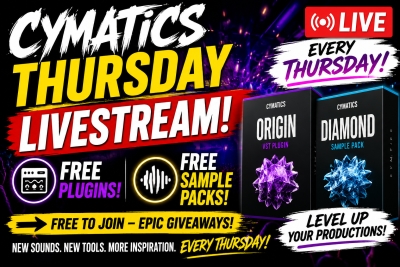
Cymatics’ Thursday Live Stream: Get FREE Plugins & FREE Sample Packs
If you’re a music producer, beatmaker, songwriter, or sound designer, there’s one weekly event you’ll want to keep on your radar: the Cymatics Thursday livestream. Every Thursday, Cymatics brings producers together for a live experience packed with music production content and, most importantly, opportunities to get FREE plugins and FREE sample packs.
For producers constantly looking for new sounds, creative tools, and inspiration, free production resources can make a huge difference. Instead of spending hundreds of dollars building your plugin and sample library, you can discover new sounds and tools while tuning into the Cymatics livestream.
The best part? You don’t have to wait for a major sale or special holiday promotion. Thursday is the day to show up, tune in, and see what free music production resources Cymatics has available.
Whether you make hip-hop, trap, EDM, pop, R&B, cinematic music, or experimental sounds, the Cymatics Thursday livestream is worth checking out.
Why Producers Should Watch the Cymatics Thursday Livestream
The modern music producer needs more than a DAW and a few instruments. A strong production workflow often depends on having access to high-quality samples, creative plugins, presets, loops, and other sound-design tools.
That’s where Cymatics stands out.
Cymatics has built a reputation around providing producers with sound libraries and production resources designed to help musicians create faster. The Thursday livestream adds another exciting opportunity for producers to discover free plugins and free sample packs.
Instead of simply downloading another random sound pack online, you can make the livestream part of your weekly production routine.
Think of it as a weekly appointment for discovering new tools.
You can tune in, explore what’s being offered, learn more about music production, and potentially walk away with resources you can immediately use in your next beat or track.
What Can You Get for Free From Cymatics?
One of the biggest reasons to watch the Cymatics Thursday livestream is the possibility of getting free plugins and sample packs.
For producers, both can be extremely valuable.
Plugins can transform the way you create music. Whether you’re looking for effects, processing tools, creative instruments, or other production utilities, adding a new plugin to your collection can introduce completely new possibilities.
Sample packs are equally important. A great collection of drums, melodies, loops, one-shots, textures, and other sounds can help you overcome creative blocks and build ideas much faster.
The opportunity to receive these resources for free makes the Thursday livestream especially appealing to producers who are building their libraries without wanting to constantly spend money.
And because the livestream happens every Thursday, you have a recurring opportunity to check in and discover what Cymatics has available.
Free Plugins Can Upgrade Your Music Production Workflow
Every producer eventually reaches the point where their existing plugin collection starts feeling repetitive.
You might have your favorite compressor, EQ, reverb, delay, synthesizer, and distortion plugin—but eventually, you want something different.
That’s one reason free plugins can be so exciting.
A new plugin can encourage you to experiment with effects and techniques you wouldn’t normally try. Even if it doesn’t immediately become a permanent part of your workflow, it can inspire a completely different approach to sound design or mixing.
For newer producers, free plugins are particularly useful because building a professional production setup can become expensive quickly.
Rather than buying every plugin you see, you can explore free resources and learn what types of tools actually benefit your workflow.
The Cymatics Thursday livestream gives producers another place to discover those opportunities while staying connected to the production community.
Free Sample Packs Mean More Sounds for Your Beats
Samples are the foundation of countless modern music productions.
A producer can start with a single drum loop, vocal sample, melody, bass sound, or atmospheric texture and turn it into an entire track.
That’s why free sample packs are so valuable.
A well-designed sample pack can give you instant inspiration when you’re staring at an empty DAW session. Instead of spending 30 minutes searching for the right kick or snare, you can open a curated library and start experimenting.
Cymatics is known for creating resources aimed at modern producers, making its free sample offerings particularly interesting for beatmakers and electronic music creators.
Free samples can also be useful for learning. By studying how professional samples are designed and then manipulating them inside your DAW, you can develop a better understanding of rhythm, sound selection, arrangement, processing, and production.
In other words, a free sample pack isn’t just a collection of sounds—it can become a source of creative ideas.
Why Thursday Should Become Part of Your Production Routine
The biggest mistake producers can make is treating inspiration as something they have to wait for.
Instead, create routines that consistently put you in contact with new ideas.
That’s why the Cymatics Thursday livestream can be a useful weekly habit.
Every Thursday, make time to join the livestream and see what’s happening. You might discover a plugin you’ve never used before. You might find a sample pack that sparks the idea for your next beat. Or you might simply get inspired by seeing other producers engaged with music creation.
Making this a weekly routine also helps you stay aware of new production resources.
Rather than randomly searching the internet for free plugins and samples, you have a specific day when you can check in with Cymatics.
For producers who are serious about improving their workflow, that consistency can be valuable.
How Free Production Resources Can Inspire Creativity
Free doesn’t mean creatively limited.
In fact, restrictions can sometimes make producers more creative.
Imagine opening a new sample pack and deciding that you have to create an entire beat using only sounds from that library. Suddenly, you have a challenge.
Maybe the drums aren’t what you normally use. Maybe there’s a strange vocal texture you wouldn’t normally touch. Maybe the melodies inspire you to experiment with a genre outside your comfort zone.
Those limitations can lead to unexpected results.
The same applies to plugins. A new effect can make you approach a familiar sound differently. A new processing tool might inspire an unusual transition, texture, bass sound, or vocal effect.
That’s one of the biggest benefits of keeping your production toolkit fresh.
The Cymatics Thursday livestream gives you another opportunity to introduce new resources into that creative process.
Who Should Watch the Cymatics Thursday Livestream?
The Thursday livestream isn’t only for experienced producers.
Beginners can benefit from discovering free tools and sample packs while building their first production setup. Intermediate producers can use new resources to refresh their sound libraries. More experienced producers can experiment with unfamiliar tools and find new ways to approach their productions.
Beatmakers, electronic producers, vocal producers, songwriters, DJs, and sound designers can all potentially find value in expanding their creative toolkit.
If you spend time inside a DAW creating music, the livestream is worth adding to your weekly schedule.
It’s particularly useful for producers who want to explore free music production plugins and free sample packs without constantly buying new products.
Don’t Miss the Thursday Livestream
The main takeaway is simple: if you’re a producer, Thursday is a day worth remembering.
Cymatics’ live stream gives music creators an opportunity to connect with the brand and discover FREE plugins and FREE sample packs.
That alone makes it worth checking out.
Your next favorite production tool could be waiting for you. The next sample pack you download could become the starting point for your next hit. And a single new plugin could completely change the way you approach your sound.
Instead of wondering what free resources might be available, make it a habit to show up and find out.
Set a reminder. Open your DAW afterward. Download the resources that interest you. Then put them to work.
The best way to find out what Cymatics has planned is to join the Thursday livestream.
Make Cymatics Thursday Part of Your Weekly Workflow
Music production is an endless process of learning, experimenting, and discovering new sounds.
You don’t need to spend a fortune every week to keep that process exciting.
Free plugins can give you new creative options. Free sample packs can refresh your sound library. And a weekly livestream can give you a reason to step away from the same old production routine and explore something new.
That’s what makes the Cymatics Thursday livestream such an exciting opportunity for producers.
If you’re serious about making beats, producing songs, designing sounds, or simply becoming a better music creator, don’t overlook the value of free resources.
Join the Cymatics Thursday livestream, discover the FREE plugins and FREE sample packs available, and see what you can add to your production arsenal this week.
Your next track could start with something you discover on Thursday.
UK Government Announces 20% Business Rates Relief for Music Venues from 2027
Written by Sounds Space
UK Government Announces 20% Business Rates Relief for Music Venues: A Lifeline for England's Live Entertainment Industry
The UK government has unveiled a significant boost for England's live entertainment sector by announcing a 20% reduction in business rates for eligible music venues, pubs, and clubs from April 2027. The measure is designed to ease the financial burden on venues that have struggled with rising operating costs, inflation, and changing consumer habits in recent years.
The announcement has been widely welcomed by venue operators, artists, promoters, and industry organizations, many of whom have long called for greater government support to preserve the UK's vibrant live music ecosystem. As grassroots venues continue to serve as the foundation for emerging talent, the new business rates relief could play a crucial role in safeguarding the future of live music across England.
A Major Financial Boost for Music Venues
Business rates have long been one of the largest fixed costs facing venue owners. Combined with increasing energy prices, staffing expenses, rent, insurance, and licensing costs, many independent venues have struggled to remain financially sustainable.
The government's decision to introduce a 20% business rates reduction aims to provide much-needed financial relief for thousands of qualifying venues. The policy is expected to free up funds that operators can reinvest into live performances, venue improvements, staffing, artist bookings, and audience experiences.
For many independent venues operating on tight margins, even a modest reduction in overhead costs can make the difference between remaining open or permanently closing their doors.
Why the Live Music Industry Needed Support
The UK's live entertainment industry has faced numerous challenges over the past several years.
Although audiences have returned to concerts and festivals following the pandemic, many venues continue to battle higher operating expenses, inflation, and changing consumer spending habits. Rising utility bills, increased supplier costs, and higher wages have significantly reduced profit margins across the sector.
Independent venues have been particularly vulnerable because they often lack the financial reserves available to larger arena operators and corporate entertainment groups.
Industry organizations have repeatedly warned that without additional support, many grassroots music venues risk closure, reducing opportunities for emerging artists and weakening local cultural communities.
Grassroots Music Venues Benefit the Most
Grassroots venues are widely regarded as the backbone of the UK music industry.
Many internationally successful artists began their careers performing in small clubs and independent venues before reaching global audiences. These intimate spaces provide musicians with opportunities to develop their live performances, build fan bases, and gain industry recognition.
The new business rates relief is expected to benefit many of these venues by helping owners invest in better sound systems, venue maintenance, marketing initiatives, and artist programming.
Protecting grassroots venues also helps preserve local music scenes, supports creative communities, and strengthens regional economies.
Economic Impact Beyond Live Entertainment
The benefits of supporting live music venues extend well beyond the entertainment industry.
Music venues attract visitors who also spend money at nearby restaurants, hotels, pubs, transport services, and retail businesses. This wider economic activity contributes significantly to local economies across England.
A healthier live music sector can generate increased tourism, create employment opportunities, and encourage investment in city centres and regional communities.
By reducing business costs for venues, the government hopes to stimulate broader economic growth while maintaining the UK's reputation as one of the world's leading destinations for live entertainment.
Support for Pubs and Clubs
The business rates reduction will not only benefit dedicated music venues but also pubs and clubs that regularly host live performances.
Many pubs serve as important cultural spaces where local artists perform and audiences discover new music. Smaller clubs also play a vital role in supporting DJs, electronic music, independent bands, comedy events, and community entertainment.
Lower operating costs could encourage more venues to expand their live event schedules, providing additional performance opportunities for artists while increasing entertainment options for local communities.
Industry Leaders Welcome the Announcement
The announcement has been positively received by many stakeholders across the music industry.
Venue owners have described the relief as an important step toward improving financial sustainability, while promoters believe lower costs could help encourage more live events throughout the year.
Artists and music advocates also recognize that healthier venues create more opportunities for touring musicians, particularly emerging acts seeking to establish their careers.
However, many industry representatives continue to argue that additional long-term measures may still be necessary to fully address the financial pressures facing the live entertainment sector.
Challenges Still Facing the Industry
While the business rates reduction represents welcome news, it does not solve every challenge confronting music venues.
Many operators continue to face rising insurance premiums, increased production costs, talent fees, security requirements, and changing audience expectations.
Competition from streaming platforms, home entertainment, and large-scale festivals has also altered consumer behaviour, making it increasingly important for smaller venues to offer unique live experiences.
Some industry experts believe continued collaboration between government, local authorities, venue operators, and music organizations will be essential to ensure long-term sustainability.
Supporting Emerging Artists Through Venue Stability
A thriving venue network is essential for artist development.
Live performances remain one of the most effective ways for musicians to connect with audiences, improve their stagecraft, and generate income beyond streaming platforms.
Independent venues often provide the first opportunities for unsigned artists to perform professionally, making them an indispensable part of the music industry's talent pipeline.
Financial stability for venues ultimately benefits artists by preserving performance opportunities and strengthening the UK's creative ecosystem.
A Positive Signal for the UK's Creative Economy
The government's latest announcement also reflects growing recognition of the economic and cultural value of the creative industries.
Music contributes billions of pounds annually to the UK economy through concerts, festivals, tourism, exports, publishing, recording, and licensing activities.
Supporting live entertainment infrastructure demonstrates an understanding that music is not only a cultural asset but also an important driver of economic growth, employment, and international influence.
The policy may also encourage future investment across the broader entertainment and hospitality sectors.
Looking Ahead to April 2027
With implementation scheduled for April 2027, venue operators now have greater certainty when planning future budgets, programming, and investment strategies.
Many businesses are expected to use the financial savings to improve customer experiences, upgrade facilities, expand event calendars, and strengthen community engagement.
Although challenges remain, the announcement offers renewed optimism for an industry that has shown remarkable resilience despite years of financial uncertainty.
Conclusion
The UK government's decision to introduce a 20% business rates relief for music venues, pubs, and clubs marks an important milestone in supporting England's live entertainment industry. By easing one of the sector's largest operating expenses, the initiative aims to protect grassroots venues, strengthen local economies, and create new opportunities for artists and audiences alike.
As the live music landscape continues to evolve, targeted government support such as this can help ensure that independent venues remain vibrant cultural hubs where new talent flourishes and communities come together through the power of live performance. If successfully implemented, the business rates relief could become a key step toward building a more resilient, sustainable, and thriving future for England's music industry.
MUSEXPO 2026 Unveils Global Conference Program Focused on AI, Streaming & Music Technology
Written by Sounds Space
MUSEXPO 2026 Unveils a Future-Focused Global Conference Program: AI, Streaming, Publishing, and Music Technology Take Center Stage
The global music industry is entering one of its most transformative eras, and MUSEXPO 2026 is preparing to lead the conversation. Recognized as one of the world's premier music business conferences, MUSEXPO has officially unveiled its highly anticipated global conference program, bringing together industry leaders, artists, executives, entrepreneurs, and innovators to explore the trends redefining the future of music.
With an agenda centered around artificial intelligence (AI), music streaming, music publishing, artist development, music technology, and the evolving business of entertainment, MUSEXPO 2026 aims to provide valuable insights into the opportunities and challenges shaping today's global music ecosystem.
As technological innovation continues to influence every aspect of music creation, distribution, monetization, and fan engagement, this year's conference promises to deliver meaningful discussions that will help professionals navigate an increasingly digital and competitive landscape.
MUSEXPO 2026 Continues Its Legacy as a Global Music Industry Hub
For more than two decades, MUSEXPO has established itself as one of the most influential international conferences dedicated to the music business. The event serves as a meeting ground where record labels, publishers, streaming services, managers, producers, investors, technology companies, and emerging artists connect to exchange ideas and build long-term partnerships.
Unlike traditional music festivals, MUSEXPO places a strong emphasis on business strategy, innovation, networking, and education. Its carefully curated panels and keynote sessions provide attendees with practical knowledge while offering exclusive access to some of the industry's most respected executives and thought leaders.
The 2026 edition builds on this reputation by focusing on the technologies and business models that are expected to shape the next decade of music.
Artificial Intelligence Takes Center Stage
Artificial intelligence has become one of the most discussed topics across the entertainment industry, and MUSEXPO 2026 reflects that growing importance.
Conference sessions will examine how AI is transforming music creation, production, marketing, audience analytics, licensing, and rights management. Industry experts are expected to discuss both the opportunities AI presents and the ethical questions surrounding copyright, ownership, transparency, and artist protection.
As AI-powered tools become increasingly accessible, musicians are finding new ways to enhance creativity, automate production workflows, and personalize fan experiences. However, the rapid adoption of AI has also raised significant concerns about unauthorized use of copyrighted material and the need for updated legal frameworks.
These conversations are expected to be among the most closely watched sessions at the conference.
Streaming Platforms Continue to Shape the Music Economy
Streaming remains the dominant force in global music consumption, making it another major focus of the MUSEXPO 2026 program.
Industry leaders will explore how streaming platforms continue to evolve through improved recommendation algorithms, higher-quality audio experiences, direct-to-fan engagement tools, and new monetization opportunities for creators.
Discussions are also expected to address important questions surrounding royalty distribution, independent artist visibility, playlist influence, subscription growth, and emerging global markets.
As competition among streaming services intensifies, understanding changing consumer behavior has become essential for labels, publishers, artists, and technology companies alike.
Music Publishing Enters a New Digital Era
Music publishing has become increasingly complex as digital platforms expand worldwide.
MUSEXPO 2026 will feature extensive conversations about publishing administration, global licensing, synchronization opportunities, metadata management, royalty collection, and intellectual property protection.
Publishing professionals are expected to share strategies for maximizing song value across streaming platforms, television, film, gaming, advertising, and social media.
With international markets growing rapidly, publishers are seeking more efficient systems to ensure songwriters receive accurate compensation while maintaining ownership of their creative works.
The conference aims to provide attendees with practical insights into navigating this rapidly evolving publishing environment.
Artist Development Remains Essential Despite Technological Change
Although technology continues to reshape the music industry, artist development remains one of its most valuable investments.
MUSEXPO 2026 emphasizes that successful careers are still built through strategic planning, branding, audience engagement, performance development, and long-term career management.
Panels will examine how independent artists can build sustainable careers without relying exclusively on traditional record label models.
Topics such as social media strategy, fan community building, live performance growth, digital marketing, global branding, mental health, and career longevity are expected to feature prominently throughout the conference.
Industry professionals increasingly recognize that while viral success can create short-term visibility, sustainable careers require careful planning and continuous professional development.
Music Technology Drives Industry Innovation
Music technology has expanded far beyond recording software and digital production tools.
Today's music ecosystem includes blockchain-based rights management, immersive audio experiences, virtual concerts, creator economy platforms, cloud collaboration, AI-assisted songwriting, fan analytics, and interactive entertainment technologies.
MUSEXPO 2026 will showcase companies developing innovative solutions that improve efficiency, increase transparency, and create new revenue opportunities across the music value chain.
Technology startups will have opportunities to present emerging products while investors and executives explore partnerships that could shape the industry's future.
The conference highlights the growing importance of collaboration between technology companies and traditional music businesses.
Networking Opportunities Create Lasting Business Relationships
One of MUSEXPO's greatest strengths has always been its networking environment.
The conference attracts executives from record labels, publishing companies, management firms, digital platforms, investment groups, technology startups, and media organizations from around the world.
These face-to-face interactions often lead to licensing agreements, publishing deals, distribution partnerships, investment opportunities, management contracts, and international collaborations.
For emerging artists and entrepreneurs, MUSEXPO offers direct access to decision-makers who influence the global music marketplace.
The event's networking sessions continue to be considered among its most valuable features.
Global Collaboration Defines the Future of Music
As music consumption becomes increasingly international, collaboration across borders has never been more important.
MUSEXPO 2026 reflects this reality by bringing together professionals representing multiple countries, cultures, and business sectors.
International partnerships are helping artists reach new audiences while enabling companies to expand into previously untapped markets.
Cross-border licensing, multilingual marketing campaigns, international touring strategies, and regional streaming growth are expected to feature throughout the conference discussions.
The global nature of today's music business requires professionals to understand both local markets and worldwide industry trends.
Why MUSEXPO 2026 Matters for the Entire Music Industry
The announcement of MUSEXPO 2026's conference program comes at a pivotal moment for the music industry.
Artificial intelligence continues to redefine creative workflows, streaming services remain the primary source of music consumption, publishing models are evolving, and technological innovation is opening entirely new business opportunities.
Rather than viewing these developments as isolated trends, MUSEXPO positions them as interconnected forces driving the industry's future.
By bringing together experts from every corner of the music ecosystem, the conference encourages collaboration, innovation, and informed decision-making.
Whether attendees represent major record labels, independent artists, technology startups, publishing companies, investment firms, or digital platforms, the event provides valuable insights into the rapidly changing music business.
As the global music industry continues to embrace digital transformation, MUSEXPO 2026 stands out as one of the year's most significant gatherings for professionals seeking to understand emerging trends, build strategic partnerships, and help shape the next generation of music innovation.
Madonna's Confessions II Debuts at No. 1 on Billboard 200
Written by Sounds Space
Madonna Makes History: Confessions II Becomes Her 10th No. 1 Album on the Billboard 200
Introduction
Madonna has once again proven why she remains one of the most influential artists in music history. In July 2026, the Queen of Pop achieved another incredible milestone as her latest studio album, Confessions II, debuted at No. 1 on the Billboard 200, marking her 10th chart-topping album in the United States.
Even more remarkably, this achievement makes Madonna the first artist to earn a No. 1 album across the 1980s, 1990s, 2000s, 2010s, and 2020s, a feat that highlights her unmatched longevity and ability to reinvent herself generation after generation.
With over four decades of chart success, Madonna continues to demonstrate that innovation, creativity, and fearless evolution are the keys to staying relevant in an ever-changing music industry.
In this article, we'll explore Madonna's latest achievement, what Confessions II represents, its commercial impact, and why this historic milestone further cements her legacy as one of the greatest recording artists of all time.
Madonna's Historic Billboard Achievement
When Confessions II debuted at No. 1 on the Billboard 200, it wasn't simply another successful album launch—it was a defining moment in pop music history.
This marks Madonna's 10th No. 1 album, joining an elite club of artists with double-digit chart-toppers.
Her No. 1 albums now span multiple generations, showcasing a career unlike almost any other artist:
- Like a Virgin (1984)
- True Blue (1986)
- Like a Prayer (1989)
- Music (2000)
- American Life (2003)
- Confessions on a Dance Floor (2005)
- Hard Candy (2008)
- MDNA (2012)
- Madame X (2019)
- Confessions II (2026)
The most remarkable aspect is not simply the number of No. 1 albums—but the incredible time span over which they've occurred.
Very few artists maintain chart relevance for over forty years, and even fewer continue reaching the very top of the industry's most competitive album chart.
The First Artist With No. 1 Albums Across Four Different Decades—and the 2020s
Billboard confirmed that Madonna is now the first act to score a No. 1 album during the 1980s, 1990s, 2000s, 2010s, and 2020s.
This distinction separates her from many legendary artists whose commercial peaks were concentrated in one or two eras.
The music industry has transformed dramatically during Madonna's career:
- Vinyl era
- Cassette boom
- Compact discs
- Digital downloads
- Streaming services
- Social media-driven music discovery
- AI-assisted music production
Yet Madonna has successfully adapted to every major technological shift.
Her continued ability to connect with audiences demonstrates that true artistry can transcend changing formats and industry trends.
What Is Confessions II?
Confessions II serves as both a spiritual successor and modern evolution of Madonna's critically acclaimed 2005 album, Confessions on a Dance Floor.
The original album became one of Madonna's defining works, producing massive international hits while embracing electronic dance music during its global resurgence.
Two decades later, Confessions II revisits those dance-pop roots while incorporating contemporary production styles including:
- Modern house music
- Melodic techno
- Synth-pop
- Nu-disco
- Electronic dance music
- AI-assisted production techniques
- Modern vocal processing
Rather than simply recreating the past, Madonna updates her signature sound for today's audience while preserving the infectious energy that made the original album so beloved.
Fans Welcome the Return of Dance-Pop Madonna
Longtime Madonna fans have praised Confessions II for returning to the dancefloor.
Throughout her career, Madonna has continually reinvented herself:
- Dance-pop icon
- Rock-inspired performer
- Electronica pioneer
- Spiritual artist
- Experimental producer
- Political commentator
- Latin-inspired performer
This willingness to evolve has kept her career fresh for decades.
Many listeners have described Confessions II as a celebration of Madonna's dance music legacy while embracing modern club culture.
For fans who grew up with Hung Up, Sorry, and Jump, the album delivers a sense of nostalgia without feeling outdated.
Billboard Success in the Streaming Era
Reaching No. 1 today is arguably more challenging than ever before.
Unlike previous decades, album success now depends on several factors simultaneously:
- Physical album sales
- Vinyl editions
- Digital downloads
- Audio streaming
- Video streaming
- Deluxe editions
- Fan engagement
- Social media promotion
Artists compete not only with other new releases but also with an enormous catalogue of music available instantly through streaming platforms.
For Madonna to debut at No. 1 in 2026 demonstrates the enduring strength of her fanbase while also attracting new listeners discovering her music for the first time.
Why Madonna's Career Longevity Is Unmatched
Longevity in music is extraordinarily rare.
Many artists enjoy one successful decade before fading from mainstream attention.
Madonna has remained culturally significant for over 40 years because she consistently reinvents herself.
Several factors explain her remarkable career:
Constant Reinvention
Every era introduces a new visual style, musical direction, and creative identity.
Creative Risk-Taking
Madonna has never been afraid to experiment with genres that challenge audience expectations.
Visual Innovation
Her music videos, live performances, and fashion choices have repeatedly shaped pop culture.
Business Intelligence
Madonna has consistently embraced emerging technologies before many of her peers.
Global Appeal
Her audience spans multiple generations and continents, giving her an international fanbase few artists can match.
How Confessions II Reflects Today's Music Industry
The success of Confessions II also reflects broader trends shaping modern music.
Dance music continues to dominate festivals, streaming playlists, and clubs worldwide.
Electronic music has evolved significantly since Madonna first embraced it during the early 2000s.
Today's producers blend:
- House
- Afro-house
- Tech house
- Progressive house
- Melodic techno
- UK garage
- Synthwave
- Hyperpop
Madonna's latest project successfully bridges classic dance-pop with contemporary production, making it accessible to both longtime fans and younger audiences.
Critical Reception
Early reviews have praised several aspects of Confessions II:
- High-energy production
- Strong songwriting
- Memorable hooks
- Polished vocals
- Dancefloor-ready beats
- Nostalgic references
- Modern electronic influences
Critics have noted that the album feels less like a nostalgia project and more like a confident continuation of Madonna's creative evolution.
Instead of repeating the past, she expands upon it.
Commercial Impact
A No. 1 debut carries significant commercial implications.
Success on the Billboard 200 often leads to:
- Increased streaming numbers
- Higher vinyl sales
- Global media coverage
- Radio exposure
- Playlist placements
- Tour demand
- Merchandise sales
The achievement also introduces Madonna's catalogue to younger listeners exploring her music after hearing about Confessions II.
This renewed attention frequently boosts streams of classic albums such as:
- Like a Prayer
- Ray of Light
- Music
- Confessions on a Dance Floor
Madonna's Influence on Modern Pop Stars
Nearly every major female pop artist working today has been influenced by Madonna's career.
Artists frequently cite her as an inspiration for:
- Reinvention
- Artistic freedom
- Live performances
- Music videos
- Fashion
- Female empowerment
- Business strategy
Her willingness to challenge industry norms opened doors for future generations of performers.
The success of Confessions II reinforces her continued relevance in an industry she helped shape.
The Role of Nostalgia in Modern Music
Nostalgia has become one of the most powerful forces in entertainment.
Audiences increasingly embrace:
- Anniversary releases
- Deluxe editions
- Vinyl reissues
- Legacy tours
- Sequels
- Musical callbacks
Confessions II benefits from this trend while avoiding its biggest pitfall—relying solely on nostalgia.
Instead, Madonna delivers fresh music inspired by one of her most beloved eras.
That balance has resonated with listeners around the world.
What This Means for the Future
With another No. 1 album under her belt, speculation has already begun regarding Madonna's next moves.
Industry observers expect:
- A global concert tour
- Deluxe album editions
- High-profile collaborations
- Additional music videos
- Festival appearances
- Exclusive streaming content
Given Madonna's history of surprising audiences, few would bet against another reinvention in the years ahead.
Why This Achievement Matters Beyond Madonna
Madonna's success represents more than an individual accomplishment.
It challenges the common belief that artists have a limited commercial lifespan.
Her career demonstrates that:
- Reinvention matters.
- Great songwriting remains timeless.
- Loyal fan communities have tremendous power.
- Experience can coexist with innovation.
- Age does not define artistic relevance.
For emerging artists, Confessions II serves as an inspiring reminder that longevity is built through evolution rather than repetition.
Final Thoughts
Madonna's 10th No. 1 album on the Billboard 200 is more than another chart victory—it's a landmark achievement that underscores one of the most extraordinary careers in music history.
With Confessions II, she has once again demonstrated her ability to evolve while remaining unmistakably herself. Becoming the first artist to achieve a No. 1 album across the 1980s, 1990s, 2000s, 2010s, and 2020s is a testament to her resilience, creativity, and enduring connection with audiences around the world.
In an industry defined by rapid change, Madonna continues to set the standard for reinvention. Whether through groundbreaking visuals, dancefloor anthems, or fearless artistic choices, she has consistently shaped popular culture for more than four decades.
As Confessions II climbs the charts and introduces her music to yet another generation, one thing is clear: Madonna's legacy is still being written. If this latest milestone is any indication, the Queen of Pop remains not just a legendary figure from music history, but a powerful force shaping its future as well.
50 Best FREE VST Plugins in 2026 | Top Free Synths, Effects & Music Production Tools
Written by Sounds Space
The 50 Best FREE VST Plugins in 2026
1. Vital
Category: Synthesizer
Vital continues to dominate the free synth market in 2026.
It's a professional wavetable synthesizer that rivals Serum in many areas while remaining completely free.
Features include:
- Three wavetable oscillators
- Spectral morphing
- Advanced modulation
- Visual modulation system
- Drag-and-drop workflow
- High-quality filters
- Massive preset community
Perfect for:
- EDM
- House
- Dubstep
- Drum & Bass
- Trap
- Future Bass
- Pop
Rating: ★★★★★
2. Surge XT
Category: Synthesizer
Surge XT is one of the most powerful open-source synths available today.
It includes:
- Over 2,000 presets
- Multiple synthesis engines
- FM synthesis
- Wavetable synthesis
- Analog modeling
- Physical modeling
- Hundreds of modulation options
Professional sound designers regularly use Surge XT for cinematic scoring and electronic music.
Rating: ★★★★★
3. Dexed
Category: FM Synth
If you love classic 1980s sounds, Dexed is essential.
Based on the legendary Yamaha DX7, it perfectly recreates those iconic FM tones heard in:
- Synthwave
- Pop
- House
- R&B
- Ambient
Thousands of classic DX7 patches are available online.
Rating: ★★★★★
4. LABS by Spitfire Audio
Category: Sample Instrument
LABS has become one of the most respected free instrument collections ever released.
It includes beautifully recorded:
- Strings
- Choirs
- Pianos
- Soft pads
- Electric pianos
- Guitars
- Brass
- Experimental instruments
Perfect for:
- Film scoring
- Lo-fi
- Ambient
- Pop
- Indie music
Rating: ★★★★★
5. BBC Symphony Orchestra Discover
Category: Orchestra
If you produce cinematic music, BBC Symphony Orchestra Discover is almost unbelievable for a free plugin.
It includes:
- Strings
- Brass
- Woodwinds
- Percussion
All professionally recorded by Spitfire Audio.
Perfect for:
- Movie trailers
- Film scores
- Video games
- Documentary music
Rating: ★★★★★
6. Valhalla Supermassive
Category: Reverb & Delay
One of the greatest free effects plugins ever created.
It produces:
- Huge reverbs
- Ethereal delays
- Endless atmospheres
- Ambient textures
Ideal for:
- Vocals
- Pads
- Guitars
- Sound design
Rating: ★★★★★
7. TDR Nova
Category: Dynamic EQ
TDR Nova combines:
- Parametric EQ
- Dynamic EQ
- Compressor
This makes it incredibly versatile for:
- Mixing vocals
- Mastering
- Removing harsh frequencies
- Controlling resonances
Many mastering engineers still use it daily.
Rating: ★★★★★
8. Melda MFreeFXBundle
Category: Multi-Effects
Instead of one plugin, this bundle includes over 35 professional effects.
Highlights include:
- EQ
- Compressor
- Phaser
- Limiter
- Delay
- Analyzer
- Stereo tools
- Auto-pan
An essential download for every producer.
Rating: ★★★★★
9. OTT (Xfer Records)
Category: Multiband Compression
OTT has become a modern production staple.
Originally inspired by Ableton's famous preset, this free plugin delivers:
- Aggressive compression
- Brightness
- Energy
- Loudness
Perfect for EDM.
Use carefully—it can dramatically reshape your mix.
Rating: ★★★★★
10. Youlean Loudness Meter 2 Free
Category: Metering
One of the best loudness meters available.
Supports:
- LUFS
- True Peak
- Streaming standards
- Mastering analysis
Essential for Spotify, Apple Music, and YouTube mastering.
Rating: ★★★★★
11. Kilohearts Essentials
Category: Effects Bundle
This excellent collection includes:
- Compressor
- Delay
- Distortion
- Gain
- Limiter
- Phaser
- Reverb
- Stereo
- Chorus
- Gate
Simple interfaces with excellent sound quality make these plugins ideal for beginners and professionals alike.
Rating: ★★★★★
12. ChowTape Model
Category: Tape Saturation
Want authentic analog warmth?
ChowTape recreates vintage tape machines with remarkable realism.
It can add:
- Warmth
- Compression
- Harmonic richness
- Vintage coloration
Perfect on:
- Drums
- Vocals
- Mix bus
- Master bus
Rating: ★★★★★
13. Voxengo SPAN
Category: Spectrum Analyzer
SPAN remains one of the industry's favorite frequency analyzers.
Features include:
- FFT spectrum analysis
- Mid/Side viewing
- Stereo analysis
- Peak monitoring
- RMS monitoring
A must-have mixing companion.
14. Fresh Air
Category: Exciter
Fresh Air quickly adds brightness to dull recordings.
Works exceptionally well on:
- Vocals
- Acoustic guitar
- Synths
- Piano
It delivers polished high-end without sounding harsh.
15. Analog Obsession Plugins
Category: Analog Effects
Analog Obsession offers dozens of excellent freeware plugins inspired by legendary analog hardware.
Popular choices include:
- Compressors
- EQs
- Saturation
- Preamps
- Console emulations
Ideal for vintage mixing workflows.
16. TAL-Reverb-4
Category: Reverb
A beautiful vintage-style algorithmic reverb that excels on:
- Synths
- Pads
- Vocals
- Snare drums
It produces lush spaces reminiscent of classic digital hardware reverbs.
17. TAL-Chorus-LX
Category: Chorus
Based on the famous Roland Juno chorus.
Adds:
- Width
- Warmth
- Vintage character
Perfect for synthwave, house, pop, and lo-fi.
18. Softube Saturation Knob
Category: Saturation
One knob.
Huge results.
This simple plugin adds analog warmth and punch to almost any source while remaining extremely CPU-efficient.
19. iZotope Vinyl
Category: Vinyl Emulator
One of the longest-running free plugins available.
Create an authentic vinyl character including:
- Dust
- Scratches
- Warp
- Mechanical noise
- Vintage filtering
Excellent for lo-fi production.
20. Pan Management Free
Category: Stereo Imaging
Pan management helps producers create wider mixes while maintaining mono compatibility.
Useful for:
- Pads
- Background vocals
- FX
- Synths
21. CamelCrusher
Category: Distortion
Despite its age, CamelCrusher remains a favorite.
It combines:
- Distortion
- Compression
- Filtering
Excellent on bass, drums, and aggressive synths.
22. HY-Delay Free
Category: Delay
A flexible digital delay with modulation options, ping-pong effects, and tempo synchronization.
Perfect for electronic music production.
23. OrilRiver
Category: Reverb
One of the smoothest freeware reverbs available.
Produces:
- Concert halls
- Rooms
- Plates
Suitable for orchestral productions as well as vocals.
24. MT Power Drum Kit 2
Category: Drum Instrument
A superb free acoustic drum plugin.
Includes:
- Realistic kits
- MIDI grooves
- Mixing controls
- Professional drum sounds
Perfect for rock, pop and indie productions.
25. Synth1
Category: Virtual Analog Synth
Even after many years, Synth1 remains one of the most downloaded free synth plugins ever made.
Its lightweight CPU usage and huge preset library make it a fantastic choice for:
- Trance
- House
- Techno
- Eurodance
- Progressive
Thousands of free presets are available online, ensuring endless creative possibilities.
Rating: ★★★★★
26. Zebralette 3
Category: Wavetable Synthesizer
Developed by u-he, Zebralette 3 is the free version of the renowned Zebra synthesizer. It offers a single oscillator with powerful wavetable editing capabilities, making it an excellent introduction to sound design.
Best For:
- Cinematic music
- Ambient
- Electronic
- Techno
- House
Why Download It?
Despite being free, Zebralette delivers premium-quality sound and an intuitive workflow that appeals to both beginners and professionals.
27. Helm
Category: Synthesizer
Helm remains one of the easiest free synths to learn. Its clean interface, modulation system, and excellent presets make it ideal for producers just starting out.
Features
- Two oscillators
- Step sequencer
- Arpeggiator
- Polyphonic modulation
- Cross-platform support
28. Pendulate
Category: Chaos Synth
Pendulate introduces chaotic oscillation into synthesis, creating unpredictable textures and evolving sounds.
Perfect for:
- Film scoring
- Horror music
- Sound effects
- Experimental electronic music
29. Tyrell N6
Category: Analog Synth
Tyrell N6 has become a classic freeware analog synthesizer.
It excels at producing:
- Vintage basses
- Leads
- Pads
- Analog plucks
Its warm sound rivals many paid plugins.
30. OB-Xd
Category: Analog Emulation
Inspired by the legendary Oberheim OB-X synthesizer, OB-Xd captures the lush analog sound that defined countless records.
Excellent for:
- Synthwave
- Pop
- Disco
- Funk
- House
31. Klanghelm MJUC Jr.
Category: Compressor
A beautifully designed variable-mu compressor.
Ideal for:
- Vocals
- Bass
- Mix Bus
- Acoustic instruments
MJUC Jr. adds warmth while maintaining transparency.
32. LoudMax
Category: Limiter
LoudMax is one of the simplest mastering limiters available.
Advantages include:
- Low CPU usage
- Transparent limiting
- Easy operation
- Excellent mastering results
Perfect for home producers.
33. FerricTDS
Category: Tape Dynamics
FerricTDS simulates analog tape recording with impressive realism.
Adds:
- Tape compression
- Harmonic coloration
- Analog warmth
- Dynamic enhancement
34. SlickEQ
Category: Equalizer
Tokyo Dawn Labs' SlickEQ is loved by mastering engineers.
Features:
- Musical EQ curves
- Analog-style saturation
- Multiple output stages
- Excellent transparency
35. Frontier
Category: Limiter
Frontier is a free mastering limiter from D16 Group.
It's capable of delivering surprisingly loud masters while remaining clean.
Great for:
- EDM
- Pop
- Hip-Hop
- Rock
36. Ample Guitar M Lite II
Category: Acoustic Guitar
One of the finest free acoustic guitar instruments available.
Includes:
- Fingerstyle articulations
- Strumming
- Natural recordings
- High realism
Excellent for singer-songwriters.
37. Decent Sampler
Category: Sampler
Decent Sampler has exploded in popularity thanks to its growing ecosystem of free sample libraries.
You can download:
- Pianos
- Choirs
- Strings
- Percussion
- Ethnic instruments
- Synth collections
Thousands of free expansions are available from independent developers.
38. Pianobook Libraries
Category: Instruments
Pianobook isn't a plugin itself but a massive community offering free instruments compatible with Decent Sampler and other platforms.
You'll find:
- Rare pianos
- Vintage synths
- Toy instruments
- Choirs
- Experimental sounds
39. BPB Saturator
Category: Saturation
Bedroom Producers Blog created one of the most versatile free saturation plugins available.
Offers:
- Tube saturation
- Tape saturation
- Solid-state coloration
Useful on virtually every instrument.
40. GClip
Category: Clipper
Instead of limiting, GClip uses clipping to increase loudness while preserving punch.
Perfect for:
- Drums
- EDM
- Hip-Hop
- Trap
41. Graillon 3 Free
Category: Pitch Correction
Graillon Free provides:
- Pitch shifting
- Vocal modulation
- Basic pitch correction
Ideal for demos and creative vocal effects.
42. MConvolutionEZ
Category: Convolution Reverb
This plugin loads impulse responses to recreate:
- Concert halls
- Churches
- Plates
- Real rooms
It delivers highly realistic reverbs.
43. Dragonfly Reverb
Category: Reverb
Dragonfly offers four excellent reverb plugins:
- Hall
- Room
- Plate
- Early Reflections
A fantastic alternative to many commercial reverbs.
44. Blue Cat's Free Amp
Category: Guitar Amp
A lightweight guitar amplifier simulator suitable for:
- Rock
- Blues
- Indie
- Pop
Perfect for beginners building a home studio.
45. Ignite Amps Emissary
Category: Guitar Amplifier
One of the best free high-gain guitar amp simulators ever released.
Perfect for:
- Metal
- Hard Rock
- Progressive Rock
It rivals many commercial amp simulators.
46. Chow Kick
Category: Drum Synth
Generate powerful electronic kick drums from scratch.
Ideal for:
- Techno
- House
- Hardstyle
- Drum & Bass
47. TDR Molotok
Category: Compressor
Molotok is a character compressor with multiple compression styles.
Excellent for adding punch to:
- Drums
- Bass
- Synths
- Mix bus
48. Ozone Imager 2
Category: Stereo Imaging
A professional stereo widener from iZotope.
It helps create wider mixes while maintaining mono compatibility.
Ideal for:
- Pads
- Synths
- Vocals
- Effects
49. Wider by Polyverse
Category: Stereo Width
Wider instantly expands mono sounds into spacious stereo images without introducing phase issues.
Extremely useful on:
- Synths
- Guitars
- Background vocals
50. Baby Comeback
Category: Delay
Developed by Baby Audio, Baby Comeback is a premium-quality free delay plugin featuring:
- Vintage delay modes
- Modern digital echoes
- Tape delay
- Ducking
- Sync options
An outstanding finishing touch to any plugin collection.
Best Free VST Plugins by Category
Best Free Synth
🥇 Vital
Best Analog Synth
🥇 OB-Xd
Best FM Synth
🥇 Dexed
Best Orchestra
🥇 BBC Symphony Orchestra Discover
Best Piano Collection
🥇 LABS
Best Compressor
🥇 TDR Nova
Best Reverb
🥇 Valhalla Supermassive
Best Delay
🥇 Baby Comeback
Best Saturation
🥇 Softube Saturation Knob
Best Limiter
🥇 LoudMax
Best Analyzer
🥇 Voxengo SPAN
Best Stereo Tool
🥇 Ozone Imager 2
Essential Free Plugin Bundle for Every Producer
If you're building your first plugin collection, these ten downloads should be at the top of your list:
- Vital
- Surge XT
- Valhalla Supermassive
- TDR Nova
- LABS
- BBC Symphony Orchestra Discover
- Voxengo SPAN
- OTT
- Youlean Loudness Meter 2
- Ozone Imager 2
Together, these plugins cover synthesis, orchestral sounds, mixing, mastering, metering, stereo imaging, and creative effects—forming a powerful toolkit without spending a penny.
Frequently Asked Questions (FAQ)
Are free VST plugins good enough for professional music production?
Yes. Many free plugins are used on commercially released tracks. Tools like Vital, Valhalla Supermassive, TDR Nova, Voxengo SPAN, and LABS are trusted by professionals worldwide.
Which DAWs support these free VST plugins?
Most plugins listed support VST2, VST3, AU, or standalone formats, making them compatible with:
- FL Studio
- Ableton Live
- Cubase
- Studio One
- Reaper
- Bitwig Studio
- Cakewalk
- Logic Pro (AU versions where available)
Always check each developer's website for operating system and format compatibility.
Are these plugins safe to download?
Yes, provided you download them directly from the official developer websites. Avoid unofficial mirrors or cracked software sites, which may contain malware or outdated versions.
What is the best free synthesizer in 2026?
Vital continues to be the top recommendation due to its exceptional sound quality, intuitive interface, extensive modulation capabilities, and active user community. Surge XT is another excellent choice for producers seeking advanced sound design options.
Can I release commercial music using free VST plugins?
Absolutely. Most free VST plugins permit commercial use, but it's always wise to review the developer's license agreement for any specific restrictions.
Final Thoughts
The world of free VST plugins has never been stronger. Today's developers are producing tools that rival premium software in sound quality, flexibility, and reliability. Whether you're producing EDM, hip-hop, orchestral scores, rock, pop, podcasts, or film soundtracks, you can build a professional-quality setup without spending anything on plugins.
Rather than downloading every plugin you find, focus on a curated collection that covers the essentials. Start with a versatile synthesizer like Vital, pair it with Surge XT for deeper sound design, use LABS and BBC Symphony Orchestra Discover for realistic instruments, and round out your toolkit with Valhalla Supermassive, TDR Nova, Voxengo SPAN, and Youlean Loudness Meter 2. As your skills grow, you can expand your library with specialized tools such as Pendulate for experimental textures, Ignite Amps Emissary for high-gain guitars, or Decent Sampler for its ever-growing ecosystem of free instruments.
By mastering a handful of high-quality plugins instead of chasing hundreds of downloads, you'll spend less time searching for tools and more time creating great music. With the 50 plugins featured in this guide, you'll have everything you need to write, mix, master, and release professional tracks in 2026.
More...
Music Industry Launches AI Labels for AI-Generated Songs
Written by Sounds Space
MUSIC INDUSTRY LAUNCHES AI LABELS FOR SONGS: A NEW ERA OF TRANSPARENCY IN MUSIC CREATION
THE MUSIC INDUSTRY TAKES A MAJOR STEP TOWARD AI TRANSPARENCY
Artificial intelligence has become one of the most transformative forces in modern music production. From AI-powered songwriting tools and vocal synthesis to automated mastering and music generation platforms, technology is changing how music is created, distributed, and consumed.
Now, the music industry is taking a significant step toward greater transparency. Several of the world's leading music organizations have announced a new industry-wide initiative designed to help listeners understand whether the music they are hearing was created by humans, artificial intelligence, or a combination of both.
The initiative introduces standardized labels that identify AI-generated and AI-assisted music, creating a clearer distinction between songs created primarily by artificial intelligence and those made by human artists using AI tools as part of their creative process.
The announcement marks one of the most important developments in the ongoing conversation surrounding artificial intelligence and music, with potential implications for artists, record labels, streaming platforms, rights holders, and listeners worldwide.
WHAT ARE THE NEW AI MUSIC LABELS?
At the center of the initiative are two standardized labels designed to provide transparency across the music ecosystem.
AI-GENERATED
The AI-Generated label applies to music where the core creative elements are created primarily by artificial intelligence.
This may include:
-
AI-generated vocals
-
AI-created melodies
-
AI-composed instrumental arrangements
-
AI-generated lyrics
-
Fully automated music production
In these cases, artificial intelligence plays the primary creative role in producing the final musical work.
AI-ASSISTED
The AI-Assisted label applies to music that is primarily created by humans but incorporates AI tools during the production process.
Examples include:
-
AI-assisted mixing and mastering
-
AI-powered audio restoration
-
AI-generated sound design elements
-
AI-assisted songwriting suggestions
-
Vocal enhancement tools
Under this classification, human creators remain responsible for the artistic direction and creative decisions while leveraging AI technology to improve workflow and efficiency.
The distinction is intended to help listeners understand the role artificial intelligence played in the creation of a song without discouraging innovation.
WHY THE MUSIC INDUSTRY INTRODUCED AI LABELS
The rapid rise of AI-generated music has created both excitement and concern throughout the industry.
In recent years, AI platforms have enabled users to generate complete songs within minutes. These systems can imitate musical styles, create realistic vocals, generate lyrics, and even produce tracks that sound remarkably similar to commercially released music.
While many creators view these tools as valuable resources, others worry about their impact on artistic authenticity, copyright protection, and the future of human creativity.
The introduction of AI labels aims to address several key challenges.
IMPROVING TRANSPARENCY
One of the biggest concerns among listeners is the inability to determine how a song was created.
Many consumers believe they have a right to know whether the music they are hearing was performed by a human artist or generated by artificial intelligence.
The new labels provide that transparency.
SUPPORTING HUMAN CREATIVITY
The initiative also seeks to protect and celebrate human artistic contributions.
Organizations behind the labeling system emphasize that technology should support creativity rather than replace it.
By clearly identifying human-created music, the industry hopes to preserve recognition for artists, songwriters, musicians, and producers.
BUILDING TRUST WITH LISTENERS
Transparency can strengthen trust between artists and audiences.
As AI-generated content becomes increasingly sophisticated, many listeners want reassurance that they understand what they are consuming.
The new labels help provide that clarity.
WHICH ORGANIZATIONS ARE SUPPORTING THE INITIATIVE?
The initiative has received support from many of the most influential organizations in the global music business.
Participants include:
-
Recording Industry Association of America (RIAA)
-
International Federation of the Phonographic Industry (IFPI)
-
Recording Academy (Grammys)
-
American Association of Independent Music (A2IM)
-
IMPALA
-
Worldwide Independent Network (WIN)
-
SAG-AFTRA
-
Human Artistry Campaign
The involvement of these organizations demonstrates broad industry consensus regarding the importance of transparency in the age of artificial intelligence.
Rather than leaving individual platforms to create their own standards, the industry is attempting to establish a unified framework that can be adopted globally.
HOW AI IS CHANGING THE MUSIC INDUSTRY
Artificial intelligence is already influencing nearly every stage of music production.
SONGWRITING
AI tools can generate lyric ideas, chord progressions, melodies, and song structures within seconds.
Many artists use these systems as brainstorming tools during the creative process.
MUSIC PRODUCTION
Modern AI software can assist with:
-
Beat creation
-
Arrangement suggestions
-
Audio editing
-
Mixing
-
Mastering
These tools help creators work faster and often reduce production costs.
VOCAL SYNTHESIS
One of the most controversial developments involves AI-generated vocals.
Advanced voice models can replicate human singing voices with remarkable accuracy, raising concerns regarding artist consent, copyright ownership, and identity protection.
CONTENT CREATION
Social media creators are increasingly using AI-generated music for videos, podcasts, advertisements, and marketing campaigns.
As adoption grows, transparency becomes increasingly important.
WHAT THIS MEANS FOR STREAMING PLATFORMS
Streaming services are expected to play a crucial role in implementing the new labeling system.
Platforms such as Spotify, Apple Music, YouTube Music, Amazon Music, and others may eventually display AI-related information directly alongside tracks.
Potential implementations could include:
-
Song metadata labels
-
Artist profile disclosures
-
Search filters
-
Playlist categorization
-
Recommendation system adjustments
For streaming companies, transparency may become an essential feature as listeners demand more information about the content they consume.
The initiative could also help combat deceptive uploads and unauthorized AI-generated content.
THE BENEFITS OF AI LABELING FOR ARTISTS
Many artists have expressed concern about how AI-generated content could impact their careers.
The new labeling system offers several advantages.
RECOGNITION OF HUMAN WORK
Artists who invest years developing their craft want their contributions recognized.
Clear labeling helps distinguish authentic performances from fully automated creations.
PROTECTION OF CREATIVE IDENTITY
AI-generated voice clones and unauthorized imitations have become major concerns.
Greater transparency may help reduce confusion and prevent misuse of artist identities.
FAIR COMPETITION
Many creators argue that listeners should be able to distinguish between songs created through traditional artistic processes and those generated largely by algorithms.
The labeling system supports a more informed marketplace.
THE CHALLENGES OF IMPLEMENTING AI LABELS
While the initiative has received widespread support, implementation may not be straightforward.
DEFINING AI INVOLVEMENT
One major challenge is determining exactly how much AI usage qualifies a song as AI-Generated or AI-Assisted.
Modern music production often involves multiple software tools, many of which already use machine learning technologies.
Establishing clear thresholds may prove difficult.
GLOBAL STANDARDIZATION
Music is distributed internationally across numerous platforms and territories.
Ensuring consistent adoption across the global music industry will require ongoing collaboration.
ENFORCEMENT
Verifying the accuracy of AI labels may become another challenge.
The industry may need systems capable of auditing submissions and detecting undisclosed AI-generated content.
HOW LISTENERS ARE RESPONDING
Public reaction to the initiative has been largely positive.
Many listeners support greater transparency and appreciate having additional information about how music is created.
Others argue that the quality of music matters more than the tools used to create it.
Regardless of differing opinions, most industry observers agree that transparency benefits consumers by providing context without limiting artistic freedom.
The labeling initiative allows listeners to make informed decisions while preserving creative choice.
THE FUTURE OF AI AND MUSIC
Artificial intelligence is unlikely to disappear from the music industry.
In fact, experts expect AI adoption to continue accelerating in the coming years.
Future developments may include:
-
More advanced songwriting systems
-
Real-time AI collaboration tools
-
Personalized music generation
-
AI-powered live performances
-
Enhanced production automation
As these technologies evolve, transparency will become increasingly important.
The introduction of AI labels represents an early attempt to establish standards before AI-generated music becomes even more widespread.
WHY THIS MOMENT MATTERS
The launch of industry-wide AI labels represents more than a technical update.
It reflects a broader effort to balance innovation with accountability.
The music industry recognizes the enormous potential of artificial intelligence while also acknowledging the importance of protecting human creativity.
By introducing AI-Generated and AI-Assisted labels, organizations are sending a clear message: technology can coexist with artistic expression, but transparency must remain a priority.
This approach allows creators to embrace new tools while ensuring audiences understand how music is being made.
FINAL THOUGHTS
The music industry's decision to introduce standardized AI labels marks a historic moment in the evolution of music creation.
As artificial intelligence becomes increasingly integrated into songwriting, production, and distribution, listeners, artists, and industry professionals need greater transparency than ever before.
The introduction of the AI-Generated and AI-Assisted labels provides a practical solution that balances innovation with consumer awareness.
For artists, it offers recognition and protection. For listeners, it delivers clarity. For streaming platforms, it creates an opportunity to build trust. And for the industry as a whole, it establishes a foundation for navigating the future of music in the age of artificial intelligence.
While challenges remain, one thing is clear: the conversation around AI in music is no longer about whether artificial intelligence will play a role in the industry. The focus has shifted toward how it can be used responsibly, transparently, and ethically.
As AI technology continues to evolve, these new labels may become one of the most important tools for maintaining trust between creators and audiences, ensuring that the future of music remains both innovative and authentic.
Beyoncé Releases "Morning Dew (Donk)" | B'Day 20th Anniversary News
Written by Sounds Space
BEYONCÉ SURPRISES FANS WITH UNRELEASED SONG "MORNING DEW (DONK)" – WHAT IT MEANS FOR THE 20TH ANNIVERSARY OF B'DAY
BEYONCÉ SHOCKS FANS WITH A SURPRISE RELEASE
Just when fans thought they had to wait a little longer for new music, global superstar Beyoncé delivered one of the biggest surprises of 2026. On Independence Day in the United States, the Grammy-winning artist unexpectedly released "Morning Dew (Donk)," an unreleased song that had remained hidden in the vault for years.
The release immediately sent social media into a frenzy, with fans around the world celebrating what marks Beyoncé's first new musical release in two years. While many initially believed the song was connected to the long-rumored Act III project, it quickly became clear that the track serves another purpose—celebrating the upcoming 20th anniversary of her groundbreaking 2006 album, B'Day.
For longtime members of the BeyHive, this wasn't just another surprise release. It was a nostalgic reminder of one of the most influential periods of Beyoncé's career and a sign that more exciting announcements may be on the horizon.
WHAT IS "MORNING DEW (DONK)"?
"Morning Dew (Donk)" is a previously unreleased song written by Beyoncé alongside legendary producers and songwriters including Pharrell Williams, The-Dream, and Darius Dixon.
Although the track has circulated among dedicated fans through unofficial leaks over the years, it had never received an official release until now. The newly released version features updated production and vocals while maintaining the smooth R&B style that many fans associate with Beyoncé's classic sound.
The song arrives with a black-and-white lyric video featuring archival footage captured by longtime collaborator Cliff Watts, further emphasizing the nostalgic theme behind the release.
WHY THIS RELEASE MATTERS
Few artists have mastered the art of surprise releases quite like Beyoncé.
From her self-titled visual album in 2013 to Lemonade, Renaissance, and Cowboy Carter, she has consistently rewritten the rules of album promotion. "Morning Dew (Donk)" continues that tradition while serving as a bridge between her past and present.
Rather than releasing an entirely new project, Beyoncé has chosen to revisit one of the most celebrated eras of her career, giving longtime fans something they have been requesting for years.
The timing is particularly significant.
Released on July 4, the song officially begins a 60-day countdown leading to September 4—the date marking both Beyoncé's birthday and the 20th anniversary of B'Day.
THE LEGACY OF B'DAY
When B'Day was originally released in September 2006, it represented a defining moment in Beyoncé's solo career.
Following the success of Dangerously in Love, expectations were incredibly high. Rather than playing it safe, Beyoncé delivered an album packed with confidence, bold production, and unforgettable singles.
The project introduced fans to classics, including:
-
"Déjà Vu"
-
"Irreplaceable"
-
"Ring the Alarm"
-
"Upgrade U"
-
"Beautiful Liar"
The album debuted at No. 1 on the Billboard 200 and became one of the defining pop and R&B releases of the decade. It showcased Beyoncé's evolution as both an artist and performer while cementing her place among music's biggest global superstars.
Nearly two decades later, B'Day continues to influence modern R&B and pop artists.
IS A SPECIAL ANNIVERSARY EDITION COMING?
The biggest question surrounding "Morning Dew (Donk)" is what comes next.
According to official announcements, the song serves as the opening chapter of the celebration leading up to a 20th Anniversary Edition of B'Day scheduled for release in early September. The reissue is expected to include "Morning Dew (Donk)" alongside additional content celebrating the iconic album.
While Parkwood Entertainment has yet to reveal the complete tracklist, fans are already speculating that the anniversary package could feature:
-
Previously unreleased songs
-
Alternate versions of classic tracks
-
Rare recordings
-
Behind-the-scenes content
-
New visuals
-
Collector's editions
If history has taught us anything, it's that Beyoncé rarely reveals all of her plans in advance.
FAN REACTION HAS BEEN OVERWHELMING
Within minutes of its release, "Morning Dew (Donk)" became one of the most discussed topics across social media platforms.
Fans praised Beyoncé for finally releasing a song many believed would remain permanently locked away in her vault. Others celebrated hearing an officially finished version after years of listening to unofficial leaks.
Online communities quickly filled with reactions, theories, and appreciation posts, with many fans describing the release as one of the biggest surprises of the year.
Some listeners also began analyzing lyrical references and artwork, searching for hidden clues that might hint at Beyoncé's future musical plans.
WHAT THIS MEANS FOR BEYONCÉ'S CAREER
Every Beyoncé release carries significance beyond the music itself.
Rather than simply chasing streaming numbers, she continues building a carefully curated artistic legacy.
Following the enormous success of Cowboy Carter, which expanded her influence into country music, revisiting the B'Day era demonstrates her ability to celebrate her past while remaining firmly focused on the future.
This strategy also keeps longtime fans engaged while introducing newer audiences to one of the most important chapters in her catalogue.
COULD THIS LEAD TO EVEN MORE NEW MUSIC?
Naturally, fans are wondering whether "Morning Dew (Donk)" is simply the beginning.
Rumors surrounding Beyoncé's next major studio project have circulated for months, particularly regarding the highly anticipated third installment of the trilogy that began with Renaissance and continued with Cowboy Carter.
Although no official confirmation has linked this release to a completely new album, Beyoncé has built her career on unpredictability. That means virtually anything remains possible.
For now, the focus appears to be on celebrating the legacy of B'Day, but history suggests fans should always expect the unexpected.
THE POWER OF SURPRISE RELEASES
Beyoncé arguably changed the modern music industry when she popularized surprise album launches.
Today, many artists have adopted similar strategies, but few generate the same level of anticipation.
"Morning Dew (Donk)" proves that even a standalone release can dominate headlines worldwide without months of traditional marketing.
Instead of relying on lengthy promotional campaigns, Beyoncé continues to let the music—and the excitement surrounding it—speak for itself.
FINAL THOUGHTS
"Morning Dew (Donk)" is much more than an unreleased song finally seeing the light of day.
It is a celebration of one of Beyoncé's most influential albums, a gift to the BeyHive, and the opening chapter of what promises to be an exciting anniversary celebration for B'Day.
As anticipation builds toward the album's 20th anniversary, fans can expect more announcements, exclusive content, and perhaps even additional surprises from one of music's most innovative artists.
Whether you're a lifelong Beyoncé fan or discovering her earlier work for the first time, this release serves as the perfect reminder of why she remains one of the most influential performers of her generation.
With "Morning Dew (Donk)" now officially part of her catalogue, the countdown to the B'Day anniversary has truly begun—and the music world will be watching closely to see what Queen Bey does next.
TIDAL AI Music Policy 2026: No Royalties for AI-Generated Tracks Explained
Written by Sounds Space
TIDAL Cracks Down on AI-Generated Music: What the New Policy Means for Artists, Streaming, and the Future of Music
The music industry has reached another defining moment in its ongoing relationship with artificial intelligence.
In a landmark move, TIDAL has announced a new policy that will fundamentally change how AI-generated music is treated on its platform. Beginning July 15, tracks identified as being entirely AI-generated will be clearly labeled and will no longer earn royalties. In addition, TIDAL has confirmed it will actively block AI-generated content used for fraud, impersonation, or other deceptive purposes.
This is one of the strongest policy decisions made by a major music streaming platform since AI-generated music began flooding digital services.
The announcement has sparked debate across the music industry. Artists see it as a positive step toward protecting creativity, while AI developers argue it raises new questions about innovation and fairness.
Regardless of which side of the debate you fall on, one thing is certain: TIDAL's decision could reshape how streaming platforms handle AI-generated music for years to come.
What Is TIDAL's New AI Music Policy?
Under the new rules, TIDAL will introduce several significant changes designed to distinguish human-created music from fully AI-generated works.
These include:
-
Clearly labeling tracks that are entirely AI-generated.
-
Removing royalty payments from fully AI-generated songs.
-
Blocking AI-generated content used for fraud or artist impersonation.
-
Expanding systems designed to detect misleading or deceptive uploads.
The platform has made it clear that its objective is not simply to regulate AI technology, but to ensure that artists and listeners know exactly what they are hearing while protecting legitimate creators from abuse.
This approach reflects growing concerns throughout the music business about transparency and authenticity.
Why TIDAL's Decision Matters
Artificial intelligence has rapidly transformed music production over the past few years.
Anyone can now generate songs using AI tools in just a few minutes. While this has opened exciting creative possibilities, it has also introduced significant challenges.
Streaming services have seen a dramatic increase in AI-generated uploads, many of which imitate the voices or styles of famous artists.
This creates several problems:
-
Fraudulent releases pretending to be real artists.
-
Confusion for listeners.
-
Reduced visibility for independent musicians.
-
Royalty pools are becoming diluted by thousands of AI-generated tracks.
TIDAL's new policy directly addresses these concerns by ensuring that royalty payments continue to prioritize human creators.
Protecting Human Creativity
Perhaps the biggest message behind TIDAL's announcement is that creativity still matters.
Professional musicians spend years developing songwriting skills, vocal techniques, instrumental ability, and production knowledge.
AI systems, by contrast, generate music by processing enormous amounts of existing material.
Many artists argue that this should not be rewarded in the same way as original human creativity.
By removing royalties from fully AI-generated tracks, TIDAL is sending a clear signal that the value of genuine artistic expression remains central to its platform.
The Growing AI Music Debate
Artificial intelligence has become one of the most controversial topics in modern music.
Supporters argue AI can:
-
Speed up production.
-
Help with songwriting.
-
Inspire new creative ideas.
-
Lower barriers for beginners.
-
Expand musical experimentation.
Critics argue AI may:
-
Replace working musicians.
-
Encourage copyright infringement.
-
Flood streaming platforms with low-quality music.
-
Reduce income for genuine artists.
-
Blur the line between original work and imitation.
TIDAL's decision attempts to strike a balance by allowing AI-generated music to exist while preventing it from competing financially with human-created works.
The Impact on Artist Royalties
Royalty distribution has already been one of the biggest challenges facing the streaming industry.
Most platforms divide subscription revenue among millions of tracks.
If AI-generated music continues growing at its current pace, it could significantly reduce the amount paid to human musicians.
TIDAL's new policy prevents this scenario by excluding fully AI-generated tracks from royalty payments.
This helps preserve the royalty pool for artists creating original music.
For independent musicians, this could become a significant long-term benefit.
Stopping AI Impersonation
One of the most serious concerns surrounding AI music is artist impersonation.
Recent years have seen numerous fake songs using AI-generated voices that closely resemble major artists.
Some listeners have struggled to distinguish genuine releases from artificial ones.
TIDAL says it will actively block uploads involving:
-
Voice cloning.
-
Artist impersonation.
-
Fraudulent releases.
-
Misleading metadata.
This protects both artists and fans while helping maintain trust in the platform.
Could Other Streaming Platforms Follow?
The biggest question now is whether other streaming services will introduce similar policies.
Major platforms including Spotify, Apple Music, Amazon Music and YouTube Music have all faced increasing pressure regarding AI-generated content.
If TIDAL's approach proves successful, it could encourage wider industry adoption.
Possible future developments include:
-
Mandatory AI labels across platforms.
-
Separate AI music categories.
-
Different royalty structures.
-
Stronger identity verification.
-
More advanced AI detection systems.
TIDAL may simply be the first domino to fall.
What This Means for Independent Artists
Independent musicians may be among the biggest winners.
Many smaller artists have expressed concern that AI-generated uploads make discovery even more difficult.
By reducing the financial incentive to mass-upload AI-generated tracks, TIDAL could improve visibility for genuine musicians.
Independent creators who invest time, money, and passion into their music stand to benefit from a healthier streaming ecosystem.
What This Means for AI Developers
AI music companies are unlikely to disappear.
Instead, they may begin focusing on:
-
Licensed AI training.
-
Creative collaboration tools.
-
Production assistance.
-
Songwriting support.
-
Educational applications.
Rather than replacing artists entirely, AI may increasingly become a creative assistant.
This collaborative approach could reduce many of the concerns currently facing the industry.
Copyright Is Becoming the Next Major Battleground
TIDAL's announcement comes at a time when governments and music organizations around the world are debating AI copyright laws.
Many artist groups argue AI companies should not train their systems using copyrighted music without permission.
Several legal cases are already underway globally.
Future regulations could determine:
-
What data AI models can learn from.
-
Whether artists must give permission.
-
How creators are compensated.
-
Who owns AI-generated music.
These legal decisions will shape the future of the music industry for decades.
The Future of Streaming
Streaming services have continually evolved.
They have introduced:
-
Lossless audio.
-
Spatial audio.
-
Lyrics.
-
Podcasts.
-
Music videos.
AI governance may become the next major competitive feature.
Platforms that successfully balance innovation with artist protection may gain greater trust among musicians and subscribers alike.
What Artists Should Do Now
Whether you're an established musician or an emerging independent artist, the industry is changing rapidly.
Now is the time to:
-
Register your copyrights.
-
Protect your brand identity.
-
Monitor unauthorized AI impersonations.
-
Understand your distribution agreements.
-
Stay informed about evolving AI policies.
The better prepared artists are, the easier it will be to adapt as new technologies emerge.
Final Thoughts
TIDAL's decision represents one of the boldest actions yet in the ongoing debate surrounding artificial intelligence and music.
Rather than banning AI outright, the platform has chosen a more balanced approach—allowing AI-generated music to exist while ensuring that royalty payments continue to reward human creativity and preventing deceptive uses such as artist impersonation.
This policy could become a blueprint for the wider streaming industry.
As AI technology continues advancing, every major platform will eventually face the same questions:
How should AI-generated music be identified?
Who deserves royalties?
How can artists be protected from impersonation?
How do we encourage innovation without undermining creativity?
The answers to these questions will define the next chapter of the global music industry.
One thing is already becoming clear.
Artificial intelligence is here to stay.
But thanks to decisions like TIDAL's, human creativity may remain at the very heart of music.
Universal Music Group Continues €500 Million Share Buyback | Music Industry News 2026
Written by Sounds Space
Universal Music Group Continues €500 Million Share Buyback, Signaling Strong Confidence in the Future of the Music Industry
The global music business continues to demonstrate remarkable financial strength, and one of the clearest examples is Universal Music Group's ongoing €500 million share buyback program. The company has announced that it has repurchased an additional 3.57 million shares, reinforcing its commitment to delivering long-term value to shareholders while highlighting confidence in its future growth strategy.
The announcement arrives during a period of continued expansion for the global music industry. Streaming subscriptions continue to rise, publishing revenues remain healthy, licensing opportunities are expanding, and artificial intelligence is opening entirely new discussions surrounding music creation and rights management. Against this backdrop, Universal Music Group (UMG) is sending a strong message to investors: the company believes its future remains exceptionally bright.
For artists, investors, music executives, and independent labels alike, the buyback program represents much more than a financial transaction. It provides valuable insight into how one of the world's largest entertainment companies views its own future.
What Is Universal Music Group's Share Buyback Program?
A share buyback, also known as a stock repurchase, occurs when a company purchases its own shares from the public market.
Rather than issuing additional shares, the company reduces the total number of outstanding shares available. This often increases each remaining shareholder's ownership percentage while potentially improving earnings per share (EPS).
Universal Music Group previously announced a €500 million share repurchase program, and the latest update confirms that another 3.57 million shares have now been bought back.
This demonstrates that the company continues to execute its long-term capital allocation strategy while maintaining confidence in its financial position.
Why Companies Buy Back Their Own Shares
Share buybacks are one of the most common financial strategies among successful global corporations.
Companies typically launch buyback programs for several reasons:
-
Returning excess capital to shareholders
-
Increasing earnings per share
-
Improving shareholder value
-
Demonstrating confidence in future growth
-
Offsetting dilution from employee stock compensation
-
Optimizing capital structure
Rather than allowing excess cash to remain unused, companies often prefer investing back into themselves when management believes their shares are undervalued.
For investors, this can often be interpreted as a positive signal regarding management's expectations for future performance.
Universal Music Group's Strong Financial Position
Universal Music Group remains the largest music company in the world, representing thousands of artists across virtually every genre.
Its business extends far beyond simply releasing music.
UMG generates revenue through multiple divisions, including:
Recorded Music
This remains the company's largest source of revenue, driven by streaming services, physical music sales, digital downloads, synchronization licensing, and other commercial partnerships.
Music Publishing
Universal Music Publishing Group represents songwriters and composers whose work generates royalties from streaming, radio, television, film, advertising, gaming, and live performances.
Merchandising
Through artist merchandise, branding partnerships, and direct-to-consumer initiatives, UMG continues expanding revenue beyond traditional music sales.
Licensing
Licensing music for movies, television, commercials, video games, social media platforms, and user-generated content has become increasingly valuable.
Artist Services
Universal has significantly expanded artist development, marketing, data analytics, branding, and global promotional services.
This diversified business model helps provide consistent revenue even during changing market conditions.
Streaming Continues to Fuel Growth
One of the biggest reasons behind Universal Music Group's financial confidence is the continued expansion of music streaming worldwide.
Subscription streaming has become the dominant method of music consumption.
Millions of new listeners continue joining streaming platforms every year, creating recurring monthly revenue that provides greater financial predictability than previous business models.
Streaming also allows older catalog music to continue generating revenue decades after its original release.
Classic albums from legendary artists now earn millions of streams annually alongside today's biggest hits.
This long-tail revenue model has fundamentally transformed the economics of the music business.
The Power of Music Catalogs
Universal Music Group owns or controls one of the largest collections of music rights in history.
These catalogs generate revenue every day through:
-
Spotify streams
-
Apple Music plays
-
YouTube usage
-
TikTok content
-
Instagram Reels
-
Facebook videos
-
Television broadcasts
-
Movie soundtracks
-
Commercial advertisements
-
Live performances
-
Public venues
-
Gaming integrations
Every licensed use contributes to long-term recurring income.
Unlike many industries where products quickly lose value, successful songs can remain commercially valuable for generations.
This makes music rights some of the entertainment industry's most attractive long-term assets.
Investor Confidence Remains High
The continuation of the buyback program reflects management's belief that Universal Music Group remains well-positioned for sustained growth.
Investors often view ongoing repurchase programs as a sign that executives believe their company's shares represent good value.
While no investment is without risk, consistent buybacks generally indicate confidence rather than caution.
The latest repurchase reinforces UMG's commitment to balancing shareholder returns with continued investment in artists and innovation.
Artificial Intelligence Is Creating New Opportunities
Although AI has introduced new copyright challenges throughout the music industry, it has also created opportunities.
Universal Music Group has taken an active role in discussions surrounding responsible AI development.
The company continues working with technology companies to establish licensing frameworks that fairly compensate artists, songwriters, and rights holders.
As AI-generated content becomes more common, companies controlling large music catalogs may find additional licensing opportunities emerging across new digital platforms.
Rather than resisting innovation entirely, Universal appears focused on ensuring creators remain protected while embracing technological advancement.
Continued Investment in Artists
Financial strength enables Universal Music Group to continue investing heavily in artist development.
Major investments include:
-
Global marketing campaigns
-
International expansion
-
Social media promotion
-
Data-driven audience analytics
-
Touring support
-
Brand partnerships
-
Creative services
-
Recording infrastructure
-
Producer collaborations
-
Songwriting development
Strong cash flow allows Universal to support both established superstars and emerging talent.
This creates a cycle where successful artists generate revenue that helps fund the discovery of future stars.
Why This Matters for Independent Artists
Although Universal Music Group is one of the world's largest record companies, its financial performance often reflects the overall health of the music industry.
When major labels continue investing confidently, independent artists can also benefit.
Healthy industry growth typically leads to:
-
Increased streaming investment
-
Better licensing opportunities
-
More technology innovation
-
Improved marketing tools
-
Expanded distribution services
-
Greater competition among music platforms
Independent musicians now have access to many of the same global distribution channels previously reserved for major labels.
As the industry expands, opportunities continue to grow for creators at every level.
Challenges Still Remain
Despite Universal's positive financial outlook, the music industry continues facing important challenges.
These include:
AI Copyright Protection
Determining how AI companies should license copyrighted music remains one of the industry's biggest debates.
Royalty Distribution
Artists continue advocating for more transparent and equitable royalty systems.
Streaming Economics
Although streaming has transformed the business, discussions continue regarding artist compensation.
Market Competition
Major labels compete not only with each other but also with independent distributors, creator platforms, and direct-to-fan business models.
Successfully navigating these challenges will be essential for sustaining long-term growth.
Looking Ahead
Universal Music Group's continued execution of its €500 million share buyback program demonstrates confidence in both its own financial position and the broader future of the global music industry.
With streaming revenues remaining strong, music publishing continuing to expand, licensing opportunities increasing, and new technologies creating fresh commercial possibilities, the company appears well-positioned for continued growth.
The repurchase of another 3.57 million shares is more than simply a financial headline—it reflects management's belief that Universal Music Group's long-term strategy remains on solid footing.
For investors, it represents confidence.
For artists, it signals continued investment in creative talent.
For the music industry, it reinforces the idea that music rights remain among the world's most valuable entertainment assets.
As consumer demand for music continues growing across streaming services, social media, gaming, film, and emerging digital experiences, Universal Music Group is positioning itself to remain at the center of the global music ecosystem.
While challenges surrounding AI, copyright, and evolving business models will continue shaping the industry, Universal's latest move suggests the company expects the future of music to be every bit as profitable—and perhaps even more innovative—than its past.
The €500 million share buyback program is therefore more than a financial initiative. It is a statement of confidence in the enduring value of music, the resilience of the entertainment industry, and the company's belief that investing in itself today will continue generating returns well into the future.