


General Knowledge (253)
New Music Friday June 26, 2026: Biggest Album & Single Releases
Written by Sounds Space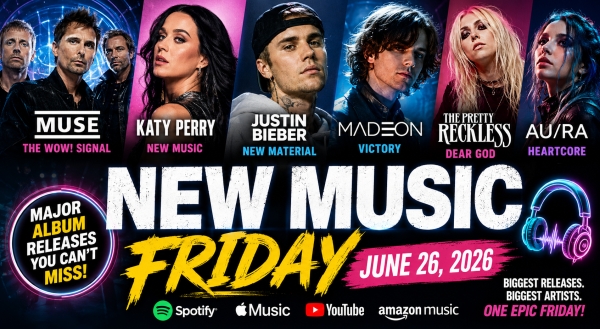
New Music Friday Delivers One of June's Biggest Release Days
Every Friday has become an event in the modern music industry. Since streaming services standardized global release schedules, Fridays have transformed into a worldwide celebration of new music. Artists, record labels, playlist curators, journalists, and millions of fans all focus their attention on one day that can significantly influence chart positions, playlist placement, and viral momentum.
This week's New Music Friday is especially notable because it features a strong lineup of internationally recognized artists from multiple genres. Rock veterans, pop superstars, EDM innovators, and alternative favorites are all releasing new material simultaneously, creating one of the busiest release calendars of the month.
The competition for listener attention has never been greater, making each release a strategic move designed to maximize streams, media coverage, and social engagement.
Muse Returns with The Wow! Signal
British rock icons Muse headline today's releases with their latest project, The Wow! Signal.
Known for combining cinematic rock with progressive instrumentation and futuristic themes, Muse continue to evolve while maintaining the dramatic sound that has defined their career for more than two decades.
Fans can expect:
- Massive guitar riffs
- Atmospheric synthesizers
- Orchestral arrangements
- Political and technological themes
- Stadium-ready production
Muse have consistently balanced mainstream accessibility with musical experimentation, allowing them to remain one of modern rock's most influential bands.
The release is expected to perform particularly well across alternative, rock, and vinyl sales charts while also attracting significant streaming numbers.
Katy Perry Continues Her Musical Evolution
Pop superstar Katy Perry joins this week's release schedule with brand-new music that further expands her evolving artistic direction.
Throughout her career, Perry has demonstrated an ability to reinvent herself while remaining one of the most recognizable figures in contemporary pop music.
Industry analysts will be watching several performance indicators over the weekend, including:
- Spotify streams
- Apple Music rankings
- YouTube views
- TikTok usage
- Radio airplay
With millions of followers across social media platforms, even a single release from Perry has the potential to generate enormous online discussion within hours.
Her ability to blend catchy melodies with polished production continues to make her one of the music industry's most commercially successful artists.
Justin Bieber Returns with Fresh Material
Another headline-grabbing release comes from Justin Bieber, whose newest music is expected to perform exceptionally well on streaming services worldwide.
Few artists have adapted to the streaming era as successfully as Bieber. His music consistently attracts billions of plays across digital platforms while maintaining strong international appeal.
His newest material continues to showcase:
- Modern pop production
- R&B influences
- Emotional songwriting
- Smooth vocal performances
- Radio-friendly hooks
Streaming services are expected to heavily feature Bieber across their editorial playlists throughout the weekend, helping drive additional discovery among casual listeners.
Many industry observers predict his latest release could quickly climb global streaming charts.
Madeon Releases Victory
French electronic producer Madeon returns with Victory, a release eagerly awaited by fans of electronic dance music.
Madeon has built a reputation for combining:
- Melodic house
- Future bass
- Electro-pop
- Cinematic sound design
- Exceptional live performances
Unlike many electronic producers who focus solely on club records, Madeon's music often blends emotional storytelling with sophisticated production techniques.
Victory continues that tradition while demonstrating how electronic music continues to evolve beyond traditional dancefloor boundaries.
For producers and DJs, Madeon's releases are often studied as examples of world-class mixing, arrangement, and sound design.
The Pretty Reckless Release Dear God
Rock fans have another major release to enjoy as The Pretty Reckless unveil Dear God.
Fronted by Taylor Momsen, the band has earned widespread acclaim for blending hard rock, alternative rock, and blues influences into a distinctive modern sound.
Their latest release is expected to appeal to both longtime followers and newer audiences seeking authentic guitar-driven music.
The band's continued success demonstrates that despite pop's dominance on streaming services, rock music remains an important force within the global industry.
Many playlists dedicated to alternative rock are expected to feature Dear God prominently throughout the coming week.
Au/Ra Shares Heartcore
Emerging pop favorite Au/Ra also joins today's impressive release lineup with Heartcore.
Known for atmospheric vocals and emotionally driven songwriting, Au/Ra continues building a loyal global fanbase through streaming platforms and social media.
Her music often blends:
- Alternative pop
- Electronic production
- Dark pop aesthetics
- Personal storytelling
- Modern vocal textures
Artists like Au/Ra represent a new generation whose careers have been built primarily through digital discovery rather than traditional radio exposure.
Streaming playlists remain a crucial driver of her audience growth.
Why New Music Friday Matters More Than Ever
The music industry has changed dramatically over the past decade.
Before streaming became dominant, albums were released on different days depending on the country. This fragmented approach often led to piracy and uneven promotional campaigns.
Today, virtually every major release arrives simultaneously worldwide on Friday.
This synchronized launch offers several advantages:
Global Marketing
Artists can coordinate interviews, livestreams, social media campaigns, and advertising around one unified release date.
Playlist Opportunities
Spotify, Apple Music, Amazon Music, Deezer, and YouTube Music all refresh many of their editorial playlists every Friday.
Landing on one of these playlists can dramatically increase an artist's visibility.
Chart Performance
Most major music charts calculate weekly performance from Friday through Thursday.
Launching on Friday gives artists the maximum opportunity to accumulate streams and sales before chart tracking ends.
Fan Engagement
Fans now anticipate Fridays as a weekly event, frequently exploring new releases immediately after they become available.
Streaming Will Shape This Weekend's Winners
Although every artist releases music simultaneously, streaming data quickly separates breakout successes from quieter launches.
Industry professionals closely monitor:
- Spotify Daily Top Songs
- Apple Music Top 100
- YouTube Trending
- Amazon Music Charts
- TikTok usage
- Shazam searches
These early indicators often predict which songs will dominate radio and global playlists over the following weeks.
Sometimes a song with modest first-day performance can explode after gaining traction through short-form video platforms.
Social Media Drives Discovery
Modern music promotion extends far beyond simply releasing a song.
Artists now create complete marketing campaigns involving:
- TikTok videos
- Instagram Reels
- YouTube Shorts
- Livestream performances
- Behind-the-scenes footage
- Fan Q&A sessions
Many listeners first discover new music through social media rather than traditional radio.
Today's releases are expected to generate millions of posts across multiple platforms as fans share reactions, favorite lyrics, and first impressions.
Multiple Genres Share the Spotlight
One of today's most interesting characteristics is its diversity.
Instead of one genre dominating the release calendar, listeners can explore:
- Rock
- Alternative
- Pop
- Electronic
- Dance
- Indie influences
This reflects the increasingly genre-fluid nature of modern music consumption.
Streaming platforms encourage listeners to move freely between genres, allowing artists from vastly different backgrounds to coexist within the same playlists.
What This Means for Independent Artists
While major stars dominate headlines, New Music Friday also creates opportunities for independent musicians.
Many listeners browse new release playlists searching for unfamiliar artists alongside established names.
Independent musicians can benefit by:
- Releasing music consistently
- Pitching songs to playlists
- Building strong social communities
- Creating engaging video content
- Encouraging fan interaction
Digital distribution has made it possible for independent artists to compete on the same platforms as major-label acts.
Although breaking through remains challenging, quality music combined with effective marketing can still find a global audience.
The Weekend Ahead
Over the next several days, industry analysts will closely watch how today's releases perform across streaming services and digital storefronts.
Questions that will soon be answered include:
- Which release earns the biggest streaming debut?
- Which songs go viral on TikTok?
- Which albums dominate editorial playlists?
- Which artist achieves the largest first-week sales?
- Which unexpected release becomes the breakout success?
By Monday morning, streaming numbers will provide a much clearer picture of this week's biggest winners.
Final Thoughts
New Music Friday on June 26, 2026 showcases exactly why Fridays remain the most exciting day in the music industry. With new releases from Muse, Katy Perry, Justin Bieber, Madeon, The Pretty Reckless, and Au/Ra, listeners have an exceptional variety of fresh music to explore.
From stadium rock and chart-topping pop to cutting-edge electronic music and emotionally driven alternative releases, today's lineup reflects the incredible diversity of today's global music scene. As streaming numbers begin to roll in over the weekend, fans, artists, labels, and industry professionals alike will be watching closely to see which songs capture the world's attention.
Whether you're updating your playlists, analyzing industry trends, or simply searching for your next favorite track, this New Music Friday delivers something for every type of music fan and reinforces the continued importance of Friday as the heartbeat of the modern music business.
Clive Davis Dies at 94: Music Industry Pays Tribute to Legendary Executive
Written by Sounds Space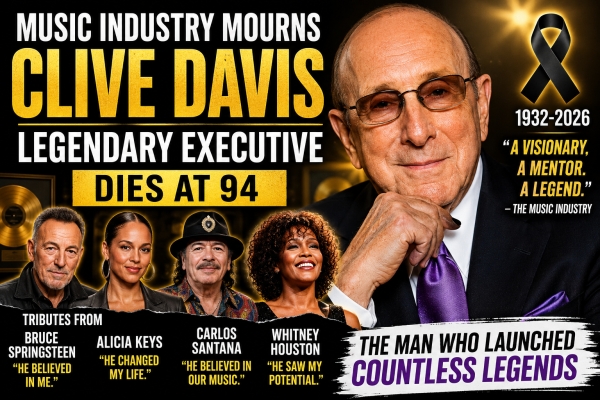
Clive Davis Dies at 94: Music Industry Mourns the Legendary Executive Who Shaped Generations of Artists
The music industry is mourning the loss of one of its most influential figures. Clive Davis, the legendary record executive whose career spanned more than six decades, has passed away at the age of 94. His death marks the end of an era for the global music business, leaving behind a legacy that transformed countless artists into international superstars and helped shape the sound of modern popular music.
Tributes from across the entertainment world continue to pour in as musicians, executives, and fans reflect on the extraordinary impact Davis had on the industry. Among those honoring his memory are Bruce Springsteen, Alicia Keys, Carlos Santana, and many others whose careers were touched by his vision, mentorship, and relentless passion for discovering talent.
From launching the career of Whitney Houston to guiding the success of artists across rock, pop, R&B, and Latin music, Clive Davis was more than a music executive—he was a cultural architect whose influence can still be heard in today's charts.
The Early Life of Clive Davis
Born in Brooklyn, New York, in 1932, Clive Davis did not begin his career with dreams of becoming a music executive. After earning a degree from New York University and later attending Harvard Law School, Davis initially worked as an attorney.
His legal expertise eventually led him to Columbia Records, where he joined the company's legal department. What started as a legal position quickly evolved into something much larger.
Davis demonstrated a remarkable ability to identify talent and understand the evolving tastes of music audiences. His instincts soon propelled him into leadership roles, and by the late 1960s he had become president of Columbia Records.
Few could have predicted that this appointment would alter the course of music history.
Building a Legacy at Columbia Records
During his tenure at Columbia Records, Davis helped transform the label into one of the most successful forces in the music industry.
He championed artists who would go on to become household names, including:
-
Janis Joplin
-
Santana
-
Chicago
-
Billy Joel
-
Earth, Wind & Fire
-
Bruce Springsteen
At a time when many executives relied heavily on market trends, Davis trusted his instincts. He had an uncanny ability to recognize unique talent before the rest of the industry caught on.
Carlos Santana frequently credited Davis for believing in his music and helping introduce it to a global audience. Without Davis' support, the legendary guitarist's path to international success may have looked very different.
The Birth of Arista Records
One of Davis' greatest achievements came in 1974 when he founded Arista Records.
The label quickly became a powerhouse, attracting some of the biggest names in music while discovering and developing future stars.
Under Davis' leadership, Arista signed and nurtured artists, including:
-
Whitney Houston
-
Barry Manilow
-
Dionne Warwick
-
Aretha Franklin
-
Patti Smith
-
Kenny G
-
Air Supply
Arista became synonymous with artist development, something Davis considered essential.
Rather than focusing solely on immediate commercial success, he invested in long-term careers. This philosophy helped create enduring artists whose influence lasted for decades.
Discovering Whitney Houston
Perhaps no artist is more closely associated with Clive Davis than Whitney Houston.
In the early 1980s, Davis recognized Houston's extraordinary talent and signed her to Arista Records.
At the time, Houston was a young singer with immense potential but little mainstream recognition.
Davis saw something special.
Working closely with Houston, he helped craft a strategy that showcased her incredible vocal abilities while positioning her for global success.
The result was one of the most successful music careers in history.
Whitney Houston would go on to sell more than 200 million records worldwide, earn numerous awards, and become one of the best-selling artists of all time.
Many industry observers believe her rise to superstardom would not have been possible without Davis' guidance and unwavering belief in her talent.
Championing Artists Across Genres
One of the reasons Clive Davis became such a respected figure was his ability to succeed across multiple genres.
Unlike many executives who specialized in a particular style of music, Davis possessed a rare understanding of diverse audiences.
Throughout his career, he worked with artists from:
Rock
Davis helped elevate artists such as Bruce Springsteen and Santana into global stars.
Pop
From Whitney Houston to Barry Manilow, his influence on pop music is immeasurable.
R&B
He played a significant role in the careers of Alicia Keys, Aretha Franklin, and many others.
Latin Music
Long before Latin music became a dominant force globally, Davis recognized its commercial and cultural potential.
His ability to bridge genres helped expand the reach of countless artists and opened new opportunities throughout the industry.
The Rise of Alicia Keys
Another artist who benefited greatly from Davis' mentorship was Alicia Keys.
When Keys entered the music industry, Davis immediately recognized her unique blend of songwriting, musicianship, and vocal talent.
After leaving Arista and launching J Records, Davis signed Alicia Keys and helped develop her debut album.
The album became a massive success, introducing the world to one of the defining voices of her generation.
Following Davis' passing, Keys praised him as a visionary who changed her life and believed in her talent from the beginning.
Their relationship exemplified Davis' approach to artist development—he was not simply interested in finding stars; he wanted to help them reach their full potential.
A Career Defined by Reinvention
The music industry experienced enormous changes throughout Davis' career.
He witnessed:
-
The rise of rock music
-
The growth of MTV
-
The CD boom
-
Digital downloads
-
Streaming platforms
-
Social media-driven music discovery
Many executives struggle to adapt to even one major industry transformation.
Davis successfully navigated all of them.
His willingness to embrace change while maintaining a focus on talent allowed him to remain relevant for more than sixty years.
This adaptability became one of the defining characteristics of his career.
Honors and Achievements
Clive Davis received numerous honors throughout his lifetime.
Among his achievements were:
-
Multiple Grammy Awards
-
The Grammy Trustees Award
-
Induction into the Rock and Roll Hall of Fame
-
Recognition from industry organizations worldwide
-
Lifetime achievement honors from numerous institutions
These accolades reflected not only his commercial success but also his profound influence on music culture.
Few executives have received the level of respect Davis commanded across the entertainment industry.
Industry Tributes Continue to Pour In
Following the announcement of his death, tributes flooded social media and news outlets.
Bruce Springsteen described Davis as a visionary who understood artists and audiences alike.
Carlos Santana thanked Davis for believing in his music and helping bring it to the world.
Alicia Keys remembered him as a mentor who changed the trajectory of her life.
Executives, producers, and musicians from every corner of the industry have shared similar sentiments.
The common theme among these tributes is clear: Clive Davis possessed an extraordinary ability to recognize greatness in others and help them achieve it.
Why Clive Davis Changed the Music Industry Forever
Many executives have signed successful artists.
Very few have transformed the industry itself.
Clive Davis did both.
His contributions include:
Artist Development
He prioritized long-term career growth over short-term profits.
Diversity in Music
He championed artists from a wide range of genres and backgrounds.
Industry Innovation
He consistently adapted to changing technologies and consumer behavior.
Talent Discovery
His ability to identify future stars remains legendary.
Global Influence
Artists he helped develop reached audiences around the world.
These qualities made him one of the most influential figures in entertainment history.
The Lasting Impact of His Legacy
Although Clive Davis is no longer with us, his influence remains embedded throughout the music industry.
Every time a young artist receives mentorship, every time a label invests in long-term artist development, and every time a visionary executive takes a chance on emerging talent, Davis' legacy lives on.
The careers he helped build continue to inspire new generations of musicians.
His approach to discovering and nurturing talent remains a blueprint for music executives worldwide.
In many ways, the modern music business was shaped by principles Davis championed throughout his career.
Conclusion
The death of Clive Davis at age 94 marks the loss of one of the most important figures in music history. Over six decades, he helped launch, guide, and elevate some of the most iconic artists ever to grace the stage.
From Whitney Houston and Alicia Keys to Bruce Springsteen and Carlos Santana, his influence can be heard across genres, generations, and continents.
More than a record executive, Clive Davis was a visionary who believed in the transformative power of music and the artists who create it.
As tributes continue to pour in from around the world, one thing remains certain: the impact of Clive Davis will be felt for generations to come.
His legacy is not simply measured in record sales or awards but in the countless lives he changed through music.
The industry may have lost a legend, but his influence will never fade.
AI Brings Boy George’s 22-Year-Old Voice Back to Life: The Future of AI Music Technology
Written by Sounds Space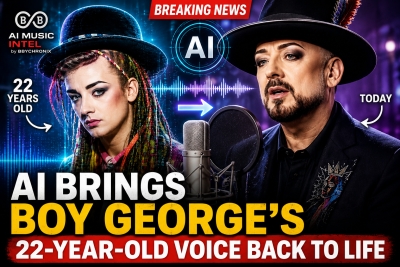
AI Brings Boy George’s 22-Year-Old Voice Back to Life: How Artificial Intelligence Is Reshaping Music Preservation and Creativity
Artificial intelligence continues to transform the music industry in ways that seemed impossible just a few years ago. One of the latest developments capturing the attention of artists, producers, and music fans worldwide is the recreation of legendary singer Boy George’s youthful voice through AI technology.
The groundbreaking project has sparked excitement, curiosity, and debate across the entertainment industry. For many, hearing a digitally recreated version of Boy George’s voice from when he was just 22 years old feels like stepping into a musical time machine. For others, it raises important questions about authenticity, ownership, and the future role of AI in artistic expression.
As AI music tools become increasingly sophisticated, projects like this demonstrate both the incredible potential and the complex ethical challenges facing the music business in 2026 and beyond.
The Technology Behind Recreating a Younger Voice
Voice cloning technology has advanced rapidly over the past few years. Using machine learning algorithms, developers can analyze hundreds or even thousands of vocal recordings from an artist and train AI models to understand the unique characteristics of that voice.
These systems examine factors such as:
- Vocal tone
- Pitch variations
- Pronunciation patterns
- Breathing techniques
- Emotional delivery
- Accent characteristics
- Singing style
Once trained, the AI can generate entirely new vocal performances that sound remarkably similar to the original recordings.
In the case of Boy George, the technology was reportedly used to recreate the distinctive vocal qualities that defined his early career during the height of the 1980s music scene. The result is a digital recreation that captures the energy, texture, and youthful characteristics of his younger voice while allowing for new performances and creative possibilities.
For many listeners, the realism is astonishing.
Why Boy George’s Voice Matters
Few artists possess a voice as instantly recognizable as Boy George.
As the frontman of the iconic band Culture Club, Boy George became one of the defining voices of the 1980s. His unique vocal style helped create timeless hits such as:
- Karma Chameleon
- Do You Really Want to Hurt Me
- Time (Clock of the Heart)
- Church of the Poison Mind
His distinctive blend of pop, soul, and new wave influences helped define an era of popular music.
Over the decades, like every vocalist, Boy George’s voice naturally evolved with age. While many artists embrace these changes, AI technology now makes it possible to revisit and recreate earlier versions of a singer’s vocal identity.
This development represents a significant milestone in music technology and opens entirely new possibilities for artists who want to reconnect with sounds from earlier stages of their careers.
The Growing Role of AI in Music Production
The recreation of Boy George’s youthful voice is part of a much larger trend occurring across the music industry.
AI is increasingly being used for:
Vocal Enhancement
Producers now utilize AI tools to improve vocal recordings, correct pitch issues, reduce background noise, and restore damaged audio.
Music Restoration
Historic recordings can be cleaned and remastered using AI-powered software capable of removing artifacts and improving clarity.
Songwriting Assistance
Modern AI systems can help generate melodies, chord progressions, lyrics, and arrangement ideas that musicians can use as creative starting points.
Audio Separation
AI can isolate vocals, drums, bass, and other instruments from older recordings, making remixing and restoration projects easier than ever before.
Voice Recreation
Perhaps the most controversial application is the ability to recreate voices from past recordings, allowing artists to perform songs with vocal characteristics from different periods of their careers.
The Boy George project highlights just how advanced these capabilities have become.
A New Era of Musical Preservation
One of the most compelling arguments in favor of AI voice recreation is preservation.
Music historians and archivists have long sought ways to preserve the artistic legacy of legendary performers. AI offers a powerful new tool for maintaining and studying voices that might otherwise be lost to time.
Imagine being able to:
- Hear new recordings performed using a singer’s younger voice
- Restore incomplete historical recordings
- Reconstruct damaged archives
- Preserve unique vocal styles for future generations
- Create educational materials for music students
For fans, these possibilities are exciting.
For historians, they may prove invaluable.
The ability to accurately model an artist’s voice creates opportunities for preserving cultural heritage in ways that were previously impossible.
The Ethical Questions Surrounding AI Voices
Despite the technological achievement, AI voice recreation remains a highly controversial topic.
Many industry professionals worry about the ethical implications of creating digital versions of human voices.
Key concerns include:
Consent
Should AI-generated voices only be created with an artist’s explicit approval?
Many argue that consent must be the foundation of all voice recreation projects.
Ownership
Who owns a voice?
Is it the artist, the record label, the estate, or the technology company that developed the AI model?
Legal systems around the world are still working to answer these questions.
Authenticity
Some critics argue that digitally recreated performances lack the emotional authenticity of genuine human recordings.
Others counter that AI is simply another creative tool, similar to synthesizers, Auto-Tune, or digital audio workstations.
Deepfake Risks
Unauthorized voice cloning remains one of the industry's biggest concerns.
Artists worry that bad actors could create fake recordings, misleading fans or damaging reputations.
These concerns have fueled growing calls for stronger legislation and industry regulations.
Why the Music Industry Is Paying Attention
The Boy George AI voice recreation arrives at a time when the music industry is experiencing rapid technological transformation.
Major record labels, publishers, and technology companies are investing heavily in artificial intelligence.
The reasons are clear:
New Revenue Opportunities
AI-powered music projects could create entirely new revenue streams for artists and rights holders.
Catalog Expansion
Classic recordings can be revitalized for modern audiences through restoration, remixing, and innovative reinterpretations.
Fan Engagement
Fans often enjoy experiencing new content connected to beloved artists and iconic eras.
Creative Freedom
Artists gain access to tools that allow them to explore sounds and styles that may no longer be physically possible.
These factors explain why AI continues to attract significant investment throughout the entertainment sector.
Artist Reactions Are Mixed
Not every musician embraces AI.
Some artists see it as a revolutionary tool capable of enhancing creativity.
Others view it with skepticism.
Supporters argue that:
- AI expands artistic possibilities.
- Musicians maintain creative control.
- Technology has always influenced music evolution.
- New tools inspire innovation.
Critics argue that:
- AI could diminish human artistry.
- Unauthorized cloning threatens performers.
- Digital recreations may confuse audiences.
- Economic opportunities for human musicians could decline.
The reality likely lies somewhere in between.
Like previous technological shifts, AI's impact will depend largely on how responsibly it is implemented.
Fans React to Hearing a Younger Boy George
For many listeners, hearing a recreation of Boy George’s younger voice triggers a powerful emotional response.
Music is deeply connected to memory.
Songs often become attached to specific moments in life, relationships, and personal experiences.
When AI allows fans to hear a familiar voice from decades ago, it can evoke intense nostalgia.
Many fans describe such experiences as:
- Emotional
- Surprising
- Fascinating
- Inspiring
- Uncanny
The combination of advanced technology and musical nostalgia creates a uniquely powerful listening experience.
Whether audiences ultimately embrace these projects on a larger scale remains to be seen, but public interest is undeniably growing.
Legal Changes Could Shape the Future
Governments worldwide are beginning to address AI-generated voices and digital likenesses.
New legislation is being proposed in several countries to protect artists from unauthorized voice cloning and deepfake content.
Potential regulations may include:
- Mandatory artist consent
- Licensing requirements
- Financial compensation structures
- Watermarking AI-generated content
- Platform liability rules
These protections could help ensure that AI serves artists rather than exploiting them.
As legal frameworks evolve, they will likely play a major role in determining how AI voice technology develops in the coming years.
What This Means for Independent Artists
The implications extend far beyond major stars like Boy George.
Independent artists now have access to AI tools that were previously available only to large studios and record labels.
Emerging musicians can use AI to:
- Restore old demos
- Improve vocal production
- Experiment with creative ideas
- Generate songwriting inspiration
- Enhance recording quality
This democratization of technology is one of AI’s most transformative effects on the music business.
Small creators can increasingly compete with larger organizations by leveraging powerful AI-powered production tools.
The Future of AI Voices in Music
The recreation of Boy George’s 22-year-old voice may represent just the beginning of a much larger movement.
Future developments could include:
Dynamic Age Selection
Artists may eventually choose whether a recording uses their voice at age 20, 30, 40, or 60.
Personalized Listening Experiences
Listeners could select different vocal eras of their favorite performers.
Interactive Music
AI systems may allow fans to engage with music in entirely new ways.
Legacy Preservation
Future generations may gain access to incredibly accurate representations of historic voices and performances.
These possibilities remain speculative, but technological progress suggests they may arrive sooner than many expect.
Conclusion
The recreation of Boy George’s youthful voice through artificial intelligence marks another major milestone in the evolution of music technology.
What once sounded like science fiction is rapidly becoming reality. AI now possesses the ability to preserve, restore, and recreate vocal performances with extraordinary accuracy, opening new doors for artists, producers, historians, and fans alike.
At the same time, these innovations raise critical questions about consent, ownership, authenticity, and artistic integrity. The music industry must carefully balance technological progress with ethical responsibility.
Whether viewed as a revolutionary creative tool or a disruptive force requiring regulation, one thing is certain: AI is reshaping the future of music.
As technologies continue to improve, projects like the recreation of Boy George’s 22-year-old voice offer a glimpse into a future where the boundaries between past and present become increasingly blurred. The challenge for artists, industry leaders, and lawmakers will be ensuring that these remarkable capabilities are used in ways that respect creativity, protect rights, and preserve the human spirit that has always been at the heart of great music.
AI Deepfake Legislation Gains Momentum: How the NO FAKES Act Could Transform Music
Written by Sounds Space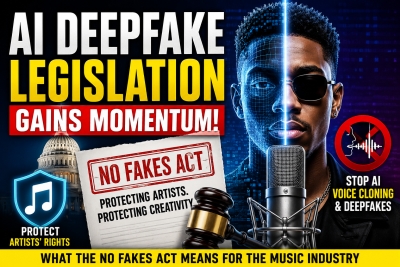
AI Deepfake Legislation Gains Momentum: What the NO FAKES Act Could Mean for the Music Industry
The Music Industry Faces a New AI Challenge
Artificial intelligence has transformed the music industry faster than almost any technological innovation in recent history. From AI-assisted songwriting and mastering tools to synthetic voices capable of recreating famous artists, the opportunities appear limitless. However, with these opportunities come significant concerns about copyright, identity theft, and the unauthorized use of an artist's likeness.
One of the most closely watched developments in music technology and entertainment law is the advancement of the NO FAKES Act in the United States Senate. The legislation aims to address growing concerns surrounding AI-generated deepfakes and unauthorized digital replicas of musicians, actors, public figures, and creators.
As AI-generated content becomes increasingly realistic, lawmakers, artists, record labels, and technology companies are engaged in a heated debate about how innovation should coexist with intellectual property rights and personal identity protections.
If enacted, the NO FAKES Act could reshape how AI companies, social media platforms, streaming services, and content creators operate in the digital era.
What Is the NO FAKES Act?
The NO FAKES Act, short for "Nurture Originals, Foster Art, and Keep Entertainment Safe," is proposed legislation designed to protect individuals from unauthorized AI-generated replicas of their voice, image, and likeness.
The bill seeks to establish clear legal protections against the creation and distribution of AI-generated content that imitates real people without their consent.
For musicians, this means unauthorized AI songs that mimic their voices could become significantly more difficult to distribute legally.
The legislation would provide individuals with stronger rights to challenge unauthorized digital reproductions and seek legal remedies against those responsible for creating or distributing them.
Why AI Deepfakes Have Become a Major Concern
Just a few years ago, AI-generated voices sounded robotic and easily identifiable. Today, advanced machine learning models can reproduce an artist's voice with astonishing accuracy.
This capability has led to an explosion of AI-generated songs featuring synthetic versions of famous artists.
Some examples include:
-
AI-generated tracks imitating major pop stars.
-
Fake interviews using cloned celebrity voices.
-
Synthetic performances from deceased musicians.
-
Unauthorized remixes featuring AI-generated vocals.
-
Social media content designed to mislead audiences.
While some creators view these technologies as artistic experimentation, many musicians see them as a direct threat to their careers, reputation, and earnings.
The problem extends beyond music.
Politicians, actors, athletes, influencers, and business leaders have all become targets of increasingly sophisticated AI-generated impersonations.
Why Artists Are Supporting the Legislation
Many of the world's largest music companies and artist organizations have voiced support for stronger protections against unauthorized AI replication.
Artists argue that their voice is one of their most valuable assets.
A singer may spend decades developing a unique vocal identity. If an AI model can reproduce that voice instantly without permission, artists fear losing control over both their brand and their creative output.
Supporters of the legislation argue that:
Artists Deserve Control
Musicians should have the right to decide how their voice and likeness are used.
Protection Against Exploitation
Bad actors could profit from fake recordings while artists receive no compensation.
Reputation Management
An AI-generated song could contain offensive or controversial content that damages an artist's reputation.
Protection for Future Generations
Emerging artists may be especially vulnerable to having their identity replicated without legal resources to fight back.
For many creators, the NO FAKES Act represents a necessary update to laws written long before AI-generated content became possible.
How Deepfake Music Is Changing the Industry
The rise of generative AI has introduced entirely new categories of music content.
Today, AI can:
-
Clone vocals.
-
Generate lyrics.
-
Compose melodies.
-
Produce instrumentals.
-
Create entire albums.
-
Simulate collaborations between artists.
In some cases, listeners cannot distinguish between real and AI-generated performances.
This creates several industry challenges.
Copyright Confusion
Who owns an AI-generated song that imitates a real artist?
Revenue Diversion
Fake recordings may attract streams that would otherwise belong to legitimate releases.
Consumer Deception
Fans may mistakenly believe AI-generated songs are official releases.
Marketplace Saturation
Streaming platforms could become flooded with synthetic content.
As AI capabilities improve, these concerns are expected to grow significantly.
What the NO FAKES Act Could Mean for Platforms
One of the most important aspects of the legislation is its potential impact on digital platforms.
If the bill becomes law, companies that host unauthorized AI-generated replicas could face legal consequences.
Platforms potentially affected include:
-
Social media networks.
-
Video-sharing websites.
-
Music streaming services.
-
AI content-generation platforms.
-
Digital marketplaces.
The legislation may require platforms to respond more aggressively to reports of unauthorized AI-generated content.
This could lead to:
-
Faster content removal systems.
-
Enhanced identity verification procedures.
-
New licensing requirements.
-
Greater moderation investments.
-
Increased compliance costs.
For technology companies, balancing user-generated creativity with legal compliance will become a major operational challenge.
The Debate Over Innovation Versus Protection
While many artists support the bill, not everyone agrees on the best approach.
Some technology advocates worry that overly restrictive regulations could slow innovation.
Critics argue that:
AI Is a Creative Tool
Many creators use AI responsibly to experiment with new forms of art.
Fair Use Questions Remain
Not every imitation is intended to deceive audiences.
Barriers for Independent Developers
Smaller AI startups may struggle to comply with complex legal requirements.
Impact on Free Expression
Some legal scholars worry that broad restrictions could affect parody, satire, and artistic commentary.
As a result, lawmakers must balance creator protections with technological innovation.
Finding that balance has become one of the central challenges of modern AI regulation.
Record Labels Are Taking AI Seriously
Major record labels are increasingly investing resources into combating unauthorized AI-generated content.
The music industry has already experienced multiple waves of technological disruption:
-
File sharing.
-
Digital downloads.
-
Streaming services.
-
Social media distribution.
AI represents the next major transformation.
Unlike previous disruptions, however, AI can directly imitate an artist's identity.
This makes the issue fundamentally different from debates over music distribution.
Labels are now exploring:
-
AI detection technologies.
-
Voice authentication systems.
-
Licensing frameworks.
-
Artist protection programs.
-
Legal enforcement mechanisms.
The advancement of the NO FAKES Act reflects growing pressure from rights holders seeking stronger legal tools.
Could Licensed AI Become the Future?
Not all AI-generated music is controversial.
Many industry experts believe licensed AI collaborations may become a significant business opportunity.
Imagine a future where:
-
Artists authorize AI versions of their voice.
-
Estates license digital recreations of legendary performers.
-
Fans purchase personalized performances.
-
Record labels monetize official AI experiences.
Under this model, AI becomes a revenue-generating asset rather than an unauthorized threat.
Some artists have already expressed interest in licensing their digital identity under controlled conditions.
The key distinction is consent.
The NO FAKES Act focuses primarily on preventing unauthorized replication while leaving room for legitimate licensing arrangements.
How Fans May Be Affected
Music fans may notice significant changes if the legislation becomes law.
Potential impacts include:
Greater Transparency
Platforms may label AI-generated content more clearly.
Fewer Unauthorized Releases
Deepfake songs could be removed more quickly.
More Official AI Projects
Artists may release licensed AI experiences.
Increased Trust
Listeners could have greater confidence in content authenticity.
Ultimately, the goal is to create a safer environment where audiences know whether they are hearing a real artist or an AI-generated imitation.
Global Implications Beyond the United States
Although the NO FAKES Act is a U.S. proposal, its influence could extend worldwide.
Major technology platforms operate internationally.
If U.S. regulations establish strong protections for digital likeness rights, other countries may adopt similar approaches.
Governments around the world are already examining:
-
AI transparency rules.
-
Deepfake regulations.
-
Copyright modernization.
-
Digital identity protections.
-
Platform accountability measures.
The outcome of the NO FAKES Act could help shape global standards for AI-generated content.
The Future of AI and Music
Artificial intelligence is not disappearing from the music industry.
In fact, AI adoption is accelerating across nearly every aspect of music creation and distribution.
Artists are using AI for:
-
Songwriting assistance.
-
Audio restoration.
-
Mixing and mastering.
-
Marketing campaigns.
-
Audience analytics.
The challenge is determining where innovation ends and unauthorized exploitation begins.
Most industry observers agree that AI itself is not the problem.
The concern lies in how AI is used.
Legislation like the NO FAKES Act seeks to establish guardrails that protect creators while allowing responsible innovation to continue.
Conclusion
The advancement of the NO FAKES Act marks a pivotal moment in the relationship between artificial intelligence and the music industry. As AI-generated voices, images, and digital replicas become increasingly realistic, lawmakers are moving to address concerns surrounding consent, ownership, and identity protection.
For musicians, the legislation could provide powerful tools to combat unauthorized voice cloning and deepfake content. For technology companies and platforms, it may introduce new responsibilities and compliance requirements. For fans, it could create a more transparent and trustworthy digital environment.
The debate surrounding AI-generated content is far from over, but one thing is clear: the music industry is entering a new era where protecting artistic identity is becoming just as important as protecting intellectual property.
Whether the NO FAKES Act ultimately becomes law or undergoes further revisions, its progress signals that governments are taking AI-generated impersonation seriously. The decisions made today will likely influence how artists, technology companies, and audiences interact with artificial intelligence for decades to come.
Tay Keith Dies at 29: Hip-Hop Producer Behind Sicko Mode Passes Away
Written by Sounds Space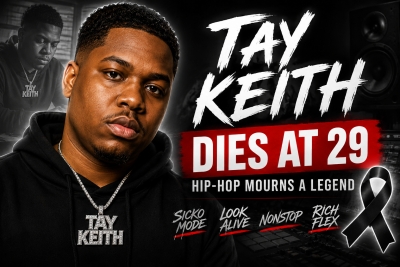
Tay Keith Dies at 29: Hip-Hop Mourns the Loss of a Generation-Defining Producer
The Music World Loses a Visionary
The hip-hop community is mourning the tragic loss of Grammy-nominated producer Tay Keith, who has reportedly passed away at the age of 29. Known for crafting some of the biggest rap records of the past decade, Tay Keith's sudden death has sent shockwaves throughout the music industry and among millions of fans worldwide.
Born Brytavious Lakeith Chambers in Memphis, Tennessee, Tay Keith rose from humble beginnings to become one of the most influential producers in modern hip-hop. His signature producer tag, "Tay Keith, f*** these n****s up," became one of the most recognizable audio trademarks in contemporary music, appearing on chart-topping hits from some of the biggest artists in the world.
According to reports, authorities discovered Keith deceased in his Nashville apartment during a welfare check. Officials have stated that no foul play is suspected, although the official cause of death has not yet been confirmed pending further investigation.
The loss of such a talented producer at just 29 years old marks one of the most heartbreaking moments in hip-hop this year.
Who Was Tay Keith?
Tay Keith was born on September 20, 1996, in Memphis, Tennessee. Growing up surrounded by the rich musical heritage of Memphis rap, he developed an early passion for music production. Inspired by local legends and the city's distinctive sound, Keith began experimenting with beats as a teenager.
Unlike many producers who spend years trying to gain industry recognition, Keith's talent quickly attracted attention. He started uploading beats online and collaborating with local artists, eventually building a reputation for creating hard-hitting instrumentals that blended Memphis horrorcore influences with modern trap production.
One of the most significant relationships in his early career was his partnership with Memphis rapper BlocBoy JB. The pair developed a creative chemistry that would ultimately help launch both of their careers to new heights.
Keith's rise serves as an inspiring example of how dedication, creativity, and persistence can transform a young artist's dreams into reality.
The Breakthrough That Changed Everything
While Tay Keith had been producing music for several years, his career reached another level in 2018 when he produced "Look Alive" by BlocBoy JB featuring Drake.
The song became a massive commercial success, reaching the upper tiers of the charts and introducing Keith's production style to a global audience. More importantly, it established him as one of the most sought-after producers in hip-hop.
Following the success of "Look Alive," major artists began seeking out Keith's signature sound.
What followed was one of the most impressive production runs in recent hip-hop history.
Creating the Soundtrack of Modern Hip-Hop
Tay Keith's influence can be heard across countless hit records that defined the late 2010s and early 2020s.
His production credits include:
-
"Sicko Mode" by Travis Scott
-
"Nonstop" by Drake
-
"Look Alive" by BlocBoy JB featuring Drake
-
"Rich Flex" by Drake and 21 Savage
-
"Pound Town" by Sexyy Red
-
"Jimmy Cooks" by Drake featuring 21 Savage
-
"Before I Let Go" by Beyoncé
-
Productions for artists including Eminem, Megan Thee Stallion, Offset, and many others.
Among these records, "Sicko Mode" remains one of the most iconic songs of the streaming era. The track dominated charts worldwide and earned Keith a Grammy nomination for Best Rap Song.
His work helped shape the sound of mainstream rap during a period when hip-hop became the world's dominant musical genre.
Grammy Recognition and Industry Success
Success for Tay Keith was not limited to chart positions.
His contributions to hip-hop earned him widespread industry recognition. He received Grammy nominations for his work on "Sicko Mode" and later for Drake and 21 Savage's "Rich Flex."
In addition to Grammy recognition, Keith was honored as Producer of the Year at the BMI Awards and was named to the Forbes 30 Under 30 Music list, recognizing his extraordinary impact on the music business before the age of 30.
These achievements reflected not only his commercial success but also the respect he earned from artists, executives, and fellow producers across the industry.
For many aspiring producers, Tay Keith became proof that talent and perseverance could open doors at the highest levels of music.
The Memphis Legacy
Memphis has long been one of hip-hop's most influential cities.
Artists and groups such as Three 6 Mafia, 8Ball & MJG, and many others helped establish a distinct sound that continues to influence modern rap.
Tay Keith carried that tradition forward.
His productions incorporated elements of classic Memphis rap while embracing contemporary trap music. The result was a style that felt both nostalgic and innovative.
Many critics and fans credit Keith with helping bring Memphis production techniques into mainstream popular culture. His success also opened opportunities for other producers and artists from the city to gain national recognition.
In many ways, Tay Keith became one of Memphis' most important musical ambassadors.
Fans and Artists React to the News
As news of Tay Keith's death spread online, social media quickly filled with tributes from fans, artists, producers, and industry professionals.
Collaborators who worked closely with Keith expressed their grief, sharing memories and celebrating his contributions to music. Fellow producers and rappers praised not only his talent but also his character and work ethic.
Across online communities, fans reflected on the countless records Keith helped create and the role his music played in their lives. Many expressed disbelief that someone so influential and successful could pass away at such a young age.
The overwhelming response demonstrates the profound impact Keith had on both the music industry and popular culture.
A Career Cut Tragically Short
One of the most heartbreaking aspects of Tay Keith's passing is how much more he still had to offer.
At only 29 years old, he was entering what many producers consider the prime years of their career.
Over the past year alone, Keith continued working with major artists and remained one of the most in-demand producers in hip-hop. His recent collaborations showed no signs of slowing down, and many fans expected him to continue dominating charts for years to come.
His death leaves behind not only a remarkable catalog of music but also countless unrealized possibilities.
The music world can only imagine what future classics he might have created.
Tay Keith's Lasting Influence on Music Production
Few producers manage to develop a signature sound that becomes instantly recognizable.
Tay Keith accomplished exactly that.
His hard-hitting drums, aggressive basslines, cinematic melodies, and minimalist arrangements became a blueprint for an entire generation of producers. Countless aspiring beatmakers studied his work in an attempt to recreate the energy and impact of his productions.
Beyond technical skills, Keith understood how to create space for artists to shine. His beats amplified performances without overwhelming them, a quality that helped make him a favorite among top-tier rappers.
Even producers who never worked directly with Keith were influenced by the trends he helped establish.
His impact on modern hip-hop production will continue to be felt for decades.
Remembering Tay Keith
When future generations look back on the evolution of hip-hop, Tay Keith's name will undoubtedly be part of the conversation.
He helped define the sound of an era.
From Memphis studios to global chart dominance, Keith's journey represented the power of creativity and determination. He transformed local influences into worldwide success while remaining connected to the city that shaped him.
Although his life was tragically cut short, his music will continue to inspire artists, producers, and fans around the world.
Every time "Look Alive," "Sicko Mode," "Nonstop," or one of his many other hits plays through speakers, headphones, clubs, or stadiums, Tay Keith's legacy lives on.
The hip-hop community has lost one of its brightest creative minds.
Tay Keith was only 29 years old.
But the impact he made during those 29 years will be remembered forever.
Rest in peace, Tay Keith (Brytavious Lakeith Chambers).
Your beats changed the sound of modern hip-hop, and your influence will never be forgotten.
Oliver Tree Dies at 32: Remembering the Life and Legacy of the 'Life Goes On' Singer
Written by Sounds Space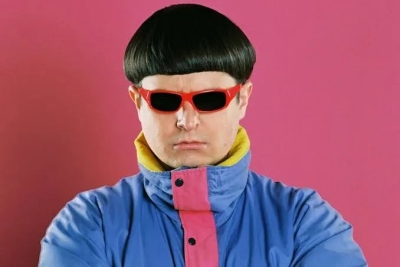
Oliver Tree Dies at 32: Remembering the Life, Legacy, and Unforgettable Career of a Musical Original
The music world has been left stunned following reports of the tragic passing of Oliver Tree, one of the most unconventional and distinctive artists of his generation. Known for his signature bowl haircut, oversized sunglasses, eccentric humor, and emotionally charged music, Oliver Tree carved out a unique space in modern pop culture that few artists could ever replicate.
According to multiple reports, Oliver Tree died at the age of 32 following a helicopter crash in Rio de Janeiro, Brazil, on June 14, 2026. The heartbreaking news has sent shockwaves throughout the entertainment industry, with fans, fellow musicians, and content creators expressing disbelief and grief over the sudden loss of an artist whose creativity knew no boundaries.
Who Was Oliver Tree?
Born Oliver Tree Nickell on June 29, 1993, in Santa Cruz, California, Oliver Tree began his musical journey long before mainstream audiences recognized his name. He experimented with various genres throughout his early career, from ska and electronic music to alternative rock and hip-hop.
His willingness to blend styles and challenge expectations became one of his defining characteristics.
Tree initially performed under the name "Tree" before reinventing himself into the larger-than-life character that millions of fans came to know. Following the viral success of collaborations and independent releases, he signed with Atlantic Records and rapidly established himself as one of music's most intriguing personalities.
Unlike many artists who carefully crafted polished public images, Oliver embraced absurdity. He leaned into awkwardness, exaggerated personas, and unconventional visual storytelling.
Yet beneath the comedy and chaos was an artist capable of writing deeply emotional songs that resonated with listeners worldwide.
The Tragic Accident
Reports indicate that Oliver Tree was among six individuals killed when two helicopters collided over Rio de Janeiro, Brazil.
The collision reportedly occurred in the western zone of the city before one of the helicopters crashed into a vehicle dealership, causing multiple fires among parked vehicles.
Brazilian emergency services responded quickly to the devastating scene.
Oliver had reportedly been in Brazil as part of his international touring commitments and had recently performed in São Paulo before extending his stay in the country to collaborate with local artists and creators.
The investigation into the precise circumstances surrounding the collision remains ongoing.
While authorities continue examining the incident, fans across the globe are mourning the sudden loss of a performer who appeared to have many creative chapters still ahead of him.
A Career Built on Breaking the Rules
What made Oliver Tree special was his refusal to conform.
In an industry often driven by formulas and trends, Tree consistently chose unpredictability.
His debut studio album, "Ugly Is Beautiful," released in 2020, showcased his remarkable ability to merge alternative rock, pop, hip-hop, and electronic influences into something entirely his own.
Tracks such as:
- Hurt
- Alien Boy
- Cash Machine
- Miracle Man
demonstrated both emotional vulnerability and satirical wit.
The album became a commercial success and introduced millions of listeners to Oliver's distinctive style.
His second album, "Cowboy Tears," surprised audiences once again by incorporating country influences while maintaining the emotional honesty and humor that fans had come to expect.
He later released "Alone in a Crowd," continuing to explore themes of identity, isolation, fame, and self-acceptance.
At a time when many artists played it safe, Oliver Tree constantly reinvented himself.
The Songs That Defined a Generation
While Oliver had a loyal fanbase long before mainstream recognition, social media propelled several of his songs to extraordinary heights.
Perhaps no song became more synonymous with his career than "Life Goes On."
The track exploded across TikTok and streaming platforms, becoming an anthem embraced by millions of users around the world.
Its chorus took on a new emotional significance following news of his passing.
Another global hit, "Miss You," introduced Oliver Tree to an even broader audience.
The song's infectious production and emotional undertones transformed it into an international success, cementing his place within contemporary pop culture.
Other notable songs include:
- When I'm Down
- Swing & A Miss
- Jerk
- Cowboys Don't Cry
- Let Me Down
- Bounce
Each track reflected different sides of Tree's artistic personality.
Some were humorous.
Others were heartbreaking.
Many were both at the same time.
More Than Just Music
Oliver Tree wasn't simply a musician.
He was a storyteller.
A filmmaker.
A comedian.
A provocateur.
He directed many of his own music videos, often performing dangerous stunts himself.
His visual work became just as iconic as his songs.
Whether riding oversized scooters, crashing through elaborate sets, or embracing bizarre costumes, Oliver transformed every release into an immersive artistic experience.
His commitment to creativity extended beyond music.
He earned recognition for setting a Guinness World Record involving the world's largest kick scooter.
He appeared on television programs and collaborated with internet personalities across multiple platforms.
His understanding of internet culture helped him thrive during an era where artists needed to engage audiences beyond traditional media.
Fan Reactions: Shock and Disbelief
One of the most remarkable aspects of the reaction to Oliver Tree's death has been disbelief.
Because Oliver frequently blurred the lines between reality and performance art, many fans initially assumed the news was another elaborate stunt.
Online communities filled with comments from listeners who simply could not accept that someone so full of life and unpredictability was truly gone.
As the reports became increasingly verified, disbelief gave way to grief.
Tributes flooded social media.
Fans shared memories of concerts.
Others posted favorite lyrics.
Many described how Oliver's music helped them through depression, loneliness, heartbreak, and uncertainty.
His message of embracing individuality resonated deeply with people who often felt misunderstood.
Tributes from the Music Industry
Fellow musicians, collaborators, and creators have also shared heartfelt tributes.
Artists praised Oliver's originality and fearless approach to creativity.
Many described him as kind, generous, and supportive behind the scenes.
Despite the eccentric public persona, those who knew him personally frequently spoke of his warmth and authenticity.
The outpouring of love serves as a reminder that Oliver Tree's impact extended far beyond chart positions and streaming statistics.
He inspired people to be themselves.
To embrace imperfection.
To stop apologizing for being different.
Oliver Tree's Lasting Legacy
The legacy Oliver Tree leaves behind is unlike that of almost any modern artist.
He demonstrated that success does not require fitting neatly into predefined categories.
He proved that vulnerability and absurdity can coexist.
That emotional depth and comedy are not mutually exclusive.
Most importantly, he encouraged millions of people to celebrate their uniqueness.
His music challenged expectations.
His videos pushed creative boundaries.
His personality reminded audiences that authenticity often matters more than perfection.
At only 32 years old, Oliver Tree had already built a body of work that many artists spend decades trying to achieve.
His influence will undoubtedly continue through the countless musicians, creators, and fans inspired by his fearless artistic vision.
Remembering Oliver Tree
The passing of Oliver Tree marks the loss of one of the most distinctive voices of the streaming generation.
He arrived in popular culture as an outsider.
He left as an icon.
While investigations continue into the circumstances surrounding the tragedy in Brazil, one truth remains clear:
Oliver Tree's art mattered.
His songs provided comfort.
His humor brought laughter.
His originality encouraged authenticity.
And his message of embracing life's imperfections resonated with millions.
Though gone far too soon, Oliver Tree's music ensures that his voice will continue to echo through headphones, festival speakers, TikTok videos, and memories shared among fans worldwide.
As listeners revisit the songs that defined an era, perhaps the lyrics from one of his biggest hits offer a bittersweet reminder of the resilience he often expressed through his art:
Life goes on.
Rest in peace, Oliver Tree.
Shakira and Burna Boy Kick Off FIFA 2026 with Electrifying ‘Dai Dai’ Performance
Written by Sounds Space
Shakira and Burna Boy Deliver Electric Performance of ‘Dai Dai’ to Kick Off the FIFA 2026 World Cup
The FIFA 2026 World Cup Opens with a Spectacular Musical Celebration
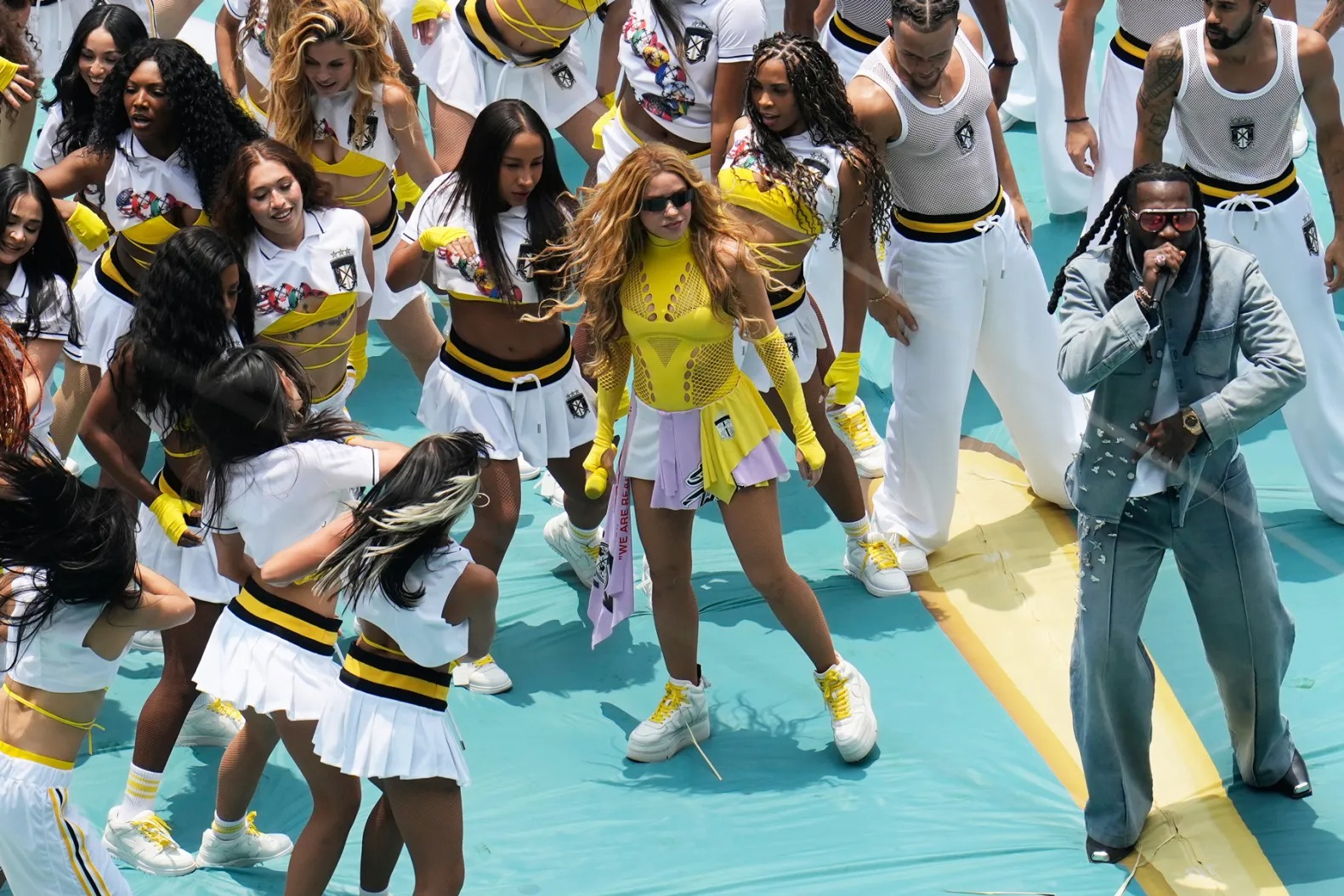
The FIFA 2026 World Cup officially kicked off unforgettably as global superstars Shakira and Burna Boy took center stage to perform the tournament's official anthem, "Dai Dai." Held in front of thousands of fans and broadcast to millions around the world, the opening ceremony transformed into a celebration of music, culture, and football's unmatched ability to unite people across borders.
The FIFA World Cup has long been associated with iconic musical moments. From unforgettable performances by international artists to anthems that become synonymous with the tournament itself, music has played a crucial role in shaping the emotional identity of football's biggest stage. In 2026, Shakira and Burna Boy delivered a performance that instantly secured its place among the most memorable World Cup opening ceremonies in history.
Shakira Returns to the World Cup Stage
For football fans, seeing Shakira perform at the FIFA World Cup carries a special significance.
The Colombian superstar has become one of the artists most closely associated with the tournament thanks to her legendary performances in previous editions. Her 2010 anthem, "Waka Waka (This Time for Africa)," remains one of the most successful and beloved World Cup songs ever released. More than fifteen years later, the track continues to dominate playlists and sporting events worldwide.
Her return to the World Cup stage for FIFA 2026 generated enormous excitement among fans eager to relive that magic.
As soon as she appeared on stage, the crowd erupted. Shakira's signature charisma, infectious energy, and commanding stage presence immediately captivated audiences both inside the stadium and watching from home.
The performance served as a reminder of why she remains one of the most influential Latin artists of all time.
Burna Boy Brings Afrobeats to Football's Biggest Stage
Joining Shakira was Nigerian superstar Burna Boy, one of the leading figures behind the global rise of Afrobeats.
Over the past several years, Burna Boy has evolved from a regional sensation into an international powerhouse. His music has topped charts, sold out arenas, and introduced millions of listeners to the vibrant sounds emerging from Africa.
His inclusion in the FIFA 2026 opening ceremony highlighted football's growing embrace of global musical diversity.
Burna Boy brought his unmistakable style and magnetic performance skills to "Dai Dai," adding depth, rhythm, and authenticity to the anthem. His confident delivery resonated with audiences around the world and showcased the enormous influence African artists now hold within mainstream entertainment.
For many viewers, his appearance symbolized a changing music industry where talent from every continent commands worldwide attention.
What Is "Dai Dai"?
"Dai Dai" serves as the official anthem of the FIFA 2026 World Cup.
Designed to capture the spirit of unity, resilience, celebration, and shared passion, the song blends multiple musical influences into a powerful and uplifting composition.
The track combines:
- Latin rhythms.
- Contemporary pop production.
- Afrobeats influences.
- Stadium-ready choruses.
- Cross-cultural musical elements.
The result is a song capable of connecting with audiences regardless of language, nationality, or background.
Like previous World Cup anthems, "Dai Dai" aims to represent more than football. It represents hope, togetherness, and the collective joy experienced during the world's largest sporting event.
Why the Performance Resonated with Fans Worldwide
One of the reasons the performance generated such a positive reaction was its authenticity.
Rather than relying solely on elaborate production and visual effects, Shakira and Burna Boy created genuine chemistry on stage. Their contrasting musical styles complemented one another perfectly.
Social media platforms exploded with praise immediately following the ceremony.
Fans celebrated:
- Shakira's triumphant return to the World Cup spotlight.
- Burna Boy's powerful vocal performance.
- The fusion of Latin and African musical traditions.
- The uplifting message behind the anthem.
- The emotional atmosphere was created throughout the performance.
Within hours, clips of the opening ceremony circulated across major social media platforms, generating millions of views and sparking conversations among football supporters and music fans alike.
FIFA's Continued Commitment to Global Representation
The selection of Shakira and Burna Boy reflects FIFA's broader efforts to showcase diversity and inclusivity through music.
Football is often described as the world's universal language. Music possesses a similar power.
By bringing together artists from different regions and cultural backgrounds, FIFA demonstrated its commitment to celebrating the truly global nature of the tournament.
The 2026 edition of the World Cup is particularly symbolic.
Hosted across multiple countries and featuring expanded international participation, this tournament represents one of the most ambitious chapters in FIFA history. The opening ceremony mirrored that vision by emphasizing collaboration rather than uniformity.
The message was clear: football belongs to everyone.
The Growing Influence of Afrobeats in Global Entertainment
Burna Boy's appearance at the FIFA World Cup opening ceremony also marks another milestone in Afrobeats' remarkable rise.
Once viewed primarily as a regional genre, Afrobeats has evolved into one of the most influential movements in modern music.
Artists from Africa continue to shape global trends through streaming platforms, international collaborations, and sold-out tours.
Burna Boy stands at the forefront of this movement.
His participation in FIFA 2026 sends a powerful message to aspiring artists throughout Africa that international opportunities are more accessible than ever before.
The genre's presence on one of the largest entertainment platforms on Earth confirms that Afrobeats is no longer emerging. It has firmly established itself as a dominant force within the global music landscape.
Shakira's Enduring Global Appeal
Few artists have demonstrated the longevity and adaptability of Shakira.
Across decades of success, she has consistently reinvented herself while maintaining the authenticity that first connected her with audiences worldwide.
Her ability to transcend language barriers and cultural divisions has made her a truly international artist.
The FIFA 2026 opening ceremony reinforced her status as one of music's most recognizable performers.
For many viewers who grew up watching her earlier World Cup performances, seeing Shakira return created a profound sense of nostalgia.
At the same time, younger audiences experienced firsthand the energy and artistry that have defined her career.
The performance bridged generations of football and music fans alike.
Music and Football: A Perfect Partnership
The relationship between music and football continues to strengthen with each major tournament.
Opening ceremonies have evolved into cultural events capable of generating headlines independent of the matches themselves.
They provide artists with unparalleled exposure while enhancing the emotional impact of sporting occasions.
World Cup anthems frequently become soundtracks to cherished memories.
Fans associate these songs with dramatic victories, heartbreaking defeats, and moments of collective celebration shared with friends and family.
"Dai Dai" now joins a distinguished list of songs forever linked to football history.
Its success will ultimately depend not only on chart performance but also on the memories it helps create throughout FIFA 2026.
Social Media Reactions Pour In
The internet responded enthusiastically following the performance.
Viewers praised the artists' chemistry, production quality, and the anthem's infectious energy.
Many fans described the performance as one of the strongest World Cup opening ceremonies in recent years.
Others highlighted the symbolic importance of seeing Latin and African artists unite on a stage viewed by hundreds of millions of people.
Entertainment commentators also noted that FIFA had successfully tapped into two of the most influential global music movements of the modern era.
The widespread praise suggests that "Dai Dai" could enjoy a lasting cultural impact long after the tournament concludes.
What This Means for the Music Industry
Beyond football, the performance illustrates several important trends shaping today's music business.
First, international collaboration continues to drive mainstream success.
Second, audiences increasingly embrace multilingual and multicultural content.
Third, artists with authentic global appeal remain among the most valuable figures in entertainment.
Shakira and Burna Boy represent these shifts perfectly.
Their partnership demonstrates that music's future is increasingly borderless, with creativity flourishing through collaboration rather than limitation.
As streaming platforms connect listeners from every corner of the globe, moments like this are likely to become even more common.
Final Thoughts
Shakira and Burna Boy's electrifying performance of "Dai Dai" accomplished exactly what a World Cup opening ceremony should achieve.
It celebrated diversity.
It energized audiences.
It honored football's unique ability to unite people from different cultures, languages, and backgrounds.
Most importantly, it reminded the world that music and sport share an extraordinary power to create moments that transcend competition.
As FIFA 2026 unfolds, fans will undoubtedly remember thrilling matches and unforgettable goals. Yet many will also remember the night Shakira and Burna Boy stood together on one stage and delivered a performance that captured the spirit of the world's greatest game.
Whether "Dai Dai" ultimately joins the ranks of the most iconic World Cup anthems ever created remains to be seen.
But one thing is certain: FIFA 2026 began with a spectacular celebration worthy of football's biggest stage.
Live Nation Expands in Latin America with Dale Play Live Acquisition
Written by Sounds Space
Live Nation Expands in Latin America with Dale Play Live Acquisition: What It Means for the Future of the Live Music Industry
The global live music industry continues to evolve at a rapid pace, and one of the biggest developments in 2026 is Live Nation Entertainment's acquisition of a majority stake in Argentine concert promoter Dale Play Live. The move signals a major commitment to Latin America's booming live entertainment sector and highlights the region's growing importance in the global music business.
As international promoters seek new opportunities beyond North America and Europe, Latin America has emerged as one of the most exciting markets for concerts, festivals, and live music experiences. Despite economic challenges in some countries, fan demand for live events continues to rise, creating significant opportunities for promoters, artists, venues, and investors.
In this article, we'll explore why Live Nation's expansion into Latin America matters, what the Dale Play Live acquisition means for the industry, and how this move could shape the future of live music across the region.
Live Nation Continues Global Expansion
Live Nation Entertainment is the world's largest live entertainment company, operating across concerts, ticketing, artist management, and venue operations. Through its Ticketmaster division and extensive network of venues and promoters, Live Nation has become a dominant force in the global live events business.
Over the past decade, the company has steadily expanded its footprint across international markets. While North America remains its largest market, Live Nation has increasingly focused on high-growth regions where demand for live entertainment is accelerating.
Latin America represents one of the most attractive expansion opportunities. The region boasts a young population, strong music culture, growing urban centers, and increasing demand for international touring artists.
The acquisition of a majority stake in Dale Play Live demonstrates Live Nation's confidence in the long-term growth potential of Latin America's live music economy.
Who Is Dale Play Live?
Dale Play Live is a leading concert promoter based in Argentina and has built a strong reputation within the Latin American music industry.
The company has played a significant role in organizing concerts, tours, and music events featuring both local and international artists. Through its deep understanding of regional audiences and local market dynamics, Dale Play Live has established itself as a key player in South America's entertainment landscape.
By partnering with Dale Play Live, Live Nation gains access to valuable local expertise, established relationships, and operational infrastructure that can help accelerate growth throughout the region.
This combination of global resources and local knowledge creates a powerful partnership capable of delivering larger events and attracting major international tours.
Why Latin America Is Becoming a Music Industry Hotspot
The live music business in Latin America has experienced significant growth in recent years.
Several factors are contributing to this momentum:
Young and Passionate Audiences
Latin America has one of the youngest populations in the world. Music plays a central role in everyday culture, and fans are highly engaged with both local and international artists.
Concert attendance continues to increase as younger generations prioritize live experiences over traditional forms of entertainment.
Streaming Growth Drives Touring Demand
Streaming platforms have helped artists reach audiences across Latin America more effectively than ever before.
As artists build larger fan bases through platforms like Spotify, YouTube, and TikTok, demand for live performances naturally follows. International acts that once visited the region occasionally are now making Latin America a regular stop on global tours.
Growing Festival Culture
Music festivals have become increasingly popular throughout countries such as Argentina, Brazil, Mexico, Colombia, and Chile.
Major events attract hundreds of thousands of attendees annually, creating new opportunities for promoters and sponsors.
The success of these festivals demonstrates the region's appetite for large-scale live entertainment experiences.
Economic Challenges Haven't Stopped Concert Demand
One of the most interesting aspects of Live Nation's investment is that it comes at a time when some Latin American economies continue to face challenges, including inflation, currency fluctuations, and political uncertainty.
Historically, economic instability can impact consumer spending on entertainment. However, recent trends suggest that live music remains a priority for many fans.
Across the world, consumers increasingly view concerts as valuable experiences rather than luxury purchases. This shift has helped fuel the post-pandemic resurgence of live events.
Many industry experts believe the demand for live music is more resilient than previously assumed. Fans are often willing to spend on experiences that create lasting memories, even during uncertain economic conditions.
Live Nation's investment suggests confidence that long-term growth will outweigh short-term economic concerns.
Benefits for Artists Touring Latin America
The acquisition could create numerous opportunities for artists looking to expand their presence in the region.
With Live Nation's global infrastructure combined with Dale Play Live's local expertise, artists may benefit from:
- Improved tour logistics
- Expanded venue access
- Larger promotional campaigns
- Better audience targeting
- Increased touring opportunities
- Enhanced production capabilities
Major international artists could find it easier to organize extensive Latin American tours, while regional artists may gain access to larger platforms and broader audiences.
This increased connectivity between global and regional markets could help elevate Latin America's position within the worldwide touring ecosystem.
What This Means for the Concert Industry
The deal reflects a broader trend within the live entertainment business.
Major promoters are increasingly seeking strategic acquisitions and partnerships to strengthen their positions in emerging markets. Rather than building operations from scratch, companies are partnering with established local promoters who understand regional audiences and business practices.
This strategy allows companies like Live Nation to scale more efficiently while maintaining strong local connections.
For the industry as a whole, this could lead to:
More International Tours
Artists may include additional Latin American dates in future tour schedules.
Larger Event Productions
Global investment often brings higher production standards and larger-scale events.
Increased Competition
Other promoters may accelerate investments across Latin America to remain competitive.
New Opportunities for Local Talent
Regional artists could gain exposure through larger events and international partnerships.
The Future of Live Music in Latin America
The future appears bright for Latin America's live music industry.
The region continues to demonstrate strong audience engagement, increasing concert attendance, and growing interest from global entertainment companies.
As infrastructure improves and more international investment enters the market, Latin America is likely to become an even more important destination for touring artists and major music events.
The Live Nation-Dale Play Live partnership may ultimately serve as a catalyst for further growth across the region.
Whether through stadium concerts, music festivals, arena tours, or emerging artist showcases, the opportunities for expansion appear significant.
For fans, this could mean access to more events, bigger productions, and a wider variety of artists performing throughout the region.
For the music industry, it reinforces a growing reality: Latin America is no longer simply an emerging market—it's becoming one of the most important drivers of global live music growth.
Conclusion
Live Nation's acquisition of a majority stake in Dale Play Live represents more than just a business transaction. It is a clear signal that Latin America has become a strategic priority within the global live entertainment industry.
By combining Live Nation's worldwide reach with Dale Play Live's regional expertise, the partnership is positioned to capitalize on growing demand for concerts and live experiences across the region.
As the music industry continues to evolve, investments like this highlight the increasing importance of live events and the growing influence of Latin American audiences on the global stage.
For artists, promoters, venues, and fans alike, the future of live music in Latin America looks more exciting than ever.
Italy Cancels Kanye West and Travis Scott Concerts After Protests and Controversy
Written by Sounds Space
Italy Cancels Kanye West and Travis Scott Concerts After Controversy and Protests
Italy Pulls the Plug on Kanye West and Travis Scott Concerts
Italy has reportedly canceled planned performances involving hip-hop superstars Kanye West and Travis Scott following widespread controversy, public protests, and growing concerns from local authorities. The decision has sparked intense debate among music fans, free speech advocates, cultural organizations, and local communities.
The cancellation marks another chapter in the ongoing scrutiny surrounding Kanye West, whose public statements and behavior over the past several years have generated significant backlash globally. Combined with concerns related to Travis Scott's live events and crowd management controversies, Italian officials faced mounting pressure from activists and residents who opposed hosting the artists.
As news of the cancellations spread, social media platforms erupted with mixed reactions. Some supporters argued that artists should be separated from their controversies, while critics praised the decision as a responsible move by organizers and local authorities.
Why Were the Concerts Canceled?
The primary reasons behind the cancellations stem from public opposition, political pressure, and concerns about the artists' reputations.
Kanye West has remained one of the most controversial figures in modern music. While widely recognized as one of hip-hop's most influential artists and producers, his public comments in recent years have led to widespread criticism from governments, corporations, media outlets, and advocacy groups.
Several Italian organizations reportedly voiced concerns about providing a platform for an artist whose statements have repeatedly generated international controversy. Protest groups argued that hosting such events could send the wrong message and potentially damage the reputation of the cities involved.
Meanwhile, Travis Scott has continued to face public scrutiny following previous concerns related to concert safety and crowd management. Although the rapper remains one of the world's most successful touring artists, critics questioned whether large-scale events featuring controversial performers were appropriate amid heightened public sensitivity.
The combination of these factors ultimately contributed to organizers reevaluating the planned performances.
Public Protests Played a Major Role
Public demonstrations and online campaigns were instrumental in influencing the outcome.
Activists organized petitions, social media campaigns, and public demonstrations calling for authorities to reconsider the concerts. Many protesters argued that public venues should prioritize artists who promote positive social values and community engagement.
Residents in several regions expressed concerns about potential disruptions, security challenges, and the broader cultural implications of hosting events involving highly polarizing figures.
The growing momentum of these campaigns placed additional pressure on event organizers, sponsors, and local governments. In today's digital age, public sentiment can significantly influence major entertainment decisions, and this situation proved no exception.
The controversy highlights how public opinion increasingly shapes the live music industry, particularly when artists become associated with political or social debates.
Impact on Kanye West's International Touring Plans
The cancellation represents another setback for Kanye West's international performance ambitions.
Despite ongoing controversy, Kanye remains one of the most influential figures in music history. Albums such as The College Dropout, Graduation, and My Beautiful Dark Twisted Fantasy continue to be celebrated by fans and critics alike.
However, his public image has undergone a significant transformation in recent years. Multiple brands, business partners, and event organizers have distanced themselves from the artist following controversial statements and actions.
As a result, securing venues, sponsorships, and international partnerships has become increasingly complicated. The Italian cancellations may signal that promoters are becoming more cautious when evaluating potential events involving high-profile but controversial performers.
For fans hoping to see Kanye perform live in Europe, these developments create uncertainty regarding future tour announcements.
Travis Scott Faces Another Challenge
Although much of the controversy centered around Kanye West, Travis Scott has also found himself drawn into the discussion.
Known for chart-topping albums like Astroworld and Utopia, Travis Scott remains one of the most commercially successful artists in modern hip-hop.
His concerts are famous for their high energy, elaborate production, and massive fan attendance. However, discussions surrounding concert safety have followed the artist since previous incidents at major live events.
While supporters argue that Travis Scott has worked to improve safety measures and event management practices, critics continue to raise concerns whenever large-scale performances are announced.
The Italian situation demonstrates how past controversies can continue influencing public perception and event planning decisions years later.
The Growing Influence of Public Accountability in Music
The cancellations reflect a broader trend within the global entertainment industry.
Artists today operate in an environment where public scrutiny extends far beyond their music. Statements made online, interviews, social media activity, and personal behavior can significantly impact career opportunities.
Promoters, sponsors, venue operators, and government officials increasingly consider reputational risks when organizing major events. Public backlash can affect ticket sales, sponsorship agreements, media coverage, and overall event success.
This shift has created new challenges for artists navigating the balance between artistic freedom and public accountability.
Supporters of the cancellations argue that communities have the right to decide which public events align with their values. Critics, however, warn that such decisions may contribute to growing restrictions on artistic expression.
The debate remains complex and highly polarizing.
Fan Reactions Are Divided
Not surprisingly, reactions from fans have been mixed.
Many Kanye West supporters expressed disappointment, arguing that music should be judged separately from political or personal controversies. Some fans accused authorities of censorship and claimed that audiences should be free to decide whether to attend performances.
Others welcomed the cancellations, believing that public figures should face consequences for controversial actions and statements.
Similarly, Travis Scott fans voiced frustration that the rapper became entangled in broader controversies despite maintaining a successful touring career.
The passionate responses demonstrate the powerful connection fans maintain with artists, even amid public criticism and controversy.
What This Means for the Future of Live Music
The cancellation of Kanye West and Travis Scott concerts in Italy could have implications beyond a single event.
Promoters around the world are increasingly aware of the reputational risks associated with booking controversial performers. Public campaigns can quickly gain momentum online, forcing organizers to reconsider previously approved events.
At the same time, artists continue to enjoy strong fan support despite criticism, creating difficult decisions for event planners attempting to balance public demand with community concerns.
The situation highlights a larger transformation within the entertainment industry, where cultural conversations, social responsibility, and public perception play a greater role than ever before.
Conclusion
Italy's decision to cancel planned concerts involving Kanye West and Travis Scott reflects the growing influence of public opinion in today's music industry. While supporters view the move as a necessary response to ongoing controversies, critics argue it raises important questions about artistic freedom and censorship.
Regardless of where individuals stand on the issue, the cancellations underscore a reality facing modern artists: public perception can significantly impact opportunities, partnerships, and live performances.
As the music industry continues to evolve, the intersection of entertainment, social responsibility, and public accountability will remain a defining topic for artists, promoters, and fans worldwide.
deadmau5 Sells Signed Synths and Studio Gear on Reverb + Exclusive mau5head Giveaway
Written by Sounds Space
deadmau5 Is Selling Signed Synths, Studio Gear, and Giving Away a Space-Themed mau5head through Reverb
Electronic Music Fans Have a Rare Opportunity to Own a Piece of deadmau5 History
Electronic music producer deadmau5 is opening the doors to his creative universe once again. Through a special sale on Reverb, the legendary producer, DJ, and technology enthusiast is offering fans the chance to purchase signed synthesizers, modular equipment, studio gear, and other unique pieces from his personal collection.
As if that wasn't exciting enough, one lucky buyer will also receive a one-of-a-kind space-themed mau5head that was previously used during performances in Las Vegas.
For music producers, synth collectors, deadmau5 fans, and electronic music enthusiasts, this is more than just another gear sale. It is a rare opportunity to own equipment directly connected to one of the most influential figures in modern electronic music.
The announcement has generated significant buzz across the music production community, with many eager to discover which iconic pieces of gear are being made available and what stories they might hold.
Who Is deadmau5?
Before diving into the sale itself, it's worth understanding why this event has attracted so much attention.
Born Joel Zimmerman, deadmau5 has become one of the most recognizable names in electronic dance music. Known for his signature mau5head helmet and groundbreaking productions, he has spent nearly two decades shaping the EDM landscape.
His extensive catalog includes globally recognized tracks such as:
- Ghosts 'n' Stuff
- Strobe
- Raise Your Weapon
- The Veldt
- Monophobia
- Some Chords
Beyond his music, deadmau5 has earned a reputation as one of the industry's most passionate technology and synthesizer enthusiasts.
His studio setups are legendary, often featuring rare vintage synthesizers, cutting-edge modular systems, custom-built workstations, and unique electronic instruments.
Because of this reputation, any opportunity to acquire gear directly from his collection instantly becomes major news within the music production world.
Why Producers Love deadmau5's Studio Setup
One reason this Reverb sale has generated so much excitement is deadmau5's long-standing reputation as a gear enthusiast.
Unlike many producers who rely primarily on software, deadmau5 has consistently invested in high-end hardware instruments and studio equipment.
Over the years, fans have watched countless studio tours showcasing rooms filled with:
- Analog synthesizers
- Modular Eurorack systems
- Vintage keyboards
- High-end monitoring systems
- Professional mixing equipment
- Custom-built electronic devices
His studio has often been described as one of the most impressive electronic music production environments in the world.
For producers, owning a piece of equipment that contributed to the creative process behind some of electronic music's most influential productions carries tremendous appeal.
What's Included in the Reverb Sale?
The sale features a carefully selected collection of gear from deadmau5's personal inventory.
Among the most sought-after items are signed synthesizers, including a signed microKORG that is expected to attract significant attention from collectors.
The sale also includes various pieces of studio hardware and modular gear that have played a role in Zimmerman’s creative workflow over the years.
Potential buyers can expect to find:
Signed Synthesizers
Signed instruments often become collector's items, especially when associated with influential artists.
For fans, a signed synthesizer represents both a practical studio tool and a unique piece of music history.
Modular Equipment
Modular synthesis has experienced explosive growth over the past decade, and deadmau5 has long been an advocate of modular systems.
Many producers are particularly excited about the possibility of acquiring modules directly from his setup.
Studio Hardware
Additional equipment may include processors, controllers, interfaces, and various production tools used throughout his career.
Rare Collectibles
Some pieces are expected to have value beyond their technical functionality due to their direct connection to the artist.
This combination of utility and collectibility makes the sale especially attractive.
The Space-Themed mau5head Giveaway
Perhaps the most exciting element of the promotion is the inclusion of a space-themed mau5head giveaway.
The mau5head has become one of the most recognizable symbols in electronic music culture.
Over the years, deadmau5 has worn countless variations of the iconic helmet, each representing different creative eras and performance concepts.
The space-themed version being offered reportedly appeared during performances in Las Vegas, adding another layer of significance for collectors.
For many fans, owning a genuine mau5head used in a professional performance would be the ultimate piece of deadmau5 memorabilia.
The giveaway adds an extra level of excitement to the Reverb campaign and is likely to drive substantial participation from fans worldwide.
Why Artists Sell Their Studio Gear
Some fans may wonder why successful artists choose to part with equipment from their personal collections.
In reality, gear turnover is extremely common among professional musicians and producers.
Technology evolves rapidly, and creative needs change over time.
Artists frequently:
- Upgrade equipment
- Reorganize studios
- Simplify workflows
- Experiment with new technologies
- Make room for future acquisitions
For deadmau5, who has always embraced innovation, selling older gear likely creates opportunities for new creative exploration.
Additionally, gear sales allow fans to connect directly with the artist's creative journey.
The Growing Market for Artist-Owned Gear
The demand for artist-owned equipment has increased dramatically in recent years.
Collectors and producers are increasingly interested in acquiring gear that carries a story.
Ownership history can significantly increase an item's desirability.
Previous sales involving equipment from major artists have often attracted global attention, with some items selling for substantially more than their original retail prices.
Factors that drive value include:
- Artist ownership
- Signature authentication
- Historical significance
- Studio usage
- Rarity
- Condition
deadmau5's gear checks several of these boxes simultaneously, making the collection particularly appealing.
Why Reverb Has Become the Go-To Marketplace
The sale is taking place through Reverb, one of the world's largest marketplaces for musical instruments and professional audio equipment.
Over the years, Reverb has become a preferred destination for artists looking to sell equipment directly to fans.
The platform offers:
- Global reach
- Secure transactions
- Verified listings
- Detailed product information
- Strong community engagement
Several major artists have partnered with Reverb to sell personal gear collections, turning these sales into highly anticipated events.
The platform's ability to connect artists directly with musicians and collectors makes it an ideal venue for projects like this.
What This Means for Music Producers
Beyond the collector appeal, the sale also offers valuable inspiration for producers.
Many aspiring musicians spend years studying the tools and workflows used by successful artists.
Seeing the types of equipment deadmau5 has chosen to use provides insight into his production philosophy.
It reinforces an important lesson:
Great music comes from creativity, experimentation, and skill—not simply from owning expensive gear.
While the equipment itself is fascinating, the real value lies in understanding how artists use technology to bring ideas to life.
The Legacy of deadmau5 in Music Technology
Few electronic artists have had as much influence on music technology culture as deadmau5.
Throughout his career, he has been an outspoken advocate for innovation, transparency, and technical excellence.
His influence extends far beyond music production and includes:
- Studio design
- Sound engineering
- Live performance technology
- Synthesizer culture
- Modular synthesis communities
- Creative workflow development
Because of this broader impact, even a simple gear sale becomes a major event within the music technology world.
Fans are not just purchasing equipment—they are buying a tangible connection to one of electronic music's most influential creative minds.
Collecting Pieces of Electronic Music History
Music memorabilia has evolved dramatically over the years.
While collectors once focused primarily on guitars and rock-and-roll artifacts, electronic music fans now seek equipment that played a role in shaping modern dance music culture.
Items associated with pioneering producers often become historical artifacts in their own right.
As electronic music continues to mature as a genre, interest in preserving its history continues to grow.
Sales like this help document and celebrate the technological side of music creation.
Conclusion
deadmau5's Reverb sale offers fans and producers an extraordinary opportunity to own pieces of electronic music history.
From signed synthesizers and modular equipment to rare studio gear and the highly coveted space-themed mau5head giveaway, the event showcases the unique intersection of music, technology, and fan culture.
For collectors, the sale presents the chance to acquire authentic items connected to one of EDM's most influential artists.
For producers, it offers insight into the tools that helped shape some of the most iconic electronic music of the modern era.
Whether you're a lifelong deadmau5 fan, a synth enthusiast, or a professional music producer, this Reverb event represents a rare opportunity to bring a piece of Joel Zimmerman's creative universe into your own studio.
And judging by the excitement already surrounding the sale, these pieces of gear won't stay available for long.
More...
Kanye West's Turkey Concert Breaks All-Time Ticket Sales Records in 2026
Written by Sounds Space
Kanye West's Turkey Concert Breaks All-Time Ticket Sales Records
The Historic Concert That Shook the Global Music Industry
In a stunning development that has captivated the global music industry, Kanye West's highly anticipated concert in Turkey has officially broken all-time ticket-selling records. The event, which drew unprecedented demand from fans across Europe, Asia, the Middle East, and beyond, has become one of the most talked-about live music events of 2026.
Known for pushing boundaries in music, fashion, and entertainment, Kanye West has once again demonstrated his extraordinary ability to command global attention. Despite years of controversy, public scrutiny, and unpredictable career moves, the artist has proven that his influence remains stronger than ever.
The record-breaking success of the Turkey concert highlights not only Kanye's enduring star power but also Turkey's growing status as a major destination for international live entertainment.
A Record-Breaking Achievement
According to industry reports, ticket sales for Kanye West's Turkey concert surpassed expectations within hours of release. Fans flooded online ticketing platforms, creating virtual queues that stretched into the hundreds of thousands.
The overwhelming demand resulted in:
- Record-breaking ticket sales in the first 24 hours.
- Ticket platforms experiencing heavy traffic and temporary outages.
- International fans booking flights and accommodation immediately after securing tickets.
- Secondary market prices skyrocketing due to demand.
Industry analysts have described the event as one of the fastest-selling concerts ever recorded, placing it alongside some of the largest global live events in music history.
For Turkey's entertainment sector, the achievement represents a landmark moment that could reshape how international artists view the country's concert market.
Why Kanye West Remains One of the Biggest Names in Music
Many industry observers have questioned how Kanye West continues to generate such enormous demand after more than two decades in the spotlight.
The answer lies in his unique combination of artistry, controversy, innovation, and cultural relevance.
Since emerging as a producer in the early 2000s, Kanye has consistently reinvented himself. Albums such as:
- The College Dropout
- Late Registration
- Graduation
- 808s & Heartbreak
- My Beautiful Dark Twisted Fantasy
- Yeezus
- Donda
have influenced multiple generations of artists across hip-hop, pop, electronic music, and even rock.
His ability to remain culturally relevant while constantly evolving has allowed him to maintain a fanbase that spans age groups, countries, and musical genres.
The Turkey concert demonstrates that Kanye's global appeal remains virtually unmatched.
Turkey Emerges as a Global Concert Destination
The success of the event also highlights Turkey's rapidly growing importance in the international entertainment market.
Over the past decade, Turkey has increasingly attracted major artists due to its:
- Strategic location between Europe and Asia.
- Modern stadium infrastructure.
- Expanding tourism sector.
- Young and music-loving population.
- Strong international travel connections.
Cities such as Istanbul have become major hubs for global entertainment, attracting millions of visitors annually.
The massive demand for Kanye West's concert could encourage promoters and booking agencies to bring even more superstar artists to Turkey in the coming years.
Industry insiders believe this concert may serve as a turning point for the country's live events sector.
International Fans Flock to Turkey
One of the most remarkable aspects of the ticket sales phenomenon has been the international audience.
Fans reportedly purchased tickets from:
- United Kingdom
- Germany
- France
- Italy
- Spain
- United States
- Saudi Arabia
- United Arab Emirates
- Qatar
- Egypt
- Azerbaijan
- Kazakhstan
and many other countries.
The event has effectively transformed into a global gathering of Kanye West supporters.
Travel agencies have already reported increased bookings, while hotels and local businesses are preparing for a significant economic boost surrounding the concert weekend.
This international demand demonstrates the power of music tourism and its growing impact on local economies.
The Social Media Explosion
As tickets became available, social media platforms exploded with reactions from fans.
Hashtags related to the concert quickly began trending across:
- X
- TikTok
- YouTube
Thousands of users shared screenshots of successful purchases, countdown posts, travel plans, and excitement about attending the event.
Fan communities dedicated to Kanye West experienced record engagement levels as supporters discussed stage design predictions, possible guest appearances, and potential setlists.
The social media buzz has only amplified interest in the event, creating a cycle of publicity that continues to drive global attention.
What Fans Can Expect From the Concert
Although official details remain limited, expectations for the show are extraordinarily high.
Kanye West has built a reputation for creating concert experiences that go far beyond traditional live performances.
Past tours have featured:
- Massive custom-built stages.
- Innovative visual effects.
- Advanced lighting technology.
- Theatrical storytelling.
- Groundbreaking production design.
Many fans expect the Turkey concert to include a career-spanning setlist featuring hits from multiple eras of his catalog.
Potential performances could include fan favorites such as:
- Stronger
- Gold Digger
- Heartless
- Power
- Runaway
- All of the Lights
- Bound 2
- Hurricane
Given Kanye's reputation for surprises, special guests and unexpected performances remain a possibility.
The Economic Impact of the Event
Beyond music, the concert is expected to generate significant economic benefits for Turkey.
Large-scale entertainment events create a ripple effect across numerous industries.
Expected beneficiaries include:
Hospitality Sector
Hotels, resorts, and short-term rental providers are already experiencing increased demand.
Transportation Industry
Airlines, airports, ride-sharing services, and public transportation networks are expected to see substantial increases in passenger traffic.
Restaurants and Retail
Visitors attending the event will contribute additional spending at local restaurants, cafes, shopping centers, and tourist attractions.
Tourism Industry
Many international attendees are extending their stays, combining the concert experience with broader tourism activities throughout Turkey.
Economic analysts estimate that the overall financial impact could reach tens of millions of dollars.
A New Era for Live Music Events
The record-breaking success of Kanye West's Turkey concert also reflects broader changes within the global concert industry.
Since the pandemic era, live music has experienced an unprecedented resurgence.
Fans are increasingly willing to:
- Travel internationally for concerts.
- Purchase premium ticket packages.
- Attend destination music events.
- Spend more on exclusive experiences.
Major artists now view live performances as one of the most important aspects of their careers.
Concerts have evolved into large-scale cultural events that combine entertainment, tourism, fashion, and social media engagement.
Kanye's Turkey concert perfectly represents this new reality.
Why Demand Was So Extraordinary
Several factors contributed to the historic ticket demand.
Scarcity
Kanye West does not perform as frequently as many other major artists. Limited opportunities naturally increase demand.
Global Fanbase
Few artists possess such a diverse international audience.
Curiosity Factor
Every Kanye event carries an element of unpredictability, making each performance feel unique.
Cultural Significance
The concert has been marketed as more than just a live show. It has become a major cultural moment.
Destination Appeal
Turkey's popularity as a travel destination has encouraged many fans to combine entertainment with tourism.
Together, these factors created the perfect conditions for record-breaking sales.
Industry Reactions
Music executives, promoters, and entertainment analysts have been quick to comment on the achievement.
Many industry experts believe the event confirms that superstar artists continue to possess immense drawing power despite changing music consumption habits.
Streaming may dominate everyday listening, but live experiences remain irreplaceable.
Industry observers also note that the success reinforces the value of event exclusivity. When artists create rare and highly anticipated performances, demand can reach extraordinary levels.
For concert promoters worldwide, Kanye's Turkey concert may become a case study in event marketing and audience engagement.
The Future of Major Concert Events in Turkey
The success of this event could have long-term implications for Turkey's entertainment landscape.
Promoters may now pursue:
- More stadium concerts.
- International music festivals.
- Exclusive artist residencies.
- Multi-day entertainment experiences.
- Cross-border tourism partnerships.
Global artists and management teams are likely paying close attention to the results.
If future events replicate this success, Turkey could become one of the most important concert markets in Europe and the Middle East.
Kanye West Continues to Defy Expectations
Throughout his career, Kanye West has repeatedly challenged conventional wisdom.
Whether through groundbreaking albums, fashion ventures, creative risks, or headline-generating moments, he has consistently remained at the center of popular culture.
The record-breaking ticket sales for his Turkey concert serve as yet another reminder of his unique ability to capture public attention.
While opinions about Kanye West may remain divided, the numbers tell a clear story: audiences around the world are still eager to see him perform.
Conclusion
Kanye West's Turkey concert has officially entered music history by breaking all-time ticket-selling records and generating unprecedented global interest.
The event showcases the enduring power of live music, the continued influence of one of the world's most recognizable artists, and Turkey's emergence as a major international entertainment destination.
With fans traveling from across the globe, social media buzzing with excitement, and economic benefits expected to ripple throughout the region, the concert represents far more than a single performance.
It is a cultural phenomenon.
As the concert date approaches, anticipation continues to build, and one thing is certain: Kanye West has once again proven that when it comes to commanding worldwide attention, few artists can compete with his reach, influence, and ability to create history.
Why Rappers Are Struggling to Sell Out Arenas in 2026
Written by Sounds Space
Why Rappers Are Struggling to Sell Out Arenas in 2026
The New Reality of Hip-Hop Touring
For decades, hip-hop has been one of the most dominant genres in the music industry. From sold-out stadiums to billion-stream artists, rap music has consistently shaped popular culture and generated massive revenue for artists, labels, and promoters alike.
However, 2026 has revealed an uncomfortable truth for many major rap artists: selling out arenas is becoming increasingly difficult.
From Rick Ross and A$AP Rocky to Kid Cudi and several other well-known names, many rappers are finding it harder than ever to fill large venues. Tours are seeing discounted tickets, venue changes, postponed dates, and in some cases, outright cancellations.
The question is simple: Why are rappers struggling to sell out arenas in 2026?
The answer is far more complex than declining popularity. Instead, it reflects a major shift in consumer behavior, ticket pricing, streaming culture, and the changing relationship between artists and fans.
The Arena Touring Model Is Becoming Harder to Sustain
The traditional arena model was built around one core principle: massive demand.
Artists would release a hit album, build anticipation, and then capitalize on that momentum through large-scale tours. Fans had fewer entertainment options and were often willing to spend significant money to see their favorite performers live.
Today, that formula is breaking down.
Fans are facing economic pressures worldwide, including rising living costs, housing expenses, and inflation. Concert tickets are no longer viewed as affordable entertainment for many households.
A single arena concert can easily cost:
- $100–$300 for standard tickets
- $50–$100 for parking
- $20–$50 for food and drinks
- Additional travel and accommodation costs
For many fans, attending one concert can cost several hundred dollars.
As a result, consumers are becoming more selective about which artists they are willing to spend money on.
Streaming Success Does Not Equal Ticket Sales
One of the biggest misconceptions in today's music industry is that streaming numbers automatically translate into concert demand.
This simply isn't true.
An artist may generate hundreds of millions of streams while maintaining a relatively passive audience. Many listeners consume music through playlists, algorithmic recommendations, and social media snippets without developing a deep connection to the artist.
In previous generations, fans often purchased full albums and followed artists closely throughout their careers.
Today's listeners frequently engage with individual songs rather than entire artist brands.
This creates a major problem for arena tours.
Just because a rapper has a viral hit on Spotify, TikTok, or YouTube does not mean thousands of people are willing to spend hundreds of dollars to see them perform live.
The gap between digital popularity and real-world demand has never been wider.
The Rise of Festival Culture
Another major challenge facing rappers is the growing popularity of music festivals.
Many fans now prefer festivals over standalone arena shows because they offer greater value.
Instead of paying premium prices to watch one artist perform for 90 minutes, consumers can attend a festival and see dozens of artists across multiple stages.
Major festivals continue to attract huge audiences because they provide:
- Multiple headliners
- Diverse music genres
- Social experiences
- Better perceived value
- Unique content for social media
For younger audiences, festivals often feel more exciting than traditional arena concerts.
This trend is especially affecting mid-tier rap artists who previously relied on arena touring revenue.
Oversaturation Is Hurting Demand
The music industry is more crowded than ever.
Every day, thousands of new songs are uploaded to streaming platforms.
Social media has created an environment where artists can achieve viral success almost overnight.
While this has created opportunities, it has also led to oversaturation.
Fans have more choices than ever before.
Instead of focusing on a handful of superstar artists, audiences now divide their attention across hundreds of musicians, influencers, content creators, gamers, and entertainers.
The competition for attention is relentless.
As a result, maintaining long-term fan loyalty has become significantly harder.
Arena Ticket Prices Have Reached a Breaking Point
Perhaps the biggest factor impacting arena attendance is ticket pricing.
Many fans simply believe concerts have become too expensive.
Dynamic pricing systems have pushed ticket costs to unprecedented levels.
While these systems help maximize revenue, they often alienate core fans.
When consumers see ticket prices fluctuating dramatically or reaching premium levels, many choose not to attend at all.
Fans increasingly ask themselves:
"Do I really want to spend $300 to see this artist?"
For many rappers, the answer from consumers is becoming "no."
Artists who were capable of selling out arenas five years ago may no longer generate enough demand to justify those ticket prices.
Social Media Has Changed Fan Relationships
Social media was once considered a powerful promotional tool for artists.
While it still plays an important role, it has also created unexpected challenges.
Fans now have unprecedented access to artists through:
- TikTok
- YouTube
- Twitch
- Podcasts
- Livestreams
As a result, the exclusivity that once surrounded celebrities has diminished.
In previous decades, attending a concert was one of the few opportunities fans had to experience their favorite artist.
Today, fans can watch hours of content from artists without ever purchasing a ticket.
This constant accessibility has reduced some of the urgency surrounding live events.
Hip-Hop Is Facing Increased Competition
Although hip-hop remains one of the world's most influential genres, it is no longer the uncontested leader it once appeared to be.
Several genres are experiencing significant growth, including:
Country Music
Country artists continue to dominate touring revenues and frequently sell out stadiums and arenas.
Fans of country music often demonstrate exceptionally high loyalty and stronger ticket-buying habits.
Electronic Dance Music (EDM)
EDM festivals and events continue to thrive globally.
The community aspect of electronic music creates highly engaged audiences willing to travel long distances for live experiences.
Latin Music
Latin artists are experiencing unprecedented international growth.
Their concerts often attract passionate fan bases that consistently support live performances.
K-Pop
K-pop remains one of the strongest touring genres in the world.
Fan communities are highly organized and extremely committed to supporting artists both online and offline.
As competition intensifies, rap artists must work harder to attract consumer spending.
Some Artists Have Outgrown Their Peak Commercial Momentum
This is often the most uncomfortable reality.
Not every artist maintains the same level of demand throughout their career.
Artists such as Rick Ross, Kid Cudi, and others have built legendary catalogs and contributed enormously to hip-hop culture.
However, commercial demand naturally evolves.
New generations of listeners emerge.
Musical trends shift.
Consumer interests change.
While legacy artists can still generate significant audiences, filling a 15,000–20,000-seat arena requires extraordinary demand.
Sometimes the market simply no longer supports venues of that size.
This does not diminish an artist's impact or legacy.
It simply reflects changing consumer behavior.
Fans Are Prioritizing Experiences Differently
Younger consumers are spending money differently from previous generations.
Many prioritize:
- Travel
- Experiences
- Gaming
- Technology
- Subscription services
- Fitness memberships
- Content creation equipment
Concerts now compete with countless other entertainment options.
The average consumer's entertainment budget is being divided among multiple platforms and experiences.
This means artists must provide compelling reasons for fans to choose a concert over everything else.
The Future of Hip-Hop Touring
Despite current challenges, hip-hop touring is far from dead.
Instead, the industry is entering a new phase.
Successful artists are adapting by:
Choosing Smaller Venues
Many artists are discovering that smaller venues create:
- Better atmosphere
- Higher demand
- Stronger fan engagement
- Easier sell-outs
A sold-out 5,000-capacity venue often generates more excitement than a half-empty arena.
Creating Premium Experiences
VIP packages, meet-and-greets, exclusive merchandise, and immersive fan experiences are becoming increasingly important revenue streams.
Building Stronger Communities
Artists who actively engage with fans throughout the year tend to maintain stronger touring performances.
Community-building is becoming just as important as releasing music.
Leveraging Direct-to-Fan Marketing
Email lists, fan clubs, membership platforms, and exclusive content are helping artists reduce dependence on algorithms and strengthen relationships with supporters.
The Arena Era Isn't Over, But It's Changing
The struggles faced by artists such as Rick Ross, A$AP Rocky, Kid Cudi, and others do not indicate that hip-hop is declining.
Instead, they reveal a changing music industry.
Streaming has transformed consumption habits.
Ticket prices have reached uncomfortable levels.
Fans have more entertainment choices than ever before.
Social media has altered artist-fan relationships.
And economic realities are forcing consumers to spend more carefully.
Arena tours remain possible, but they increasingly require exceptional demand, strategic pricing, powerful fan engagement, and a compelling live experience.
The artists who adapt to these new realities will continue to thrive.
Those relying on outdated touring models may find that selling out arenas in 2026 is far more difficult than it was just a few years ago.
As the music business evolves, one thing is becoming clear: popularity on a screen does not always translate into people filling seats inside an arena.
Spotify Expands Its Superfan Strategy with AI Tools, Exclusive Content & Fan Subscriptions
Written by Sounds Space
Reason 14 Officially Released: New Features, Workflow Updates & More
Written by Sounds Space