

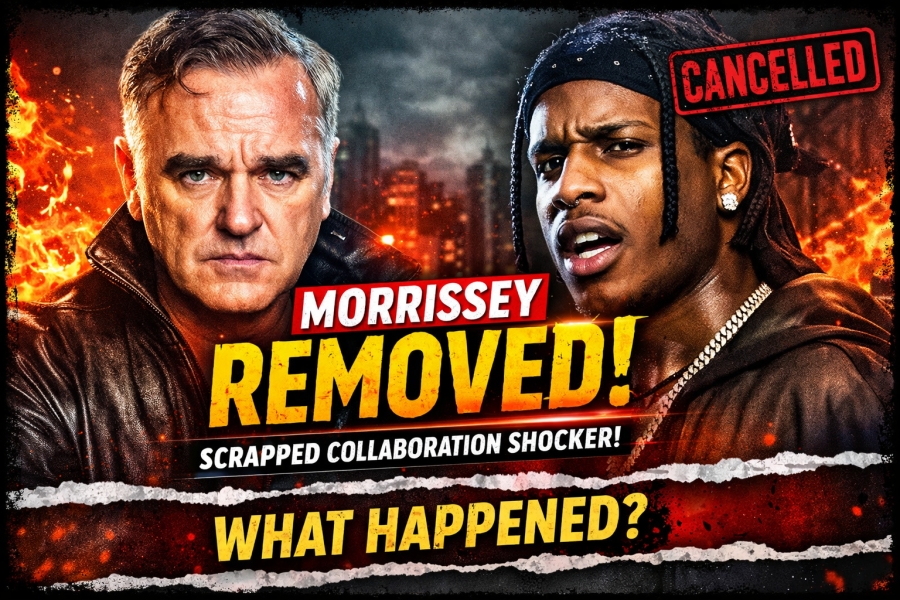
Morrissey Removed From A$AP Rocky’s New Album: The Scrapped Collaboration That Shook Music Culture
A Once-Unthinkable Crossover That Never Was
For years, the idea alone sounded like an internet myth: Morrissey and A$AP Rocky on the same record. Two artists from completely different musical universes — one a polarising British icon of melancholic alternative rock, the other a Harlem-born rap visionary known for fashion, art, and cultural disruption.
Yet somehow, the impossible nearly happened.
Now, it’s official — Morrissey has been removed from A$AP Rocky’s upcoming album, and the internet is on fire. Fans are confused. Critics are debating. And the music industry is once again reminded how fragile modern collaborations can be.
This isn’t just about a missing feature.
This is about cancel culture, creative boundaries, reputation risk, and the new rules of music in 2026.
How the Morrissey x A$AP Rocky Collaboration Began
The roots of this collaboration stretch back several years, quietly circulating through industry whispers and studio rumours. A$AP Rocky has never hidden his admiration for alternative, punk, and post-punk aesthetics. His fashion sense, lyrical minimalism, and emotional detachment often mirror the outsider ethos that Morrissey embodied in the 1980s.
Sources close to the project previously hinted that:
-
Morrissey had recorded spoken-word or vocal passages
-
The track leaned more toward art-rap or experimental hip-hop
-
The collaboration was intended to be provocative, not commercial
In other words, it wasn’t supposed to be radio-friendly — it was meant to challenge culture.
And that’s exactly why its removal matters.
Why Was Morrissey Removed From the Album?
While no official statement from A$AP Rocky’s camp has gone fully on record, industry insiders point to three major reasons.
1. Morrissey’s Controversial Public Image
Morrissey has spent the past decade as one of the music industry’s most divisive figures. Once universally adored, he has since become synonymous with:
-
Political controversy
-
Provocative public statements
-
Refusal to conform to modern cultural norms
For a major hip-hop release in 2026 — especially one tied to fashion brands, streaming platforms, and global tours — association risk is real.
In today’s industry, perception equals profit.
2. Brand Alignment & Industry Pressure
A$AP Rocky is no longer “just” an artist. He is:
-
A global fashion icon
-
A brand collaborator
-
A cultural ambassador
Major stakeholders — labels, distributors, sponsors — reportedly expressed concern that a Morrissey feature could:
-
Overshadow the album’s narrative
-
Spark backlash on social media
-
Distracted from Rocky’s artistic vision
This doesn’t mean Rocky personally rejected Morrissey — it means the ecosystem around the album couldn’t absorb the shockwave.
3. Creative Direction Changed
Albums evolve. Concepts shift. And sometimes, even brilliant ideas no longer fit the final vision.
It’s entirely possible that:
-
The track no longer matched the album’s tone
-
The collaboration felt more distracting than additive
-
The message conflicted with the project’s final themes
In modern album cycles, nothing is safe until release day.
Why Fans Are So Divided
The reaction online has been explosive — and deeply split.
Supporters Say:
-
“Art should be uncomfortable.”
-
“This was a once-in-a-lifetime crossover.”
-
“Music shouldn’t bow to outrage culture.”
Critics Argue:
-
“Some artists are too toxic to platform.”
-
“Freedom of speech doesn’t equal freedom from consequences.”
-
“Rocky made the right business decision.”
This division perfectly reflects where music culture stands today — caught between authenticity and accountability.
What This Says About Cancel Culture in Music
This situation reignites one of the biggest debates in modern art:
Can controversial artists still participate in mainstream culture?
Unlike the past, today’s music industry operates under:
-
Instant social backlash
-
Algorithm-driven visibility
-
Corporate risk management
In previous eras, controversy fueled sales.
In 2026, controversy can kill partnerships overnight.
Morrissey isn’t “cancelled” — but he is commercially radioactive.
Why This Would’ve Been a Historic Track
Let’s be honest: musically, this collaboration could’ve been legendary.
-
Morrissey’s detached, dramatic delivery
-
A$AP Rocky’s experimental production choices
-
A fusion of post-punk melancholy and avant-garde hip-hop
This wasn’t meant to be a hit — it was meant to be a statement.
And that’s why its removal stings.
A$AP Rocky’s Silence Speaks Volumes
Rocky has chosen not to fan the flames — no public drama, no interviews explaining the decision.
That silence is strategic.
In the modern era:
-
Statements become screenshots
-
Clarifications become controversies
-
Apologies become admissions
By saying nothing, Rocky keeps the narrative focused on the music — not the politics.
Morrissey’s Legacy: Untouchable or Unemployable?
Here’s the uncomfortable truth.
Morrissey remains:
-
One of the most influential lyricists of all time
-
A defining voice of outsider culture
-
A figure whose music shaped generations
But influence doesn’t equal immunity.
In 2026, legacy artists don’t control the conversation anymore — the internet does.
Could the Track Leak One Day?
Let’s not pretend this is the end.
History shows that scrapped collaborations often:
-
Leak years later
-
Surface on deluxe editions
-
Appear in documentaries or unreleased archives
If the Morrissey x A$AP Rocky track exists — and it almost certainly does — fans may eventually hear it.
Just not today.
What This Means for Future Cross-Genre Collaborations
This incident sends a clear message across the industry:
-
Cross-genre experimentation is welcome
-
Cultural risk is not
-
Innovation must align with public sentiment
Artists will still push boundaries — but with tighter filters and safer partners.
The age of “anything goes” is officially over.
The Bigger Picture: Art vs Algorithm
At its core, this story isn’t about Morrissey or Rocky.
It’s about:
-
Algorithms over instinct
-
Optics over originality
-
Safety over shock value
And that raises a haunting question:
What masterpieces are we losing because they’re too risky to release?
Final Thoughts: A Cultural Moment Lost — or Delayed?
The removal of Morrissey from A$AP Rocky’s album isn’t a failure — it’s a snapshot of our time.
A time where:
-
Art is global
-
Backlash is instant
-
Creativity is filtered through brand safety
Whether you agree with the decision or not, one thing is undeniable:
This would’ve been one of the most talked-about collaborations of the decade.
And maybe that’s exactly why it couldn’t happen.
