

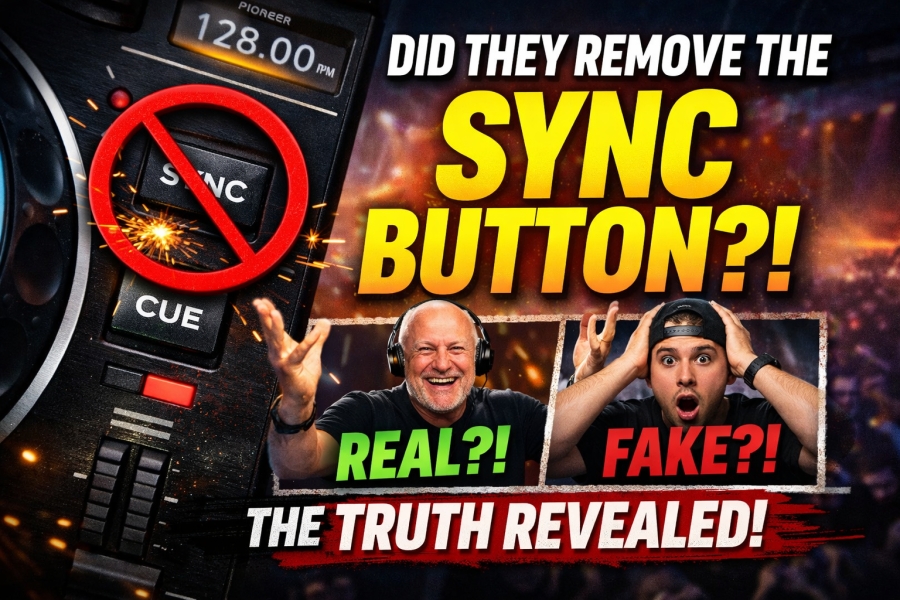
Pioneer / AlphaTheta Removes Sync Button From All Upcoming Products – Genius Move or DJ Chaos?
The DJ world thrives on innovation—but every so often, a single feature sparks years of debate. That feature? The sync button. And now, according to recent reports, AlphaTheta Corporation (formerly Pioneer DJ) is allegedly taking a bold step: removing the sync button from all future products.
But here’s the twist—this headline shook the industry not because it was real… but because it wasn’t.
Still, the conversation it ignited is very real—and incredibly important for the future of DJing.
The Sync Button Controversy Explained
Pioneer DJ (now under AlphaTheta) has long dominated the DJ hardware industry. From CDJs to mixers, their gear is considered the industry standard in clubs and festivals worldwide.
One feature, however, has divided DJs for over a decade: the sync button.
What Does the Sync Button Do?
The sync button automatically matches the tempo (BPM) and beat alignment of two tracks, allowing DJs to mix seamlessly without manually beat-matching.
For some, it’s a game-changing innovation.
For others, it’s cheating.
The Viral Announcement: Removing Sync Forever?
In late March 2026, headlines began circulating that Pioneer / AlphaTheta would remove the sync button entirely from all upcoming DJ gear.
The claim suggested that the company had listened to years of debate and decided to “preserve the integrity of DJing” by forcing DJs to return to manual beatmatching.
The reaction?
- Veteran DJs celebrated
- Beginners panicked
- Social media exploded
- Industry forums went into meltdown
It seemed like one of the biggest shifts in DJ technology history.
The Truth: It Was an April Fools’ Joke
Just as the debate reached boiling point… the truth came out.
The announcement was not real—it was an April Fools’ prank.
Yes, the sync button is not going anywhere (for now).
But what makes this story fascinating is not the prank itself—it’s how believable it was.
Why People Actually Believed It
The idea of removing the sync button resonated because it taps into a real, ongoing debate in DJ culture.
1. The “Real DJing” Argument
Many traditional DJs believe:
- Beatmatching by ear is a core skill
- Sync removes the art and challenge
- Technology is making DJing “too easy”
For these DJs, removing sync would be a return to authenticity.
2. The “Technology Evolves” Argument
On the other side, modern DJs argue:
- Sync allows more focus on creativity and performance
- It enables complex layering, effects, and live remixing
- It lowers the barrier for new talent entering the scene
For them, sync is not cheating—it’s progress.
The Evolution of DJ Technology
To understand the debate, we need to look at how DJing has evolved.
From Vinyl to Digital
- Vinyl required perfect pitch control and manual beatmatching
- CDJs introduced waveforms and BPM counters
- Software added sync, loops, hot cues, and AI tools
Each step was criticized at first—but eventually became standard.
AlphaTheta’s Role in Innovation
AlphaTheta Corporation has consistently pushed boundaries in DJ tech:
- rekordbox ecosystem
- Cloud-based libraries
- Cross-platform integration
- Advanced performance features
Their mission has always been to “push the craft forward”—not restrict it.
Which is why the idea of removing sync felt both shocking—and oddly plausible.
What Would Happen If Sync Was Removed?
Even though it was a joke, let’s explore the hypothetical scenario.
1. A Skill Renaissance
Removing sync would force DJs to:
- Learn beat-matching by ear
- Develop stronger timing and rhythm skills
- Practice more before performing
This could lead to a higher technical standard across the industry.
2. A Barrier for New DJs
On the flip side:
- Beginners might struggle more
- The learning curve would increase
- Some potential talent might never start
Sync has played a major role in democratizing DJing.
3. Competitors Would Capitalize
If AlphaTheta removed sync, competitors would likely:
- Promote sync-enabled gear heavily
- Target beginner and hybrid DJs
- Gain market share quickly
This could disrupt AlphaTheta’s industry dominance.
The Real Future of DJ Gear
Rather than removing features, the future is more likely to include:
Smarter Sync (Not No Sync)
- AI-assisted beatmatching
- Key matching and harmonic mixing
- Real-time track suggestions
Hybrid Performance Tools
- Live remixing capabilities
- Stem separation (vocals, drums, bass)
- Integration with DAWs and plugins
Cross-Platform Ecosystems
As seen with innovations like shared libraries and integrations, the industry is moving toward:
- Interoperability between platforms
- Cloud-based DJing
- Seamless transitions between software and hardware
Why This Debate Still Matters
Even as technology evolves, the sync debate touches on something deeper:
What Does It Mean to Be a DJ?
Is it:
- Technical skill?
- Track selection?
- Crowd reading?
- Creativity?
The answer is: all of the above.
And that’s why this conversation isn’t going away anytime soon.
Community Reactions: Divided as Ever
The prank revealed just how split the DJ community is:
Pro-Removal Crowd
- “Finally, real DJing returns.”
- “Sync ruined the craft.”
- “This is long overdue.”
Anti-Removal Crowd
- “This would kill innovation.”
- “Not everyone DJs the same way.”
- “Tools don’t define talent.”
The Marketing Genius Behind the Joke
From a marketing perspective, this was brilliant.
The story:
- Went viral instantly
- Sparked global debate
- Reinforced brand relevance
- Highlighted industry tensions
Even as a joke, it positioned AlphaTheta at the center of the DJ conversation.
Final Thoughts: The Sync Button Isn’t the Enemy
The truth is simple:
- Sync doesn’t make you a bad DJ
- Not using sync doesn’t make you a great DJ
What matters is:
- Musical taste
- Creativity
- Connection with the audience
The tools are just that—tools.
Conclusion: A Joke That Revealed a Truth
The “sync button removal” story may have been fake—but the reaction was very real.
It exposed:
- Deep divisions in DJ culture
- The tension between tradition and innovation
- The evolving definition of what DJing really is
And most importantly, it reminded us that technology will always change—but the essence of DJing remains the same.
Whether you use sync or not… the crowd only cares about one thing:
How you make them feel.
