

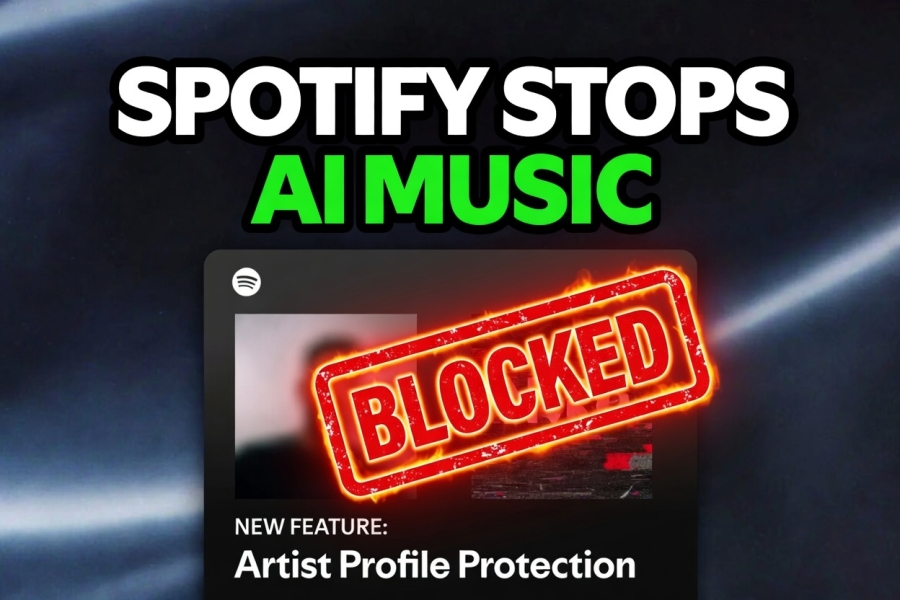
Spotify Prevents AI Music and Incorrect Releases From Appearing on Your Artist Profile With This New Feature
Spotify has officially taken one of its biggest steps yet in protecting artists from fake releases, AI-generated tracks, and music appearing on the wrong artist profiles. The platform recently confirmed that it is testing a new feature that allows artists to manually approve any music before it appears on their official Spotify page.
According to Spotify, the problem has grown significantly over the past year. The company openly acknowledged the issue, stating that music has been landing on the wrong artist pages, and the rise of AI-generated songs has made the situation even worse.
For independent musicians, labels, and music marketers, this new feature could completely change how artist profiles are protected in 2026 and beyond.
Why Music Is Appearing on the Wrong Artist Profiles
One of the biggest issues artists have faced in recent years is incorrect releases appearing on their Spotify pages. This usually happens when someone uploads music through a distributor using the wrong metadata.
In the past, if a distributor submitted a track with an artist name that already existed, Spotify’s system often matched the release automatically. That meant:
- Songs from unknown artists appeared on major artist pages
- Fake albums were sometimes listed as official releases
- Fans got confused about whether the music was real or not
- Artists had to manually contact Spotify support to remove it
This problem became even more serious when AI music tools became widely available. Anyone could create a song, upload it with a well-known artist name, and let the algorithm do the rest.
Spotify recently admitted that the experience has not been ideal for artists or fans. The company said the goal of the new system is to ensure that only verified and approved releases appear on official profiles.
Spotify’s New “Artist Profile Protection” Feature Explained
The new feature is currently being tested under the name Artist Profile Protection, and it is designed to give artists complete control over what appears on their profile.
Instead of automatically publishing new releases to an artist page, Spotify will now notify the artist (or their team) before the release goes live. This means:
- Artists can approve legitimate releases
- Fake AI tracks can be rejected instantly
- Incorrect releases can be blocked before fans ever see them
- Labels and distributors must submit verified content
The system works similarly to a verification gate. Once an artist activates the feature, every new release must be reviewed and approved before it appears publicly.
Spotify is also testing something called artist keys, which allow trusted distributors to automatically publish legitimate releases without manual approval every time.
This is especially useful for independent artists who release music frequently but still want protection from fake uploads.
The Rise of AI Music Forced Spotify to Act
The introduction of AI music tools completely changed the music industry in 2025 and 2026. Platforms like AI vocal generators and AI songwriting tools made it possible for anyone to create realistic music in minutes.
As a result, streaming platforms started seeing:
- AI-generated albums uploaded under real artist names
- Fake “new singles” appearing from artists who had not released music in years
- AI cover songs using the voice of famous artists
- Massive amounts of low-quality AI tracks flooding the platform
A recent report also highlighted that the music industry is now dealing with what many are calling “AI slop” — a term used to describe huge amounts of low-effort AI music being uploaded purely to generate streams.
Spotify’s new feature is one of the first real attempts to stop this problem at the source instead of simply removing fake songs after they appear.
Why This Feature Matters So Much for Independent Artists
For independent artists, this change could be even more important than it is for major labels.
Many smaller artists have experienced situations where:
- Someone uploads a song using their artist name
- The song appears on their Spotify page
- Fans think it is an official release
- The artist’s brand becomes damaged
- It takes weeks to remove the release
This is especially frustrating because smaller artists do not always have label teams to handle disputes. Now, with manual approval built directly into Spotify, artists finally have a direct way to protect their identity.
This could also reduce one of the biggest problems in digital music: artist impersonation.
How the Feature Works Step by Step
Spotify’s new system is designed to be simple and artist-friendly. Here’s how it works:
Step 1: Artist Activates Profile Protection
Artists can opt into the new system directly through their Spotify for Artists dashboard.
Step 2: Spotify Detects a New Release Submission
Whenever a distributor uploads a track using that artist name, the system pauses the release before it appears publicly.
Step 3: Artist Receives a Notification
The artist or their team receives a notification asking them to approve or reject the release.
Step 4: Artist Approves or Rejects
If the release is legitimate, the artist approves it.
If it is fake, incorrect, or AI-generated, the artist rejects it.
Step 5: The Release Appears Only If Approved
Only verified music will appear on the artist’s profile.
Spotify has confirmed that the feature is currently in beta but will be expanded to more artists soon.
Why AI Music Has Become Such a Big Problem
To understand why Spotify created this feature, it’s important to understand how fast AI music has grown.
Just two years ago, AI music was mostly experimental. Today, it has become a major part of the music ecosystem. Many people are using AI tools to:
- Create music without being musicians
- Upload hundreds of songs per week
- Target popular artist names to gain more streams
- Monetize fake releases
Even major artists have already been affected. Several reports have shown that AI-generated tracks have appeared on artist profiles without permission, which damages both credibility and trust with fans.
Spotify’s new feature is a direct response to this situation.
How This Will Change Music Distribution Forever
If Spotify expands this feature globally, the entire music distribution process could change.
In the past, distributors had almost full control over what appeared on an artist's profile. Now, the artists themselves will have the final decision.
This means:
- Fake distributors will struggle to upload content
- Artists will have more power than ever
- Labels will need stronger verification processes
- AI-generated fake songs will become harder to publish
- Streaming platforms will become more secure
This is not just a technical update. It is a major shift in how artist identity is protected in the digital music industry.
Fans Will Also Benefit From This Update
While this feature is mainly designed to protect artists, fans will benefit too.
Many Spotify users have already experienced situations where:
- A favorite artist suddenly releases a strange song
- The music sounds completely different
- The artist never promoted the release on social media
- The song turns out to be fake
This creates confusion and damages trust in streaming platforms. With manual approval, fans will know that any new release appearing on an artist profile is real and officially approved.
Spotify has made it clear that the goal is to improve the listening experience and make sure users only hear authentic music from the artists they follow.
The Bigger War Against AI Music in 2026
Spotify’s new feature is only one part of a much bigger battle.
The music industry is now facing challenges that did not exist just a few years ago:
- AI vocal cloning
- Fake artist impersonation
- AI-generated albums are flooding streaming platforms
- Bot-generated streams
- Massive content spam
Major publications have already reported that musicians are starting to push back against the flood of AI music because it threatens real creativity and real careers.
This means that more platforms will likely introduce similar features in the near future.
What This Means for Music Marketers and Labels
Music marketers and labels must now adapt to this new system.
For years, digital distribution focused mainly on uploading music as quickly as possible. Now, verification and authenticity will become just as important as promotion.
Labels and marketing teams will need to:
- Make sure all metadata is correct
- Work only with trusted distributors
- Protect artist identity
- Focus more on real fan engagement
- Avoid using automated or suspicious release tactics
This shift will benefit artists who focus on real music, real fans, and long-term growth rather than quick streaming numbers.
Could This Be the Beginning of a Safer Music Industry?
Spotify’s new feature may not solve every problem overnight, but it is a major step in the right direction.
For the first time, artists are getting direct control over what appears on their own profile. That alone could prevent thousands of fake releases every month.
It also sends a clear message to the music industry:
Authenticity matters more than ever.
If the feature works successfully, it could lead to:
- Stronger artist verification systems
- AI detection tools
- Better protection for independent musicians
- More trust between artists and fans
- A cleaner and more reliable streaming ecosystem
Final Thoughts: A Huge Win for Artists in 2026
Spotify’s decision to let artists approve releases before they appear on their profiles is one of the most important updates in recent music streaming history.
The rise of AI music has created both opportunities and serious risks. While technology continues to change how music is created, platforms must also protect real artists from impersonation and identity theft.
By introducing Artist Profile Protection, Spotify is finally giving artists the power to control their own identity on the platform.
For independent musicians, this could be one of the most important features introduced in years. For fans, it means more trust. And for the music industry as a whole, it may be the first real step toward solving the growing AI music problem.
