


General Knowledge (261)
Music Industry Shockwave: Major Labels Accuse Suno of Piracy in Explosive AI Lawsuit Could This Be the End of AI Music as We Know It?
Written by Sounds Space
The major record labels have taken a new, sharper tack in their legal battle with AI music startup Suno — amending their original copyright complaints to add explicit piracy and anti-circumvention allegations. The amended filings, which the labels say follow fresh evidence and recent precedent, accuse Suno of acquiring large swathes of copyrighted sound recordings by “stream ripping” them from YouTube (i.e., using automated tools to convert streaming video into downloadable audio files), and of circumventing YouTube’s technical protections to do so. This development reframes the dispute: it’s no longer only about whether AI output can infringe copyrights, but whether the very way training datasets were collected broke basic anti-piracy laws.
Why are the labels adding piracy claims now
Labels’ lawyers say timing is part legal strategy and part reaction to a shifting legal landscape. The Anthropic authors’ settlement — a high-profile, multi-hundred-million/over-billion dollar resolution involving allegations that a model was trained on pirated books — appears to have emboldened rights holders in other industries to scrutinize how training data were acquired. The labels argue that if Suno obtained recordings by bypassing YouTube’s protections and converting streams to files, that’s a discrete legal wrong under anti-circumvention provisions of the Digital Millennium Copyright Act (DMCA) and separate from any questions about whether the model’s outputs themselves infringe. The labels, therefore, added claims that could trigger statutory penalties for circumvention as well as standard copyright damages.
What the labels are actually alleging
According to the amended complaint language reported in industry outlets, the labels allege that Suno “illicitly downloaded” many — possibly “many if not all” — of the sound recordings placed into its training corpus through automated stream-ripping tools, in some instances by circumventing YouTube’s “rolling cipher” or similar streaming protections. The complaint frames that alleged acquisition method as intentional and systemic, not incidental. If the court accepts the labels’ factual allegations, the legal consequences could include both statutory damages for each infringed work and penalties under Section 1201 of the DMCA for circumvention.
How Suno and similar startups might defend themselves
Suno has previously argued that its technology is transformative — i.e., it creates new musical outputs rather than reproducing existing recordings — and has declined to disclose detailed training data lists publicly. That defense addresses whether model outputs are infringing, but it doesn’t directly negate claims that the training data were acquired illegally. Potential defenses Suno could raise include denying the factual claim that stream ripping or circumvention occurred; asserting that any automated acquisition complied with terms of service and applicable law; or arguing that even if some circumvention occurred, the downstream use qualifies as fair use. But fair-use defenses are murky in the context of systemic circumvention allegations: courts have recently signaled that how you obtain copyrighted material matters a lot.
Practical stakes: damages, injunctions, and industry ripple effects
If the piracy/anti-circumvention claims survive early motions, the labels can pursue statutory DMCA damages — including statutory awards per act of circumvention — alongside traditional copyright remedies that can reach up to $150,000 per infringed work in willful cases. Even absent maximum statutory awards, discovery could force Suno to disclose its entire data-acquisition pipeline and dataset, which would be commercially and reputationally consequential. A court injunction could also order the company to stop using certain training data or to alter its practices. More broadly, these allegations could chill investor appetite and raise costs for other AI music operators, or incentivize rapid licensing negotiations between labels and AI firms. Indeed, labels’ parallel negotiations with some AI platforms and large tech firms underscore the industry’s current two-track approach: litigate where rights are rawly disputed while negotiating licensing frameworks where possible.
Broader legal and policy implications
This fight touches on several systemic questions. First, it separates two issues that sometimes get conflated: (a) whether generative outputs are infringing and (b) whether training datasets were obtained lawfully. Demonstrating that data were acquired through piracy strengthens the labels’ position regardless of arguments about transformation. Second, the litigation could prod platforms and AI developers toward stronger provenance tracking for training data — an industry analog to content-ID systems used in streaming. Third, regulators and lawmakers will watch closely: if courts reward circumvention claims, Congress might be pressured to consider clearer rules for trained-on content, mandated attribution, or tailored licensing regimes.
What to watch next
There are a few near-term milestones that will indicate which way this dispute is trending:
• Motions to dismiss: expect Suno to challenge the amended complaint on procedural and substantive grounds; how the courts rule will shape discovery.
• Discovery outcomes: forced disclosures about datasets, scraping scripts, or logging will be pivotal if they occur.
• Parallel licensing talks: ongoing negotiations between major labels and AI platforms could render parts of this dispute moot if comprehensive licensing regimes emerge. But licenses won’t erase past-conduct claims.
What this means for creators and listeners
For artists and labels, expanding the complaint to include piracy claims is a bid to protect long-term commercial value: it’s about preventing a market flooded with synthetic copies produced from illicitly obtained masters. For listeners, the practical short-term impacts are more diffuse — potential reductions in some AI-generated content, uncertainty about experimentation tools, and (possibly) better-funded artist remuneration if licensing frameworks are realized. The larger equilibrium the industry seeks is one where innovation can proceed, but not on the backs of rights holders whose works were taken without authorization.
Bottom line
The labels’ expansion of the Suno complaint to include piracy and anti-circumvention allegations sharpens the legal battleground around AI music. It shifts part of the dispute from abstract questions about creativity and transformation to concrete claims about how copyrighted material was gathered — claims that, if proven, carry distinct statutory liabilities. The outcome will be consequential not only for Suno but for the entire ecosystem of AI music startups, major tech platforms, and the music industry’s efforts to define a commercial — and lawful — path forward for generative audio. Expect aggressive litigation, high-stakes discovery, and parallel industry talks as the market seeks a working balance between technological possibility and copyright protection.
Music library cleanup made easy: Lexicon wants to be “the iTunes replacement for DJs”
Written by Sounds Space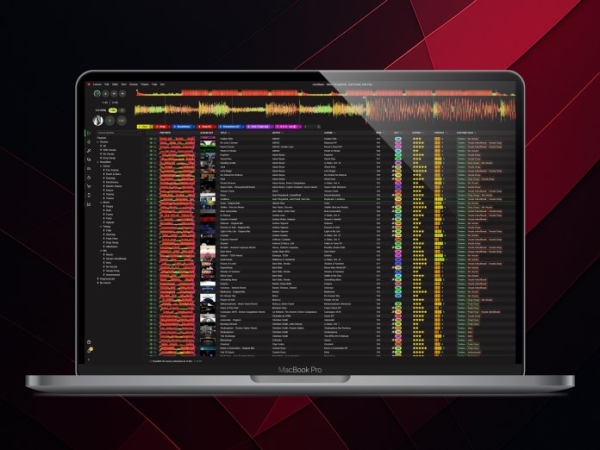
The Ultimate DJ Library Manager: Built by DJs, for DJs, with Music at Its Core
In today’s digital age, DJs are constantly juggling an ever-expanding library of tracks. From rare vinyl rips to the latest Beatport releases, remixes, acapellas, and custom edits, managing a music collection can sometimes feel just as demanding as performing. While technology has made music more accessible than ever, it has also created an overwhelming challenge: how to organize, curate, and perform with a library that often grows by hundreds of tracks each month.
That’s where the ultimate DJ library manager comes in—a tool designed not by software engineers in isolation, but by actual DJs who understand the unique frustrations of track management, preparation, and performance flow. Built by DJs, for DJs, this library manager doesn’t just store your music. It redefines how you interact with it, putting the focus back where it belongs—on the music itself.
In this article, we’ll dive deep into why DJs need a dedicated library management solution, what sets this ultimate tool apart, and how it transforms the craft of DJing into a more intuitive, creative, and enjoyable experience.
The Problem: Digital Overload for DJs
The transition from vinyl to digital formats brought convenience but also complexity. DJs no longer carry crates of records—they carry entire hard drives filled with MP3s, WAVs, AIFFs, and FLAC files. While this sounds like a dream, it can quickly become a nightmare without proper organization.
Here are some of the most common challenges DJs face today:
-
Messy Metadata: Inconsistent ID3 tags, missing BPMs, or incorrect genre fields create headaches when searching for tracks mid-set.
-
Duplicates Everywhere: Downloads from multiple sources often lead to multiple copies of the same track cluttering the library.
-
Preparation Bottlenecks: Hours spent prepping cue points, loops, or playlists can cut into valuable creative time.
-
Cross-Platform Pain: A set prepared on Rekordbox might not perfectly sync into Serato or Traktor, forcing DJs to redo their work.
-
Creative Block from Chaos: A disorganized library makes it difficult to flow with creativity, as DJs spend more time searching for tracks than mixing them.
The ultimate DJ library manager was designed to solve all of these issues. But what makes it so different from traditional music organization software?
Built by DJs, for DJs
Most music management platforms are designed for casual listeners or audiophiles. iTunes, MediaMonkey, or even Spotify playlists aren’t built with a live performer in mind. DJs have different needs: precision, speed, and reliability during high-pressure moments in front of a crowd.
This new library manager has been designed with the perspective of working DJs who have lived through the pain points themselves. Every feature has been stress-tested on the decks, in the booth, and on stage. The guiding philosophy is simple: eliminate technical frustrations so DJs can focus purely on their performance.
Key Features That Put the Focus Back on Music
So what exactly makes this library manager the “ultimate” tool for DJs? Let’s break down the features that set it apart:
1. Unified Music Library
No more scattered folders across external drives or cloud storage. This software creates a central hub that pulls in your entire collection, automatically detecting duplicates and syncing changes across devices.
2. Smart Metadata Management
Missing tags? Inconsistent genres? This manager uses advanced algorithms (and optional online databases) to automatically clean up track information, filling in missing BPMs, keys, album art, and more. DJs can then manually tweak fields with an intuitive editor.
3. Intelligent Playlists & Crates
Gone are the days of static playlists. With dynamic smart crates, DJs can set rules—like “tracks between 120–125 BPM, in key of A minor, tagged as deep house.” The software then automatically updates these playlists as new tracks are added.
4. Cross-Platform Exporting
Whether you’re using Pioneer’s Rekordbox, Serato, Traktor, or Engine DJ, the library manager ensures cue points, loops, and playlists carry over seamlessly. No more redoing work for different platforms—prepare once, play anywhere.
5. Cloud Integration
With built-in cloud syncing, DJs can access their library from multiple devices without manually dragging folders between hard drives. Backups happen automatically, reducing the risk of losing tracks before a gig.
6. Performance-Ready Search
A lightning-fast search engine allows DJs to locate the perfect track instantly. Search by BPM, key, genre, tag, or even personal notes attached to each track (e.g., “good for opening set” or “pairs with Track X”).
7. Cue & Loop Sync
All cue points, hot cues, loops, and beat grids are stored in the library itself—not locked into one platform. DJs no longer lose hours of prep time when switching software or hardware.
8. Creative Tools Built In
Features like automatic key analysis, harmonic mixing suggestions, and even AI-driven playlist recommendations give DJs more room to experiment while maintaining control over their unique style.
9. Collaboration Mode
For B2B (back-to-back) sets or shared performances, DJs can merge their libraries temporarily without messing up personal setups. This allows smooth transitions between performers, even with different organizational habits.
10. Live Performance Focus
Unlike traditional music managers, this system has been tested in real-world DJ booths. Its layout ensures fast, stress-free track retrieval in dark, high-pressure environments, ensuring DJs stay in the zone.
The Philosophy: Music First, Always
At the core of this library manager is one powerful principle: music should always come first. DJs shouldn’t be bogged down by technicalities or forced to navigate through clunky menus while performing. Instead, the software is designed to fade into the background, empowering DJs to focus on what matters—the crowd, the energy, and the seamless flow of tracks.
By putting music at the center, the tool allows DJs to:
-
Spend less time organizing and more time discovering.
-
Build sets that flow harmonically and energetically.
-
Develop creativity without being limited by software restrictions.
-
Rekindle the joy of DJing by removing organizational headaches.
Why This Changes the Game for DJs
Imagine preparing for a gig and knowing your library is perfectly organized—no duplicates, no missing metadata, no worries about exporting to the wrong format. Imagine stepping into the booth and finding the exact track you need in seconds. Imagine collaborating with another DJ seamlessly because your cues and loops are universally readable.
That’s what this ultimate DJ library manager offers: freedom. Freedom from technical barriers, and freedom to focus on performance, connection, and musical storytelling.
For new DJs, it reduces the overwhelming barrier of entry, making it easier to start building sets with confidence. For professionals, it saves countless hours of prep work and safeguards against errors that could derail a live performance.
The Future of DJ Library Management
The rise of streaming services like Beatport Streaming, TIDAL, and SoundCloud Go+ has already begun to reshape how DJs access music. But even as streaming integrates into hardware, local libraries remain the backbone of serious DJing. Exclusive edits, rare bootlegs, and personal remixes will never live fully on streaming platforms.
This library manager bridges that gap, offering future-ready support for both local files and streaming integrations. It’s not about replacing human creativity with algorithms—it’s about empowering DJs with tools that remove distractions and let the artistry shine.
As AI technology evolves, we may see even more intelligent features: automatic track suggestions that match crowd energy, AI-assisted set building based on historical performances, and predictive organization that anticipates how DJs will want to group tracks. But no matter how advanced the technology gets, the guiding principle will remain the same: music first, always.
Final Thoughts
DJing is an art form that thrives on creativity, energy, and connection. Yet too often, that artistry gets buried under the weight of messy folders, inconsistent metadata, and cross-platform headaches. The ultimate DJ library manager changes that, offering a tool built with the performer in mind.
Crafted by DJs who understand the pressures of the booth, it simplifies organization, enhances preparation, and ensures that when you step onto the stage, your only focus is the music.
Because at the end of the day, that’s what DJing is about—not the software, not the metadata, but the beats that move the crowd and the stories told through sound.
With the ultimate DJ library manager, built by DJs for DJs, the focus finally returns to where it belongs: the music.
Sequential Fourm: Legendary Analog Power, Now at the Most Affordable Price Ever.
Written by Sounds Space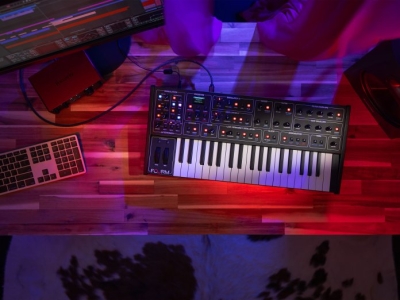
Sequential Fourm: A New Gateway into Iconic Analog Sound
With the launch of the Sequential Fourm, Sequential has opened up a fresh chapter in its storied history—delivering its characteristic analog warmth and expressive tools in what the company calls its most affordable synthesizer to date. For many musicians and synth enthusiasts, Fourm may well represent the sweet spot where classic timbre meets practical price. Here’s a closer look at what makes this synth special, how it fits into Sequential’s lineage, and what it might mean for creators.
The Pitch: Value + Heritage
Sequential introduced Fourm on September 23, 2025. It’s a compact, 100 % analog polysynth designed to bring some of the magic of their higher-end instruments—like the Prophet-5—into a more accessible format.
The marketing emphasizes expressive performance (especially via polyphonic aftertouch), hands-on control (modulation routing on the top panel), and a voice architecture inspired directly by older classics.
At a street price around US$999 / £799 / €949, Fourm undercuts many of Sequential’s previous polyphonic analog synths, making it more reachable.
What You Get: Specs & Features
Here are the key specs and capabilities of Fourm that justify the buzz:
-
Polyphony: 4 voices. Enough to play chords, pads, and layered textures, though it’s not in the same class as 8-voice monsters.
-
Oscillators: Dual analog oscillators per voice with simultaneously selectable waveforms; oscillator 2 also usable as a low-frequency oscillator (LFO) in some modes.
-
Filter: A classic 4-pole low-pass resonant filter—again, invoking the Prophet-5 lineage. The envelope curves are modeled on the 1978 original Prophet-5.
-
Modulation: Top-panel modulation matrix inspired by the Pro-One. Users can route sources (filter envelope, oscillator B, aftertouch, LFO) to various destinations without deep menu diving. Color-coded destination buttons help with clarity.
-
Polyphonic Aftertouch: A big deal. Sequential has reintroduced polyphonic aftertouch for the first time in decades, via a newly developed “Tactive™ slim-keys poly AT keybed.” Expressivity is a key selling point.
-
Performance & Utility Features:
-
Overdriven feedback circuit to add grit or aggressive tones.
-
Arpeggiator + 64-step sequencer mode (via arp).
-
Glide modes, including options similar to 303-style glides per step.
-
-
Build & Interface: 37-note slim keys (for space saving and more compact footprint), housed in a steel chassis. MIDI IN/OUT/THRU, USB, footswitch/pedal input, etc.
What’s New / What’s Shared
Some features are clearly inherited from Sequential’s legacy; others are new or adjusted to hit the price point.
-
Shared DNA: Prophet-5 influence is everywhere—in voices, filter behavior, envelopes. The modulation approach, classic 4-pole filter, etc., are part of what gives Fourm its familiar tonal character.
-
New engineering: The Tactive slim-keys polyphonic aftertouch keybed is newly developed in-house, calibrated especially to match the analog engine. That’s not a trivial feature; many synths at similar prices omit poly-AT entirely due to cost and complexity.
-
Cost trade-offs: As with any product trying to squeeze high performance into lower price, there are limits. Only four voices, no built-in effects (or at least the effects are limited). For some, the slim-key keyboard might feel less satisfying than heavier, full-size keys. Some people expect deeper layering, stereo effects, or more modulation destinations, but part of the design decision was clearly balancing cost vs performance.
Where It Fits: Who It’s For
Fourm seems targeted at a few overlapping groups:
-
Intermediate & Advanced Players Seeking the Classic Sequential Sound
If you’ve admired the Prophet family, or older Sequential analog polys, and wanted something more affordable—this might be the entry point. You get heritage, character, and expressive control without the price tag of full Prophet-series or high-end analog polys. -
Live Performers / Expressive Players
With polyphonic aftertouch, responsive keys, feedback circuits, modulation matrix, etc., Fourm offers real performance tools. Even with 4 voices, expressive playing (chord voicings, dynamic touch, etc.) makes a difference. -
Bedroom Studios / Electronic Producers
For someone building a synth rig, Fourm gives you a real analog voice, flexible modulation, sequencer/arpeggiator, and direct hands-on control. It can help avoid overreliance on plugins, and add character and color in ways analog often does so well. -
Beginners / Budget Buyers Wanting “Real Analog”
Though the price isn’t cheap in absolute terms, for Sequential and for analog polysynths, this is competitive. As a first analog poly from a major heritage brand, it could be a defining experience.
What to Consider: Limitations & Compromises
No synth is perfect, and Fourm is no exception. Depending on your needs, some trade-offs might matter more than others:
-
Voice Count: Four voices are solid, but limit thick pads, very dense layering, or dividing parts. If you want 8 or 16-voice polys, or to run multiple layers, you’ll hit limits.
-
Effects / Processing: The unit does not include (or includes very minimal) built-in effects like reverb, delay, chorus, etc. For lush ambience or spacey effects you may need external or plugin support. MusicRadar
-
Key Feel: Slim keys save space, reduce weight, reduce cost—but for some, they lack the tactile feel of full-size, heavier, premium keybeds. Also, while polyphonic aftertouch is a big plus, adapting technique to use it takes practice.
-
Size vs Expandability: The compact footprint and fewer voices are good for portability and price, but not for massivemusical ambits or layering multiple patches live in a big rig.
What this Means for the Synth Market & Sequential’s Strategy
Fourm suggests a few trends/moves in Sequential’s roadmap—and in the analog synthesizer market generally:
-
The heritage brands are increasingly working to democratize analog polyphonic sound—not just for flagship studio units or high-end live rigs, but for more affordable desktop or stage tools. Fourm is a clear example.
-
Expressive controllers (like polyphonic aftertouch) and performance features are again being prioritized—not just sound-color, but feel and nuance matter.
-
Modulation and hands-on control remain central differentiators. The ability to route modulation without digging through menus is a big selling point. Fourm’s top panel matrix and color indicators show attention to usability.
-
Pricing remains a live challenge. Balancing cost of analog circuits, keybeds, panel controls, and the needed hardware (chassis, connectivity) is non trivial. Fourm strikes a balance that many will consider fair.
Verdict: Is Fourm the Right Choice?
If I were advising someone, here’s how I’d decide whether Fourm is right for them:
-
Yes, if you want classic Prophet/Squential-style analog sound, and you value expressive performance (aftertouch, modulation) but don’t need massive polyphony or built-in effects.
-
Maybe, if you want lush ambient effects onboard, or huge layering, or heavier keys—or if you frequently need 8+ voices live.
-
Not the best pick, if your main goal is maximum voices for pads, or you need a full-size keybed, or deep effects chain embedded.
Overall, Fourm looks like it succeeds at its promise: giving more people access to genuine Sequential analog polyphonic sound, with performance tools and a tactile interface—at the lowest price Sequential has offered for a synth.
Final Thoughts
Sequential Fourm marks a noteworthy step in making analog polys more accessible without giving up what makes them special. Heritage, expression, sound warmth—all of that is there. It’s not perfect or all-things-to-all-people, but as a “gateway” synth it’s possibly one of the strongest we’ve seen in a long time. For creators, the Fourm might not just represent “the first Sequential polysynth I can afford,” but a meaningful instrument in its own right.
IK Multimedia Announces ReSing — an “Ethically Sourced” AI Voice-Modelling Tool
Written by Sounds Space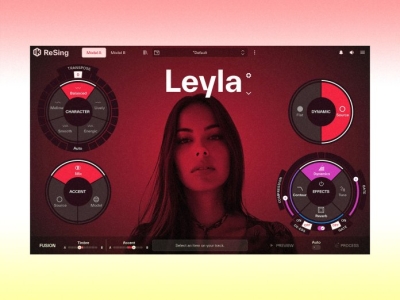
IK Multimedia Announces ReSing — an “Ethically Sourced” AI Voice-Modelling Tool
AI voice modelling has been one of 2024–25’s most heated conversations in music tech: transformative for producers, unnerving for some artists. Into that debate steps IK Multimedia with ReSing, a desktop plug-in and standalone app that the company bills as an ethical, artist-friendly take on voice modelling — trained on “ethically sourced, original datasets” and designed to run on your computer rather than in the cloud.
What is ReSing?
ReSing promises to turn scratch or modestly recorded vocals into “ultra-natural” performances by swapping the timbre and phonetic characteristics of a track with those of a high-quality AI voice model. It’s presented as a professional tool for music producers who want studio-ready vocals without re-recording, and as a way for creators to model their own voices for personal use or licensing. The engine works as both a DAW plugin (ARA-compatible) and a standalone app, letting you edit dynamics, EQ, reverb, and pitch from inside your production environment.
The “Ethically Sourced” Claim — what does it mean?
IK has put the ethics label front and centre. According to the company, ReSing’s voice models are built from original datasets where vocal artists have “signed clear and transparent agreements” that ensure contributors are licensed, credited, and protected — language designed to address the biggest legal and moral critiques of AI audio (unauthorised use, hidden datasets, and murky royalty situations). IK says this approach removes the “gray areas” often associated with AI in music.
That’s an important distinction: rather than training on scraped or ambiguous datasets, IK claims each model in ReSing is the result of explicit artist consent and clear licensing. The company also plans a “Sessions” system where partner voice models will be available for short-term hire, so users can license a voice for a project rather than relying on unvetted samples.
Desktop processing vs cloud services
One of ReSing’s selling points is that the heavy lifting happens locally — on your own machine — not on external servers. IK argues this gives users more control (and privacy), avoids upload queues, and reduces reliance on cloud subscriptions. For producers and studios that prioritize data control or work with confidential material, local processing is a meaningful advantage. It also sidesteps certain legal and jurisdictional complexities that come with sending artist stems to third-party servers.
Editions, pricing, and availability
IK has positioned ReSing with tiered access. A free edition provides a small set of voices and user-model slots; higher-tier editions unlock more voices, instruments, and the ability to save and manage additional user models. The product is available for pre-order now and is scheduled for a late-October 2025 launch, with introductory pricing on the paid tiers. There will also be the option to rent “Session” voices on a monthly terms. (See IK’s product pages and early press for the precise tier breakdowns and pre-order offers.)
-
Practicality for creators. For independent producers, session singers, and solo artists, ReSing could cut the time and cost of re-tracking vocals while offering stylistic flexibility (genre tweaks, blended timbres, accent changes). Doing this locally makes it accessible in typical studio setups.
-
Artist control & new revenue paths. If IK’s licensing claims hold up, a transparent system where vocalists opt in and can be compensated or credited could become a template for ethical AI in music — an alternative to models trained on unconsented material. The Sessions rental model also suggests new revenue streams for vocalists who want to license their timbres.
-
Creative possibilities. Beyond straight replacement, ReSing’s ability to blend characteristics or apply instrument-style modelling (guitar→sax-like transformations were demoed) opens new sound design avenues that might inspire fresh musical directions.
Concerns and caveats
No single product will erase the broader ethical and legal debates around AI audio. Even with signed agreements, questions remain about:
-
Scope of Consent: How Detailed Are the Contracts? Do they permit unlimited commercial use, or are there limits? Who controls moral rights and future uses? IK’s statements sound promising, but the contracts’ specifics matter.
-
Perceived authenticity: Some producers and listeners still prefer the subtle imperfections of human performance. Forum chatter and early reactions have mixed tones — curiosity and praise for the tech, but also skepticism about realism and taste. Public discussion online already shows a range of responses from excitement to unease.
-
Market impacts: If it becomes cheap and easy to generate realistic vocals, session work and vocal branding could shift. That has both democratizing and disruptive economic effects — potential new income for some artists, and replacement pressures for others.
Community reaction so far
Early write-ups in the trade press are largely intrigued, describing ReSing as a “breakthrough” with impressive demo examples (and noting the ethics framing). At the same time, online forums show the usual mixture of hype and cynicism — some users question whether AI vocals genuinely compete with the nuance of real singers. In contrast, others point to creative uses beyond mimicry. It’s a classic technology debut: the tool is powerful, but how the industry chooses to use it will define whether the impact is net positive.
Bottom line
IK Multimedia’s ReSing is worth watching. It packages advanced voice-modelling tech with two potentially influential choices: local processing (privacy/control) and a stated commitment to ethically sourced datasets (artist consent and clear licensing). If IK’s promises about contracts, compensation, and transparency are upheld in practice, ReSing could be an early example of how AI tools and artist rights can be balanced. But the devil is in the details — contract terms, the breadth of permitted uses, and how the industry responds will determine whether “ethical AI” becomes a genuine standard or a marketing line.
If you produce vocals, manage artists, or care about the future of recorded performance, give the demos a listen when they’re available and read the licensing terms carefully before integrating AI-modelled voices into releases. The tech is moving fast; the rules and norms will follow.
Sources: IK Multimedia product/announcement pages; coverage in MusicRadar, MusicTech, Sound On Sound and early community discussion threads
Spotify Strengthens AI Protections for Artists, Songwriters, and Producers
Written by Sounds Space
Spotify Strengthens AI Protections for Artists, Songwriters, and Producers
In September 2025, Spotify made a big move in shaping the future of music streaming and AI: announcing new policies and tools designed to protect artists, songwriters, and producers from misuse of generative AI — especially voice clones, spam uploads, and deceptive content. These changes reflect growing concern across the music industry about how AI could erode creators’ rights, mislead listeners, and dilute earnings. Here’s a deep dive into what Spotify is doing, what prompted the change, what it means, and what still remains uncertain.
What prompted Spotify’s shift
Generative AI tools have rapidly become more powerful and accessible. They can produce vocals that mimic real artists, churn out instrumentals, and mass-produce tracks with minimal human input. While many artists and producers are experimenting and innovating with AI — from songwriting assistive tools to AI-powered instrumentation — there’s also been a rise in:
-
Spammy content: mass uploads of tracks that are very short, duplicated, or manipulated in trivial ways, often aimed at exploiting streaming thresholds or algorithms.
-
Impersonation/deepfakes: using AI to clone or mimic the voices of well-known artists (without authorization), uploading tracks under another artist’s name, or otherwise confusing attribution.
-
Opacity/transparency issues: listeners and rights holders not always knowing whether AI was used (and how), making it harder to assess origin, value, and legitimacy.
These trends have a number of potential negative effects: diluting royalty pools, hurting authentic artists who compete for listener attention, undermining trust, and possibly misappropriating voices and identities.
Spotify itself has observed these challenges. Over the past year, the company reported that it removed 75 million “spammy” tracks from its platform. Spotify+2Music Business Worldwide+2
What Spotify is doing: The New Protections
Spotify’s announcement lays out a three-pronged framework aimed at combating the worst abuses, while allowing responsible AI use. The Hollywood Reporter+3Spotify+3Consequence+3
Here are the main pillars:
1. Stronger impersonation rules
-
Unauthorized vocal impersonation or voice cloning will no longer be tolerated unless the artist whose voice is being used explicitly authorizes it. Spotify+2Music Business Worldwide+2
-
Spotify is also improving its process for detecting “content mismatch” — when someone uploads music (AI-generated or otherwise) to another artist’s profile or tries to pass off content under the wrong name. They are reducing review wait times and enabling artists to flag mismatches even before release stages. Spotify+1
2. Music spam filter
-
A new spam filtering system will identify and flag tracks and uploaders engaging in abuses like mass uploads, duplicate tracks (with slightly changed metadata), SEO manipulation, or uploading very short tracks just to hit royalty thresholds. Spotify+2Music Business Worldwide+2
-
The system will also stop recommending such tracks via Spotify’s algorithms, so they have less visibility. Rollout is planned carefully so as not to unduly penalize legitimate creators. Spotify+1
3. AI disclosures through industry-standard credits
-
Spotify is backing work by DDEX (Digital Data Exchange) to develop metadata standards that allow artists and rights holders to disclose how AI was involved in the creation of a track (e.g. vocals, instrumentation, mixing, mastering). Spotify+1
-
These disclosures will become visible in the Spotify app once submitted via labels/distributors. The goal is transparency, not penalizing artists who responsibly use AI. Spotify+1
What hasn’t happened (or what may be misunderstood)
There’s been some confusion, and it’s important to correct or clarify:
-
Despite some reports, Spotify has not said it removed 25,000 AI-songs. What they have said is 75 million “spammy” tracks have been taken down in the past year. Spotify+2Music Business Worldwide+2
-
Spotify is not banning AI music altogether. The policy changes are about misuse: impersonation without authorization, deceptive claims, spam tactics. Legitimate, transparent uses of AI are allowed and can even be declared in the credits. Rolling Stone+2Spotify+2
-
Spotify does not own AI-generated music or create its own tracks; its role is as a platform. The royalty mechanism and licensing remain based on what uploaded / licensed content is used, as always. Spotify+1
Impacts on Stakeholders
These policy changes have implications across the industry — for artists, songwriters, producers, platforms, listeners, and AI tool developers.
For artists, songwriters, producers
-
Stronger protection of identity: Artists who are concerned their voice could be misused now have clearer recourse.
-
Greater ability to benefit from transparency: If they use AI tools as part of their production, they can be clear with fans—this can help maintain trust.
-
Reduced competition from shady spam: Fewer low-effort or deceptive uploads may mean better discoverability and potentially less dilution of streaming royalty pools.
For streaming platforms and distributors
-
Need to build or upgrade detection and review systems: both for content mismatch/impersonation and for spam detection.
-
More cooperation with metadata standards bodies and distributors (labels, aggregators) to ensure AI credits/disclosures are supported.
For listeners
-
Better trust and clarity: listeners will have more information about how a track was made and whether an artist authorized certain uses.
-
Possibly higher quality of recommended content, fewer spammy or misleading tracks.
For AI & tech developers
-
More incentive to build tools that respect voice rights, transparency, and ethics.
-
Potentially more requirements from distributors/streaming services to provide metadata on how AI was used.
Critiques, challenges, and what to watch
While Spotify’s announcement is a strong step, there are open questions and challenges ahead. Here are several:
-
Implementation & errors
Designing spam filters, detecting deepfakes, impersonation, and content mismatch is hard. False positives (legitimate tracks flagged) and false negatives (bad content slipping through) are risks. Spotify acknowledges it will roll out the filter conservatively to avoid penalizing the wrong creators. Spotify+1 -
Definition & limits of “spammy” / “slop” content
What counts as abuse, and what counts as creative experimentation or low-budget DIY content? There’s a fine line. Some artists may use AI in light or experimental ways that border on the edge. The clarity of definitions, fairness of enforcement, and transparency will matter. -
Global enforcement & jurisdictional issues
Artists around the world operate under different copyright laws, cultural norms, and data protection regimes. Ensuring consistent protection globally is challenging. -
Disclosure norms & audience reception
Even when disclosed, how will listeners respond? Will AI-involved tracks be stigmatized, under-promoted, or unfairly judged? Having right to disclose is good, but audience perception and industry reaction will matter. -
Long-term business models and royalty fairness
If a track uses AI, how is ownership or authorship assigned? How are royalties divided among human creators vs AI tool developers? Spotify’s policy seems to focus more on preventing misuse than laying out full new rules for attribution/royalties in mixed human/AI creation. That is, for now, still murky. -
Transparency of enforcement
How much will creators see about the reason tracks are removed, flagged, or demoted? Will there be appeals? How accessible will the policy documents be? How often will they be updated?
Why this matters
These changes are not just technical tweaks; they reflect deeper tensions and values in how music will be created, shared, and consumed in an age of AI. Here’s why the Spotify move is significant:
-
Artist rights & identity: Voices are deeply personal; misuse (voice cloning, impersonation) is an ethical violation, not just a legal one. Empowering creators to control when their voice is used is essential.
-
Economic integrity: Streaming platforms pay out royalties based on volume of plays, but royalty pools and user attention are finite. Spam or deceptive content that gains traction can dilute earnings for legitimate creators.
-
Trust & platform reputation: If users feel tricked by AI deepfakes, fake artists, or spam, trust may erode. Platforms that fail to police this risk losing user and artist confidence.
-
Shaping ethical norms: As AI tools proliferate, early policies like Spotify’s help set industry expectations for transparency, attribution, voice rights, and fairness.
What’s next / What to Monitor
Here are some things to watch, both for creators and industry observers:
-
How fast the spam filter is fully rolled out, and how accurate it is in practice.
-
Whether major record labels and distributors adopt the DDEX AI credit standard broadly, and how detailed those disclosures are.
-
How Spotify responds to cases of false positives: artists who are wrongly flagged, or content improperly removed.
-
Legal/regulatory moves: voice rights legislation, copyright laws being updated to explicitly address AI-created content or impersonation, potentially in different countries.
-
How other platforms respond: Spotify is not alone — YouTube, Apple Music, Amazon, TikTok, etc., will likely feel pressure to adopt similar policies, especially as artist backlash or public concern grows.
-
How producers and artists adapt: will we see more contracts about AI use, more artist-driven tools, or new genres of hybrid human-AI music with clear disclosure?
Conclusion
Spotify’s new policy shift represents a major juncture in the streaming and music creation landscape. By strengthening impersonation rules, deploying spam filters, and pushing for AI credit disclosures, Spotify is attempting to strike a balance: enabling innovation while protecting creators from abuse. For artists, producers, and songwriters, the changes provide more control, transparency, and potentially a fairer environment. Yet much will depend on the policy implementation, the evolution of enforcement, and how the broader ecosystem adapts — listeners, AI developers, distributors, law makers.
October’s Best Free VST Plugins: Fresh Synths, FX & Must-Have Giveaways for Producers
Written by Sounds Space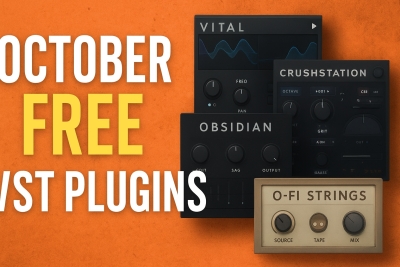
🎛️ Why Free VSTs Still Matter in 2025
Before we dive into plugin picks, it’s worth reminding ourselves why free VSTs are still so compelling:
-
Low risk, high reward: You can experiment without spending, which is great for learning, prototyping, or adding flavor.
-
Discover new ideas: A quirky free synth or effect might spark a creative idea you never would have tried.
-
Community support & ecosystems: Many freebies are supported by active communities, with presets, tutorials, or sample packs.
-
Frequent limited-time freebies: Many developers release “gifts” or promotional free plugins that may be available only temporarily.
With that in mind, let’s jump into a curated list of free VST plugins (instruments, effects, utilities) that are getting buzz as of October 2025 (or still deserve your attention).
🚀 Spotlight Freebie Offers in October 2025
These plugins are either newly free, on a limited-time giveaway, or recently updated, so act fast.
W.A. Production Obsidian — Free via BPB until October 1
W.A. Production is offering Obsidian as a freebie (VST / AU / AAX) via Bedroom Producers Blog (BPB), but the offer wraps up on October 1.
If you haven’t grabbed it yet, this is one to scoop now. Obsidian is a versatile effect plugin (or multi-effect) often bundled in W.A.’s paid toolkits.
Eventide CrushStation — Normally Paid, Now Free (Promo)
Eventide has made CrushStation—a distortion + saturation + effects plugin—available for free using a promo code (PIRATE100) at checkout.
CrushStation offers more than just distortion: it includes compression (pre/post), an Octave control to add pitch-shifted layers, “Grit” control for low-end distortion, a “Sag” parameter (to mimic tube-like behavior), a 3-band EQ, noise gate, and a Ribbon morph control to automate parameter transitions.
This is a powerful plugin—go grab it while the deal holds.
New Sample/Instrument Freebies & Libraries
-
Lo-Fi Strings by The Crow Hill Company: This is a tape-treated string library with vintage-style artifacts—dropouts, saturation, hiss, etc.
It’s available across VST, VST3, AU, AAX, for macOS/Windows. Great for adding nostalgic textures and emotional string layers. -
Full Bucket FB-3300: A free software recreation of the rare 1970s Korg PS-3300 modular synth.
While not brand-new, it’s a gem that’s still free and offers rich modulation, semi-modular patching, and vintage analog flavor. Download it now if you don’t already own it.
These library/instrument freebies can inject new sounds into your palette, especially when you’re in the mood for atmospheric or vintage textures.
🧩 Top Free VSTs (2025 Edition) — Stable Favorites & Recent Highlights
Beyond freebies and temporary deals, here are strong free plugins that continue to shine and that you should check out if they aren’t already on your rig.
Synths & Instruments
-
Vital (Matt Tytel)
Vital remains one of the top free wavetable synths, often compared favorably to paid giants like Xfer Serum.
Its spectral warping engine, rich modulation, clear UI, and extensibility (sound banks, user patches) make it a go-to synth for genres from EDM to ambient. -
Decent Sampler
A free sampler / ROMpler host with many freely downloadable libraries (pianos, strings, percussion, etc.).
Because it supports many formats and is user-friendly, it's a solid choice if you want to work with sampled instruments without investing in Kontakt. -
LABS (Spitfire / Splice)
While not always strictly “brand new,” LABS remains one of the most-loved free instrument platforms, with evolving sound packs and regular updates. -
Other Free Instrument Picks
From curated lists of 2025, plugins like Syndtsphere, X-Stream (a spectral synth), and more show up in free instrument roundups.
These are worth exploring for unique sonic character beyond the usual synth palette.
Effects, Modulation & Utility Plugins
-
Valhalla SuperMassive
A free reverb/delay plugin of great depth and flexibility, often recommended in free plugin lists.
It includes algorithms for ambient, shimmer, delays, and more. A must-have for sound design and space. -
TDR Nova
A free dynamic EQ that balances usability, sound quality, and transparency. It’s often cited as a top free EQ choice.
Use it for surgical dynamic EQ, mid/side shaping, de-essing, etc. -
Sixth Sample Deelay
A compelling free delay plugin highlighted by LANDR as a top pick.
Its interface is elegant and intuitive, and it handles standard delay duties well. -
Acon Digital Multiply
A free chorus effect that uses phase randomization to create rich chorus textures, cited by LANDR in their roundup. -
Baby Audio Freebies
The “freebie suite” from Baby Audio includes Warp (pitch/speed manipulation), Magic Switch, Magic Dice, and more.
Warp in particular can create interesting time-stretch/pitch combinations beyond the usual. -
Yum Audio Freebies
Yum Audio offers things like Crispy Clip Light (clipper) and Grater Light (a shaping/compression tool). -
Kilohearts Essentials
A free suite containing many basic effect modules (EQ, delay, chorus, filters, etc.), usable standalone or inside their Snapin host/chain. -
Obliterate (by Newfangled Audio)
A distortion effect born from a “coding glitch” concept — fun, experimental, and free in many lists.
🧪 Suggested October Workflow: Try & Integrate
Here’s a suggested process for integrating these new free plugins into your workflow this month:
-
Claim the limited-time freebies first
Start with Obsidian (before Oct 1) and Eventide’s CrushStation (promo code) while the offers last. -
Install or update your favorites
If you already have Vital, Decent Sampler, Valhalla SuperMassive, etc., check for updates. These projects often evolve. -
Create a small test session
Set up a 4–8-bar blank project (e.g., drum loop + pad) and systematically test:-
A new synth (e.g., Vital, Synthi, FB-3300)
-
A new effect (e.g., CrushStation, Deelay, SuperMassive)
-
A utility or modulation (e.g., TDR Nova, Multiply, Kilohearts module)
-
-
Preset dive + sound design challenge
Pick one plugin and try to get a completely new patch (i.e. avoid presets). It helps you understand modulation paths, routing, and depth. -
Integrate into your existing tracks
Drop in a free plugin into a track you’re already working on—replace a paid effect or augment it. See if it gives you something new you didn’t expect. -
Organize & prune
Over time, if you accumulate many freebies, prune the ones you rarely use. Keep just your favorites for faster workflow.
🔍 Tips & Caveats When Using Free VSTs
-
Watch for OS/format compatibility: Some free plugins may only support VST2, VST3, AU, or certain architectures. Always check developer sites.
-
Performance considerations: Some free plugins are lightweight; others can be CPU-heavy. Test their performance in larger projects.
-
Limited-time promos: Some freebies (like Obsidian) may not remain free. After a promotion ends, future downloads may require payment.
-
Updates & bugs: Free plugins may receive fewer bugfixes or support. Always back up plugin installers.
-
Licensing & redistribution: Check plugin licenses—some free ones may forbid inclusion in plugin bundles or commercial redistribution.
🧾 Sample Featured Plugins for October — Summary Table
| Name | Type / Use-Case | Highlights |
|---|---|---|
| Obsidian (W.A. Production) | Multi-effect / creative FX | Free giveaway until Oct 1, worth grabbing now, Bedroom Producers Blog |
| CrushStation (Eventide) | Distortion/saturation/effects | Promo code free; includes compression, EQ, morphing, octave layers, MusicRadar |
| Lo-Fi Strings (Crow Hill) | Tape-treated string instrument | Nostalgic, vintage character library MusicRadar |
| FB-3300 (Full Bucket) | Vintage modular synth emulator | Powerful semi-modular, patchable synth based on Korg PS-3300 MusicRadar |
| Vital | Wavetable synth | Deep modulation, extensive presets, top free synth pick, Bedroom Producers Blog |
| Decent Sampler | Sample instrument host | Hosts many free sample libraries, easy to use, Bedroom Producers Blog |
| Valhalla SuperMassive | Reverb/delay | Rich ambient algorithms, effect depth LANDR Blog+1 |
| TDR Nova | Dynamic EQ | Transparent, usable, versatile EQ tool LANDR Blog |
| Sixth Sample Deelay | Delay effect | Elegant multi-delay for general use LANDR Blog |
| Baby Audio Freebies | Effects / creative tools | Warp, Magic Switch, Dice — playful modulation & delay tools Splice+1 |
| Kilohearts Essentials | Utility effect modules | Modular effect building blocks for varied routing Splice |
🎯 Final Thoughts & Call to Play
October 2025 is shaping up to be a fertile month for free audio tools. Whether you’re grabbing a limited-time plugin giveaway or exploring under-the-radar synths, there’s plenty to spark inspiration.
Here are a few closing suggestions:
-
Act quickly on temporary freebies (like Obsidian) before they vanish or revert to paid.
-
Don’t hoard—experiment: Download a few, try them in your favorite tracks, then keep the ones that add something unique.
-
Join plugin communities: Many free plugin developers have Discords, forums, or preset exchanges. That’s where you’ll find tips, patches, and updates.
-
Share your discoveries: If one of these free tools leads you to a cool sound or workflow trick, share it—others in the producer community will benefit.
Fortnite Just Went FULL Daft Punk — Step Inside the World’s First Playable Music Experience!
Written by Sounds Space
“A first of its kind”: An “immersive” Daft Punk experience is coming to Fortnite
Fortnite has long treated music like a playable playground. From Travis Scott’s planet-sized concert to The Weeknd’s neon spectacle, Epic Games has turned its island into a stage where millions can gather, dance, and experience music in ways that extend beyond a standard livestream. The next chapter in that experiment? An officially licensed, fully interactive Daft Punk Experience—an ambitious, multi-room tribute to the French electronic duo that promises to let players remix, dance, and even direct LEGO-style music videos inside Fortnite’s world.
What’s arriving and when
Epic’s Daft Punk Experience is scheduled to launch with a live event and then remain as an on-demand playground inside Fortnite. The grand opening is set for September 27 (with a pre-event lobby noted to open beforehand), while a Daft Punk-themed bundle—packed with signature helmets, outfits, accessories, and at least one playable Jam Track—becomes available in the Fortnite Item Shop shortly before the experience opens. This isn’t just another skin drop; Epic is billing the mode as one of its biggest musical experiences to date.
An interactive, room-by-room celebration
What makes this collaboration stand out is how hands-on it’s designed to be. Rather than a passive concert replayed to avatars, the Daft Punk Experience is structured as a modular playground of rooms and activities inspired by the duo’s catalogue and visuals. Players will be able to hop between themed zones—places built for remixing tracks, testing out laser-driven robot battles, assembling music-video scenes, and partying in a Daft Club that features archival performance footage and visual throwbacks to Daft Punk’s famed Alive era. The variety of interactions aims to turn fans into co-creators, allowing them to manipulate stems, craft mashups, and save or share their creations.
A deep dive into the catalogue
Epic says the Experience will include 31 songs spanning Daft Punk’s career. That breadth suggests the playground will move beyond the obvious hits, giving players access to deeper cuts, live edits, and moments that showcase why the duo became icons of modern electronic music. Offering stems and remix-friendly tools inside a game environment is a significant step: it blends music production basics with the accessibility of a game UI, lowering the barrier for creative experimentation for millions of players who might never otherwise try remixing.
How does this fit Fortnite’s music playbook?
Fortnite’s approach to music has always been experimental. Epic has iterated on concerts (real-time, ephemeral shows), interactive modes (where music reacts to player input), and branded islands that double as creative spaces. The Daft Punk Experience looks like a maturation of those ideas: it’s not merely a promotional moment but a persistent space where the rules of the game are reshaped around music-making and collective fandom. By anchoring the experience to a legendary act with an audiovisual identity as strong as Daft Punk’s, Fortnite is effectively offering the pair’s aesthetic as a new game mechanic—lights, loops, and robot choreography become tools players can wield.
What the bundle brings (and why it matters)
Alongside the experience, a Daft Punk bundle will be sold in Fortnite’s shop. Early reporting lists the duo’s signature TB3 and GM08 helmets, outfits styled after both the real-world and LEGO-like versions of the band, musical accessories, and the “Get Lucky” Jam Track that players can use inside their creations. Bundles like this aren’t just cosmetic revenue drivers; they enable identity play—players can dress as the robots, jam with friends, and signal their fandom inside the shared world. For a franchise that earns both attention and cash through in-game goods, tie-ins like this are now central to how music and gaming interact economically.
Creative potential—and limitations
The idea of letting players sit in the producer’s chair is intoxicating. Imagine a teenager in a small town learning about sampling by dragging a Daft Punk drum loop into a virtual remix booth, or a content creator producing a short LEGO-style music video inside Fortnite and sending it viral. That democratization of music tools, even simplified ones, is an accessible gateway to creative practice.
But there are practical limits. Fortnite’s interface, while flexible, is still a game; it can’t fully replicate professional DAW workflows or high-fidelity mastering. The Jam Track tools and remix mechanics will almost certainly be simplified for playability, which both helps accessibility and constrains complexity. Nevertheless, the experience’s educational and inspirational value—getting millions to experiment with song structure, rhythm, and audiovisual synchronization—could be enormous.
Why is it being called “first of its kind”?
Many writers and industry observers are calling the Daft Punk Experience a “first of its kind” because it blends licensed tracks, archival live footage, user-driven remixing tools, and a persistent in-game playground into a single, cohesive product. Previous Fortnite events have leaned heavily into spectacle and linear shows; this project pushes toward a creative sandbox where music becomes a manipulable environment rather than a backdrop—an evolution that could set a new template for future music/game partnerships.
Looking beyond Fortnite: a new model for music experiences
If the Daft Punk Experience succeeds, expect more artists and estates to pursue similar partnerships. The model is compelling: games provide scale, interactivity, and an engaged audience; artists provide IP, music, and cultural cachet. Together they can create experiences that are promotional, commercial, and—perhaps most importantly—creative. For artists, the payoff is exposure and new revenue streams; for players, it’s access and agency. For the music industry at large, it’s another nudge toward thinking of songs not only as recordings but as playable, remixable artifacts.
Final note: bring your headphones and an open mind
Whether you’re a Daft Punk diehard or a curious gamer, this is one of those crossover moments worth trying. Even if you never touch the remix tools, marching through 31 tracks with visual callbacks to the duo’s storied career—while dressed as a neon robot—will be an event. More importantly, the experiment is a reminder that creative culture is increasingly hybrid: music, film, and games will keep borrowing each other’s vocabulary, and the players in between will be the ones writing the next set of rules.
Sources & further reading: Epic Games’ official announcement, Pitchfork, DJ Mag, TechRadar, and coverage from Flood and other outlets provided the details summarized here
Apple Music Levels Up: DJ-Style AutoMix, Live Lyrics Translation & More in iOS 26
Written by Sounds Space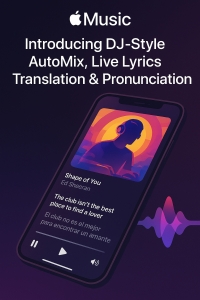
Apple Music Levels Up: DJ-Style AutoMix, Live Lyrics Translation & More in iOS 26
Music streaming is no longer just about selecting songs and pressing play. With Apple’s iOS 26 rollout, Apple Music is pushing forward with new features that aim to deepen listening, break down language barriers, and blur the line between a curated DJ set and your personal playlist. Among the most significant upgrades: AutoMix, Lyrics Translation and Pronunciation, plus a host of companion features that make the experience more seamless and global. Here’s what’s new, why it matters, and what to watch out for.
What’s New: AutoMix, Lyrics Translation & Pronunciation
AutoMix: DJ-Style Transitions
One of the headline additions is AutoMix. Designed to make transitions between songs smoother, AutoMix analyses audio features like tempo, beat, and key (using Apple’s AI/machine learning tools) and dynamically mixes one track into the next. The idea is to avoid awkward silences or sharp jumps — the way a skilled DJ would make sure the dancefloor stays alive.
Unlike the simple “crossfade” that many streaming services offer (where one track fades into another), AutoMix employs time-stretching and beat matching, letting tracks overlap in rhythmically compatible ways and maintain a continuous flow.
Lyrics Translation and Pronunciation
Another major set of features aims at making music more linguistically accessible:
-
Lyrics Translation: Users can now see translations of lyrics into their native or preferred languages. This helps in understanding the meaning behind songs in foreign languages — whether you're exploring world music or simply listening to a track you like but don’t fully understand.
-
Lyrics Pronunciation: Alongside translation, Apple is also introducing pronunciation aids. This assists in singing along properly (or learning) when lyrics are in languages you don’t speak fluently. Important for phonetics, cultural expression, etc.
These features are made possible by combining machine learning with human-expert oversight, ensuring that nuance, emotion, and cultural context aren’t totally lost in translation.
Why This Matters
These aren’t just small “nice to have” updates. They shift how we engage with music in several meaningful ways:
-
Enhanced listening experience
AutoMix turns passive listening into something more immersive. Whether you’re working, walking, driving, or hosting, the flow matters — abrupt transitions or silence can break the mood. AutoMix keeps you “in the moment.” -
Globalization & inclusivity
With streaming, geography is no longer a barrier — but language still is. Being able to read translations and see pronunciation helps users access and appreciate music from cultures and languages beyond their own. It makes music more universal. -
Learning & appreciation
These features also serve as tools for language learners, world music fans, and even karaoke enthusiasts. Pronunciation tools and real-time translations can help with understanding lyrics, cultural references, or metaphors you might otherwise miss. -
Competition & innovation in streaming
Features like AutoMix reflect how streaming services are pushing to differentiate themselves. It’s not enough anymore to just have large catalogs; it’s about how you deliver, how you enhance, how you let users connect. Apple spurs competition, which typically results in better features for everyone.
Potential Limitations & Things to Watch
All new features come with trade-offs, and user feedback already suggests some issues and caveats:
-
Cuts in songs / truncated transitions: Some early testers say AutoMix sometimes cuts off portions of tracks (especially the end of a song or beginning of the next) too early, sacrificing full verses or intros in favor of a smooth transition.
-
Genre/playlist restrictions: AutoMix may work better in certain genres or playlist types. Songs with wild tempo changes, dramatic intros or outros, or non-standard musical transitions might be harder to mix well. The algorithm has limitations.
-
Translation limits: While translations are powerful, initially, they may only cover certain language pairs. And nuance (slang, cultural idioms) can be hard to preserve even with experts refining them. Users may find some translations less polished.
-
Device / regional availability: As with many new Apple Intelligence features, availability depends on device capability and region. Some older devices may not support the new AI-driven features, or certain languages may not be available immediately.
Broader Context & What It Suggests for the Future
These upgrades give us hints about where music streaming might be headed.
-
More AI in creative delivery: AutoMix shows that AI isn’t just for recommendations or playlists — it’s involved in how the music sounds to the listener. We can expect more tools that alter or augment playback (remixes, dynamic EQ, spatial audio, etc.).
-
Cultural bridging tools become core: Lyrics translation & pronunciation suggest that global music markets will increasingly prioritize understandability and cultural resonance — not just discovery but comprehension. This ties into the rise of global hits (K-pop, Latin, Afrobeats, etc.).
-
User control vs automation balance: Users like automation (so things are smoother, easier), but also want control (keeping full songs, not skipping intros, preserving original album experiences). Apple and others will need to balance those.
-
Hardware & software integration: Features like “Sing” allowing your iPhone to act as a microphone when paired with Apple TV, visual effects, etc., show Apple building into their ecosystem. The software features are tightly coupled with devices.
Final Thoughts
Apple Music’s introduction of AutoMix, real-time lyrics translation, and pronunciation features marks a meaningful step forward in how we listen to and understand music. It shows that streaming isn’t just about what’s next in the queue, but how we transition between tracks, how much of the content we can absorb, and how global our musical identities can be.
For many users, the result could be more immersion, more connection, and more joy — whether you’re exploring foreign artists, belting karaoke in your living room, or simply letting music carry you through your day without interruption. That said, perfection isn’t here yet: occasional truncations, genre limitations, and device restrictions may temper the experience for some. But on balance, these are exciting innovations.
Learn more at APPLE
United Studio Technologies UT Twin48 Review: A Modern Take on Vintage 47 & 48 Tube Mics
Written by Sounds Space
Bringing Two Vintage Legends into One: The United Studio Technologies UT Twin48
In the world of high-end studio microphones, few items carry as much mystique (and cost) as the “47” and “48” style tube condensers — classic mics from the late 1940s and 1950s that have defined the sound of countless recordings. But owning one of those originals — in good condition — is both difficult and expensive. United Studio Technologies (UT) has taken a bold step: the UT Twin48 is a new microphone that aims not just to replicate one classic, but to bring both of these revered designs into a single, flexible tool.
This isn’t just a clone; it’s a hybrid (or “twin”) in more ways than one. Here’s what the Twin48 offers, what works well, what to look out for, and whether it might make sense for your studio.
What the Twin48 Does & What’s Inside
Two Modes: 47 & 48
A key feature of the Twin48 is that it provides two historically distinct mic modes in a single body.
-
47 Mode: Offers “47 Cardioid” and "47 Omni". The cardioid mode here is called “True Cardioid”—where the rear diaphragm is decoupled to give a more open, sensitive sound, with more ambience and top-end detail.
-
48 Mode: Offers “48 Cardioid” and "48 Figure-8". The cardioid in this mode is achieved differently ("Active Cardioid," where the rear diaphragm is polarized along with the backplate) yielding a more intimate, warmer sound, lower in sensitivity.
So, depending on what you're recording (vocals, acoustic guitar, strings, horns, etc.) you get options: the more airy, open character of the 47 side, or the richer, thicker texture of the 48.
Components & Build Quality
United didn’t cut corners. Some of the standout design/internals:
-
Capsule: UT K48 custom capsule — dual diaphragm, single backplate, 34 mm brass, 6-micron Mylar, gold-sputtered. Designed to be very close to the originals in feel and sound. United Studio Technologies+1
-
Tube: Uses a “new old stock” EF86 pentode tube — the same type (or descendant) as used in the vintage originals. That gives it a harmonic profile more in line with what made vintage 47/48s so desirable. United Studio Technologies+1
-
Transformer: The UT-BV8 transformer is a custom one, US-made, wound to original specifications (Braunbuch spec), high-nickel alloy laminations, copper Faraday shielding to reduce interference. United Studio Technologies+1
-
Power Supply: External, discrete rails, high-quality regulation, good filtering of RF/EMI, etc. For a tube mic, the PSU matters a lot. UT seems to have put effort into ensuring noise is kept low and that the mic is stable. United Studio Technologies+1
Physical & Practical Specs
-
Frequency range: 20 Hz – 20 kHz. United Studio Technologies+1
-
Max SPL: approx 137 dB @ 0.5% THD. United Studio Technologies+1
-
Self noise: about 11 dB (A-weighted). United Studio Technologies+1
-
Output transformer, external PSU, cable included, shockmount; it comes with a briefcase style case. United Studio Technologies+1
What the Review Says: Sound, Performance, & Character
The MusicTech review describes the UT Twin48 as sounding fabulous, especially when recording acoustic guitar. The mic captures “superb results” for that application. MusicTech
Some engineers note how you achieve strong results without needing to grab other mics or spend time finding just the right vintage unit. That flexibility (switching between the 47- and 48-modes) allows you to adapt depending on performance, room, vocalist, etc., without swapping gear. United Studio Technologies+2MusicTech+2
Also, people have pointed out that the Twin48 tends to smooth out harshness or sibilance compared to cheaper vintage-style copies, due to its capsule design and electronics. It’s not overly bright; there’s a richness and creaminess that many find pleasing. United Studio Technologies+2msonic Baltic+2
However, some notes of caution: for very forward, modern vocal production (think “in your face” pop/hip-hop vocals), the richer character may need some EQ or supplementary mics to get maximum clarity or edge. Also, tube mics in general are larger, heavier, require external PSU, and have some maintenance/operational trade-offs (warm-up time, tube life etc.). But this is true of any mic in this class.
What is it Great For?
Here are scenarios where the Twin48 seems particularly well suited:
-
Acoustic guitar: The airy top end of the 47 mode, or the richer warmth of 48 mode, both allow you to capture beautiful and musical tone. The review highlights that as one of its best use cases. MusicTech
-
Strings and orchestral instruments: Because of its smooth high-end and low distortion at high SPL, plus pattern versatility, it's good for detail without harshness.
-
Vocals (especially when you want vintage warmth): For singer/songwriter, jazz vocals, or anything where a more “classic” or “luxury” mic sound is desired.
-
Room enables airy recording: In a good room, the sensitivity and detail allow you to get ambient cues (especially with the omni or figure-8 modes) that enhance the sense of space.
Where might it Be Less Ideal?
It’s not all perfect, and some situations may see less benefit or require compromise:
-
Very modern vocals needing precision: If you want something razor-sharp, ultra-bright, super tight (e.g. for certain pop, rap, voice-overs), you might find the Twin48 a little too lush, and may need EQ or pairing with another mic.
-
Budget and cost factor: The unit is not cheap (price is significant, especially when you include the PSU, case, etc.). For someone building a starter studio, this is a premium tool.
-
Physical logistics: Big mic, external PSU, warm-up times and tube maintenance. Also, tube mics generally require more careful cabling, grounding, and noise control.
-
Sensitivity & gain: In very loud environments (or needing very loud sources), might require careful gain staging to avoid overload; similarly in very quiet sources, you may hear noise more if preamps are less than ideal.
Verdict: Who Should Consider the Twin48
If you are serious about having a versatile, high-end tube mic that can deliver both the airy clarity of a 47 and the richer, more intimate voice of a 48, the Twin48 is a rare kind of tool. For studios that already have good preamps, good rooms, and want a “one mic, many voices” machine, it seems like a strong investment.
If you’re more into hard-edged modern styles, or on a tight budget, or need very rugged / portable setups, then you might get more utility out of mics tailored to that niche (possibly spend less or use more than one cheaper mic to cover desired tonal palette).
Final Thoughts
The UT Twin48 does something increasingly rare: it bridges two classic microphone worlds with fidelity and engineering rigour. It doesn’t just mimic; it gives you intentional choices—choice of character, of pattern, of clarity vs warmth—all baked into one mic. The build, components, and design appear top-tier, and user reviews, especially from MusicTech, praise the results.
If I were building or upgrading a studio and could stretch the budget, I’d likely pick this up as a centerpiece mic. It could reduce the need to own multiple classic clones if it indeed covers both those spaces well enough.
EMINEM SUES MARK ZUCKERBERG'S META FOR $109 MILLION IN A MAJOR LAWSUIT FOR USING 243 OF HIS SONGS ON REELS AND REMIXES WITHOUT PERMISSION.
Written by Sounds Space
The Case at a Glance
-
Who’s suing: Eight Mile Style, the music publishing company that owns the rights to many of Eminem’s early songs (from about 1995-2005). Eminem (Marshall Mathers) is not named personally.
-
Defendant: Meta Platforms, Inc. (parent company of Facebook, Instagram, WhatsApp).
-
What’s alleged: That Meta allowed, encouraged, reproduced, stored, distributed, and made available 243 songs from the Eight Mile Style catalog without a proper license. Features such as Original Audio and Reels Remix are cited as channels via which users could use this music without permission or attribution.
-
Where: On Meta’s platforms — Facebook, Instagram, WhatsApp.
-
Damages being claimed: Over US$109 million (~US$109,350,000), calculated as statutory damages of $150,000 per song for each platform where the songs were used unlawfully.
-
Legal claims/causes: Copyright infringement (unauthorized reproduction, distribution, storage), contributory infringement, vicarious infringement, inducement of infringement, and lost profits / diminished copyright value.
Background: Eight Mile Style & Licensing History
To understand what’s going on, it helps to know a bit about how music publishing, licensing, and rights holders work.
-
Eight Mile Style is the publishing company closely associated with Eminem’s early catalog. They own or control many of the copyrights for Eminem’s songs from roughly 1995-2005.
-
In 2020, Meta entered into an agreement with a royalty collection/licensing firm called Audiam, Inc. according to the lawsuit, that Audiam agreement did not include a license for the Eight Mile Style catalog.
-
Prior to this lawsuit, Eight Mile Style had complained to Meta about certain songs, and in some cases, Meta removed “several” of those compositions from its music libraries. But Eight Mile Style alleges that despite removals, unauthorized copies remained stored, reproduced, and distributed.
What Eight Mile Style Alleges
Here are the main contentions that E.M’s publisher is making:
-
Unauthorized Use of Platform Features
Meta allegedly allowed features like Original Audio and Reels Remix to be used in ways that let users choose and attach audio from the 243 songs into their video content without a proper license. These features are seen not just as passive hosts but as tools that enable unlicensed use. -
Reproduction, Storage & Distribution
They claim Meta stored copies of these works on its servers (online music libraries), reproduced them (copies for distribution), and made them available to users. This isn’t just streaming; the allegation is of full reproduction and storage without permission. -
Economic Harm
-
Loss of profits/royalties that should have come from licensing those songs properly.
-
Diminished value of the copyrights (if the songs are freely available or used without a license, their licensing value can decrease).
-
Unjust enrichment by Meta (because Meta benefits from user engagement, content creation, etc., which uses those songs).
-
-
Statutory Damages
They seek the maximum statutory damages allowed per song, which is $150,000 per work per platform (Facebook, Instagram, WhatsApp). With 243 works × 3 platforms × the statutory max, that leads to the ~$109.35 million claim.
Meta’s Position (So Far)
From what’s reported:
-
Meta says it has licenses with thousands of partners globally and runs a large licensing program for music.
-
Meta also claims that it was negotiating in good faith with Eight Mile Style before the lawsuit.
-
After being alerted, Meta removed some of the compositions from its music libraries.
Legal Issues and Potential Outcomes
Here are some of the legal dynamics and what to watch out for:
-
Statutory vs. Actual Damages
The lawsuit is seeking statutory damages (i.e. the maximum allowed per song, per platform). If proven, those are very high. But actual damages could differ — proving usage, harm, and profits will be critical. If Meta is found liable, the statutory damages are powerful leverage. -
What “license” means, and what was promised
The crux is whether Meta had appropriate license(s) covering Eight Mile Style’s works. If Audiam did not possess the right to license those works (as alleged), then Meta’s reliance on those licenses might be invalid or incomplete. -
Injunctions and removal
Beyond money, Eight Mile Style is seeking a court order to prevent Meta from continuing unauthorized uses. Removal of works, stopping certain features, or disabling certain library availability might be part of relief. -
Burden of proof
Eight Mile Style must show that Meta stored, reproduced, and distributed the works without authorization, that users accessed and used them via Meta features, and quantify damages. Meta will likely argue that some or many uses were licensed, or that it acted in good faith, and/or that some alleged copies were removed, etc. -
Precedent / Implications for Other Artists
This case could be widely followed. Platforms increasingly allow user-generated content (UGC) with music, and artists/publishers have long complained about insufficient compensation or licensing transparency. A verdict here could affect how tech giants license music catalogs, how features are designed (e.g., whether users can pick arbitrary songs not licensed for certain use), and the exposure of platforms to copyright claims.

Why This Matters: Broader Implications
-
Artist Rights in the Digital Era
As more content is user-generated and platforms embed music libraries for use in videos, Reels, Remixes, etc., there is tension between convenience (for users/content creators) and fair compensation/licensing for rights holders. Artists and publishers want their music to be properly licensed and compensated. -
Platform Liability
How liable is a platform when users upload or embed content that uses copyrighted material? There are doctrines like contributory infringement, vicarious infringement, inducement, etc., which come into play. Depending on how courts interpret “permission” versus “hosting” or “enabling,” platforms may need to be more rigorous. -
Licensing Practices
Agreements like the one between Meta and Audiam will come under scrutiny: what do they cover, what doesn’t, how comprehensively? If catalogs are excluded, platforms risk infringing works. Also, whether rights holders are properly consulted or notified, and whether they receive royalties or compensation when their works are used in new digital formats/features. -
Statutory Damages as a Deterrent
When each infringed song can carry up to $150,000 in damages, multiplied across a big catalog and multiple platforms, the sums become large. That can influence negotiation behavior: platforms may prefer to settle, license more conservatively, or proactively ensure they have rights. -
Public Perception / Brand Risks
For a big company like Meta, lawsuits of this kind pose not just financial risk but reputational risk. Accusations of exploiting artists can fuel public criticism. For artists, pursuing these cases can be seen as defending creative rights, which many fans will support.
What's Unclear / To Be Determined
While some facts are public, others will be fleshed out in court:
-
Exactly how many times and in what contexts the songs were used in unlicensed ways. E.g. how many videos, how many streams, etc. Eight Mile Style claims “millions of videos, billions of streams.” People.com+1
-
Which songs among the 243 are most central, and whether some have already been licensed separately, or whether Meta had partial licenses.
-
Whether some alleged uses are protected under fair use or other statutory exceptions (though with music licensing this is a high bar).
-
Whether Meta can show it took sufficient action once it became aware of the complaint (i.e. removal of works, implementing filters, etc.).
-
The final monetary judgment, if any, may be less than the $109M claimed, depending on what is proven.
Possible Outcomes
-
Settlement: Very possible. Given the large sums and the uncertainty and cost of litigation, often these cases get settled out of court. Meta may agree to pay some amount, license the catalog properly, or agree to change practices.
-
Trial Victory for Eight Mile Style: If they win fully, they might get damages near what was claimed, plus possibly an injunction that forces Meta to remove or stop using many of the songs or features.
-
Trial Victory for Meta / Dismissal: If Meta can show it had licenses, or that the statutory damages claim is too high, or that some claims are invalid, the court may reduce damages or dismiss parts of the case.
-
Changes in Industry Practice: Regardless of the outcome, this suit will likely cause platforms to be more careful about licensing, and rights holders will be more aggressive in monitoring and pursuing infringement.
What This Means for Creators, Platforms, and Users
-
For Other Artists & Publishers
This shows that it’s possible to challenge huge platforms over music rights. It might encourage others to audit whether their works are included in streaming/music-library features without proper licensing. -
For Platforms / Tech Companies
They may need to re-examine their licensing agreements to ensure they truly cover all the catalogs they use, especially for user-modifiable features like Reels, Remixes, etc. Also, possibly implement better detection, take-down, or opt-in/opt-out mechanisms. -
For Users / Content Creators
There’s risk: users might be relying on music features, assuming that everything in platform music libraries is licensed and legal to use. This lawsuit underlines that sometimes that assumption can be wrong, which could lead to content being removed, or in theory liability issues (though normally platforms absorb much of that).
A Closer Look at Statutory Damages & US Copyright Law
To understand the $150,000 per song number:
-
Under U.S. copyright law, for willful infringement, the law allows statutory damages of up to $150,000 per work (song) infringed. This is regardless of how much money the rights holder actually lost, if they opt for statutory damages and the court finds infringement willful.
-
Because Eight Mile Style alleges Meta allowed, stored, distributed, etc., without a license, and that Meta was aware (or should have been aware) and in negotiations etc., the willful infringement allegation is part of what supports seeking the maximum.
-
However, awarding the full statutory amount per work per platform is not guaranteed. Courts often consider various factors in determining damages: how widespread the infringement was, how much was known, how much harm resulted, whether the defendant took action once notified, etc.
Why Eminem Is Not Named & What That Means
-
The lawsuit is not filed by Eminem personally but by Eight Mile Style, which owns/controls the publishing rights to the catalog in question.
-
That distinction matters legally: the rights holder (publisher) is the one with the legal standing to sue, not necessarily the performing artist (unless the artist holds the rights). It also may affect public perception — fans sometimes assume it is the artist, but in the legal/financial world, the entity holding the copyright is the plaintiff.
What the Claim Could Trigger Going Forward
-
Platforms may start auditing their entire music library catalogs more aggressively. If they find unlicensed works, they may pull those, pay retroactive fees, or change how audio features work.
-
There could be pressure for more transparency in licensing—artists and publishers might demand clearer reporting of which songs are licensed where, and how royalties / fees are calculated.
-
Lawmakers might take notice: as user-generated content platforms evolve, there’s already been ongoing legislative attention to how music copyright is handled online. This case might feed into broader policy debates.
-
Licensing firms and rights management organizations might get more scrutiny—auditing their practices, ensuring that when firms offer licensing on behalf of rights holders, they actually have the authority to do so and rights holders are compensated.
Conclusion
The $109 million lawsuit by Eight Mile Style against Meta is a high-stakes example of the tension between user-generated content platforms and the rights of creators and rights holders. It raises fundamental questions:
-
What does it mean for a platform to “license” music properly, especially when its features allow users to incorporate music widely in user content?
-
How much responsibility do platforms have for verifying that the music in their libraries is fully cleared?
-
What remedies are available when copyright holders believe their works have been used without authorization?
Whatever the outcome, this case is likely to reverberate across the music and tech industries—and could shift how platforms deal with copyrighted material in the age of Reels, Remixes, short-clips, and viral audio.
More...
Internet Archive reaches “confidential resolution” with major labels over the Great 78 Project — what it means
Written by Sounds Space
Internet Archive reaches “confidential resolution” with major labels over the Great 78 Project — what it means
On September 15, 2025, the long-running and closely watched legal fight between the Internet Archive and several major record labels quietly came to an end. In a short filing to the U.S. District Court in San Francisco both sides told the court they had “settled this matter” and asked the judge to hold the case while they implement the deal — and the Internet Archive followed with a terse blog post saying the parties “have reached a confidential resolution of all claims” and that there would be no further public comment.
The dispute, formally docketed as UMG Recordings, Inc. v. Internet Archive, grew out of the Internet Archive’s Great 78 Project — an ambitious effort to digitize fragile shellac 78-rpm discs from the early 20th century and make those recordings publicly accessible for research and listening. Labels, including Universal Music Group and Sony Music (along with other plaintiffs named over time) argued that the Archive went far beyond preservation and effectively operated as an unauthorized digital distribution platform, seeking hundreds of millions of dollars in damages. The Archive defended the effort as preservation and fair use, a digital analogue to what libraries and museums have done for generations.
Below I unpack what happened, why it mattered to archivists, artists, and the music industry, and what the confidential settlement may — and may not — mean going forward.
A short history: Great 78, the lawsuit, and the build-up
The Great 78 Project (started publicly in 2017) invited donors to send in old 78-rpm discs — shellac records from roughly the 1890s through the 1950s — which the Archive digitized and posted online with metadata for researchers and the public. To preservationists, the project was straightforward cultural stewardship: 78s are physically fragile, playback equipment is rare, and many recordings risked being lost. The Archive built a searchable collection that quickly became a reference point for historians, collectors, and musicians.
In August 2023 a coalition of major labels filed suit, alleging the Archive had uploaded thousands of recordings without authorization and was essentially operating an illegal record store; early estimates of claimed damages varied, with headlines citing sums in the hundreds of millions of dollars. The litigation gained public attention not only because of the dollar amounts involved, but because it pitted an institution that many see as a public-benefit library against the modern commercial music industry. In 2024, a federal judge in California rejected part of the Archive’s attempt to dismiss the case, meaning the Archive would have to answer many of the labels’ claims in court — a major escalation that set the stage for protracted litigation.
What the parties argued
The labels’ central claim was straightforward: many of the recordings in question remain protected by copyright (through recordings and/or publishing rights), and the Archive’s posting and streaming of those tracks constituted unauthorized distribution and public performance. Label filings described the Archive’s site as offering content in a way that competed with commercial services — a particularly sensitive charge in an industry where licensing and controlled distribution are the primary ways rights holders monetize recordings.
The Internet Archive answered with familiar library and preservation defenses. It emphasized the public-interest character of its work, the historical and scholarly value of making rare recordings accessible, and asserted that a broad fair-use defense applied in many instances. The Archive also framed itself as a nonprofit library doing what libraries do: digitize, catalog and make rare materials available for research and posterity. For many legal observers, the dispute raised classic questions about how copyright exceptions for libraries and archives apply in a digital world — particularly when material is made available outside a single reading room and can be streamed worldwide.
The public reaction: artists and archivists take sides
The case drew a surprising wave of grassroots support for the Archive. Hundreds — by some counts over 600 — musicians and cultural figures signed open letters and statements urging the labels to drop the lawsuit, arguing that the Archive’s work preserved musical heritage rather than undercutting living artists. Organizations such as Fight for the Future amplified the campaign, and prominent musicians including Tegan and Sara, Kathleen Hanna and Amanda Palmer publicly backed the Archive’s preservation mission. Preservationists, music historians and some independent labels likewise warned that a successful suit could chill efforts to digitize and preserve rare audio artifacts across the cultural sector.
On the other side, many in the industry framed the suit as an effort to defend artists’ and rights-holders’ control over how their recordings are used and monetized. Labels argued that when copyrighted works are uploaded and streamed without licenses, creators and rights owners lose both revenue and bargaining power.
Why the confidential settlement matters (and why we still don’t know much)
Confidential settlements are common in civil litigation, particularly when large organizations and reputational risk are in play. But confidentiality also leaves a vacuum where clarity would help policymakers, archivists and rights holders navigate similar disputes in the future.
Because the court filing and the Archive’s blog announced only that a confidential resolution was reached, we do not yet know key things people were watching for:
• Did the Archive remove particular recordings or portions of the Great 78 collection as part of the deal? Several outlets reported that some recordings had been taken down during litigation; whether that removal will be permanent or conditional is unclear.
• Were royalties, licenses or monetary payments part of the settlement? If so, to whom and under what standards? A settlement could involve payments, licensing deals for specific titles, or procedural changes to how the Archive ingests and posts materials — but the public record is silent.
• Does the agreement create any precedent, industry standard or pathway for libraries to lawfully digitize fragile recordings for public access? Because the settlement terms will be confidential, it’s unlikely we’ll get a clear legal rule out of this case in the near term.
It’s worth noting that confidentiality benefits both sides in practical ways. Labels can assert their rights without establishing a publicly cited legal victory or admitting fault. The Archive can avoid an adverse judgment that might limit nonprofit archiving activities or require expensive compliance regimes. But for scholars, archivists, librarians, and smaller cultural institutions looking for guidance, the secrecy is frustrating — it denies them clarity about where the line is drawn between permitted preservation and actionable infringement.
Legal and policy consequences to watch
Even with the settlement sealed, a few important consequences are likely to ripple outward:
-
Operational caution among digital archives. Nonprofit archives, small museums, and historical societies that had considered large-scale digitization projects may proceed more cautiously. The threat of a major label lawsuit — and the prospect of multimillion-dollar claims — shifts risk calculations for organizations with limited legal budgets.
-
Pressure to negotiate licensing pathways. One possible long-term effect is the emergence of negotiated frameworks that allow archives to digitize and provide access while ensuring rights holders receive compensation or control mechanisms. If the economics can be clarified with a standard license or model, it could enable preservation while protecting creators’ rights.
-
Continued public debate about fair use online. The case underscored unresolved questions about how fair use applies to noncommercial preservation and remote access. Lawmakers, courts and policy advocates may use the episode to push for statutory safe harbors or clearer library exceptions adapted for digital distribution.
-
Artist and public mobilization remain influential. The strong public show of support for the Archive suggests that artists and advocacy groups can shape the social narrative around copyright enforcement, potentially influencing how labels approach enforcement in public forums.
What journalists and advocates are saying
Major outlets — from Reuters to Rolling Stone and specialist music trade press — reported the settlement but emphasized the confidentiality of terms and the continuing ambiguity about what the deal actually changes on the ground. Some trade stories focused on procedural details (who sued, which labels joined, the timeline of filings), while advocacy outlets highlighted the perceived victory for preservation and the power of public pressure. Others stressed that the settlement merely pauses a legal fight without resolving the broader policy questions at the heart of the dispute.
A cautious, conditional win — but not a legal precedent
For supporters of the Internet Archive, the settlement represents a practical win: the long, expensive litigation is halted and the Archive avoids a final adverse ruling that could have constrained nonprofit archiving practices. For rights holders, the settlement may resolve a grievance and could include protections or compensations that labels consider necessary to sustain the broader music market. But because the terms are secret, neither side can claim a public legal vindication or a definitive policy victory.
This outcome leaves license-seekers, legal scholars and cultural institutions with mixed feelings. The immediate litigation smoke clears, but the legal fog remains: until or unless settlement terms are publicly disclosed or similar litigation produces a binding court decision, the fundamental rules governing large-scale digitization, remote access, and preservation under copyright law remain contested and unsettled.
What to look for next
If you’re following the story, here are a few things to watch for in the coming weeks and months:
• Any subsequent court filings that reflect dismissal or a final order tied to the settlement (those filings occasionally list limited details about compliance deadlines).
• Public statements by the Internet Archive or the recording industry if either side later decides to explain elements of the deal (unlikely but possible if the settlement includes a standardized license or program that could be publicized).
• Policy or legislative activity. The case has already generated discussion among librarians and cultural policy advocates about whether statutory fixes are needed to protect preservation while respecting rights holders.
• Similar litigation or private negotiations between other archives and rights holders. Parties often use confidential settlements as templates for private licensing programs; keep an eye on industry press for any such developments.
Final thoughts
The Internet Archive’s Great 78 Project touched a raw nerve at the intersection of cultural heritage and modern copyright economics. The confidential settlement announced in mid-September 2025 draws a line under this particular courtroom drama, but it doesn’t resolve the more complex questions about how society should balance the preservation of fragile, historically valuable materials with the legitimate economic and moral claims of rights holders.
Whether that balance will be struck through private deals, a new licensing marketplace, court precedent down the line, or legislative action remains to be seen. For now, archivists and historians breathe a collective sigh of relief that one of the most prominent digital preservation projects in recent years will continue to exist — even as the community presses for clearer, more sustainable rules that let libraries and archives do their work without risking ruinous litigation.
Best audio interface 2025: For home recording, podcasting, and streaming — tested by experts
Written by Sounds Space
Best audio interface 2025: For home recording, podcasting, and streaming — tested by experts
Whether you’re tracking vocals in a bedroom studio, running a multi-host podcast, or streaming games and music live, your audio interface is the bridge between the analog world and your computer. In 2025 the market has matured: there are budget gems with surprisingly clean preamps, compact interfaces that don’t compromise on latency or converters, and high-end units that bring pro-grade DSP and ultra-stable drivers to the home studio. This guide — distilled from expert testing and hands-on reviews — explains what matters, and recommends the best interfaces for three common use cases: home recording, podcasting, and streaming.
Quick picks (fast answer)
-
Best overall (home recording): Focusrite Scarlett 2i2 (4th Gen). Great preamps, small footprint, superb value.
-
Best for podcasting / live streaming (all-in-one): RØDECaster Pro II or Focusrite Vocaster line (depending on budget and workflow).
-
Best pro / high-end for producers: Universal Audio Apollo Twin X (powerful onboard UAD processing).
-
Best for ultra-low latency and meters: MOTU M2 / M4 (excellent converters and visual metering).
-
Smart upgrade (lots of I/O): PreSonus Quantum HD series — powerful USB-C/Thunderbolt options for larger setups.
How we judge audio interfaces in 2025 (and what you should care about)
When experts test interfaces, they focus on four practical pillars:
-
Preamps & converters: Clean gain, low noise, and transparent ADC/DAC. For spoken word (podcasts) you want clarity and presence; for music you may want slightly colored preamps or a “drive” option.
-
Latency & drivers: Low round-trip latency and rock-solid drivers are essential for tracking and live streaming without delay. Thunderbolt and modern USB-C drivers improved a lot across 2024–25.
-
I/O and routing: Do you need multiple mic inputs, MADI/ADAT expansion, dedicated monitor mixes or loopback for streaming? Podcast and streaming interfaces often add program mix and multichannel USB loopback.
-
Workflow features: Onboard DSP (UAD, onboard mixers), software control, and form factor — does it sit on your desk or in a rack? For podcasters, “all-in-one” consoles that replace a mixer are often preferred.
If you match those four pillars to your needs, you’ll pick an interface that lasts for years.
Best overall for home recording: Focusrite Scarlett 2i2 (4th Gen)
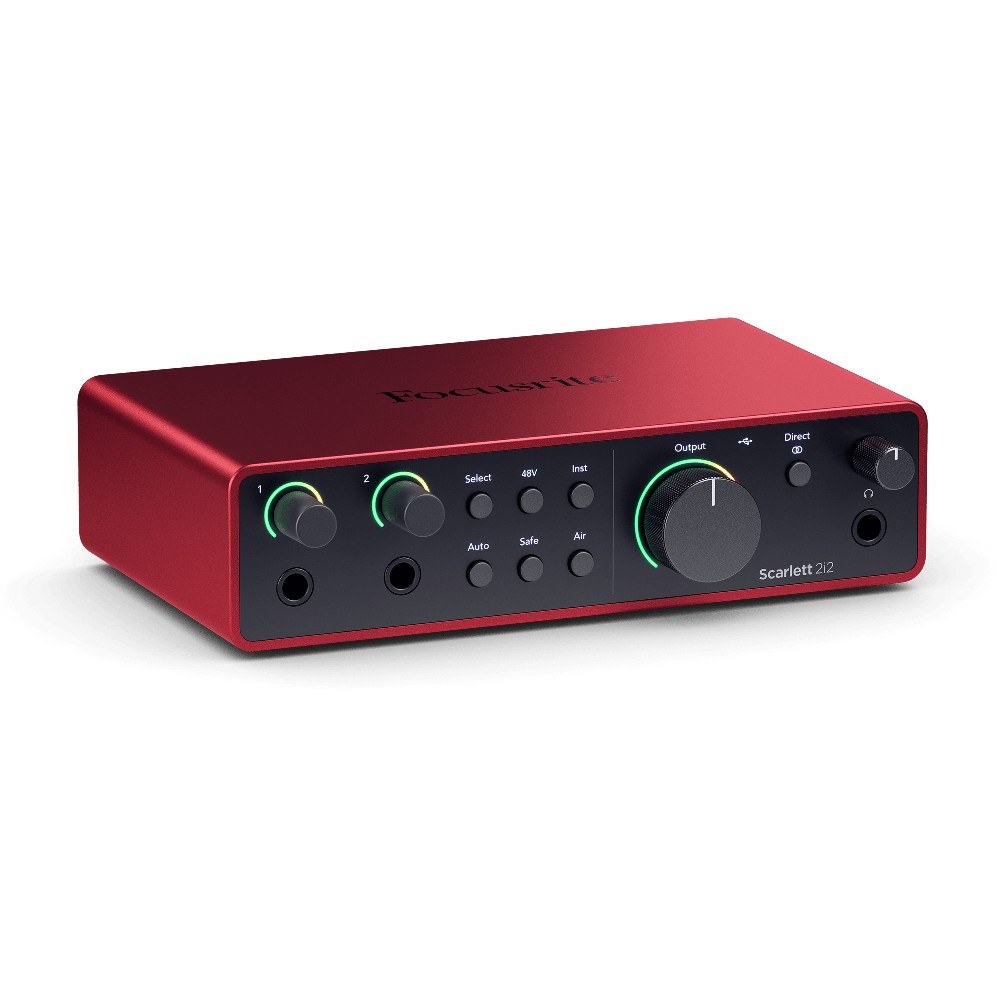
The Scarlett 2i2 remains the go-to for many home producers because it hits the sweet spot: affordable, great-sounding, and simple to use. The 4th Gen refreshed the preamps and improved gain staging, giving more headroom for low-output mics and ribbon mics without resorting to external boosters. It’s compact, bus-powered, and works on Mac and Windows with minimal fuss — ideal for singer-songwriters, beatmakers, and streaming musicians who track remotely. If you want a two-input, high-quality interface with proven software support, this is the pragmatic pick.
Who should buy: Solo musicians, beginners, mobile recordists.
Main downside: If you need DSP or tons of I/O, look higher up the ladder.
Best for podcasting and live streaming: RØDECaster Pro II / Focusrite Vocaster
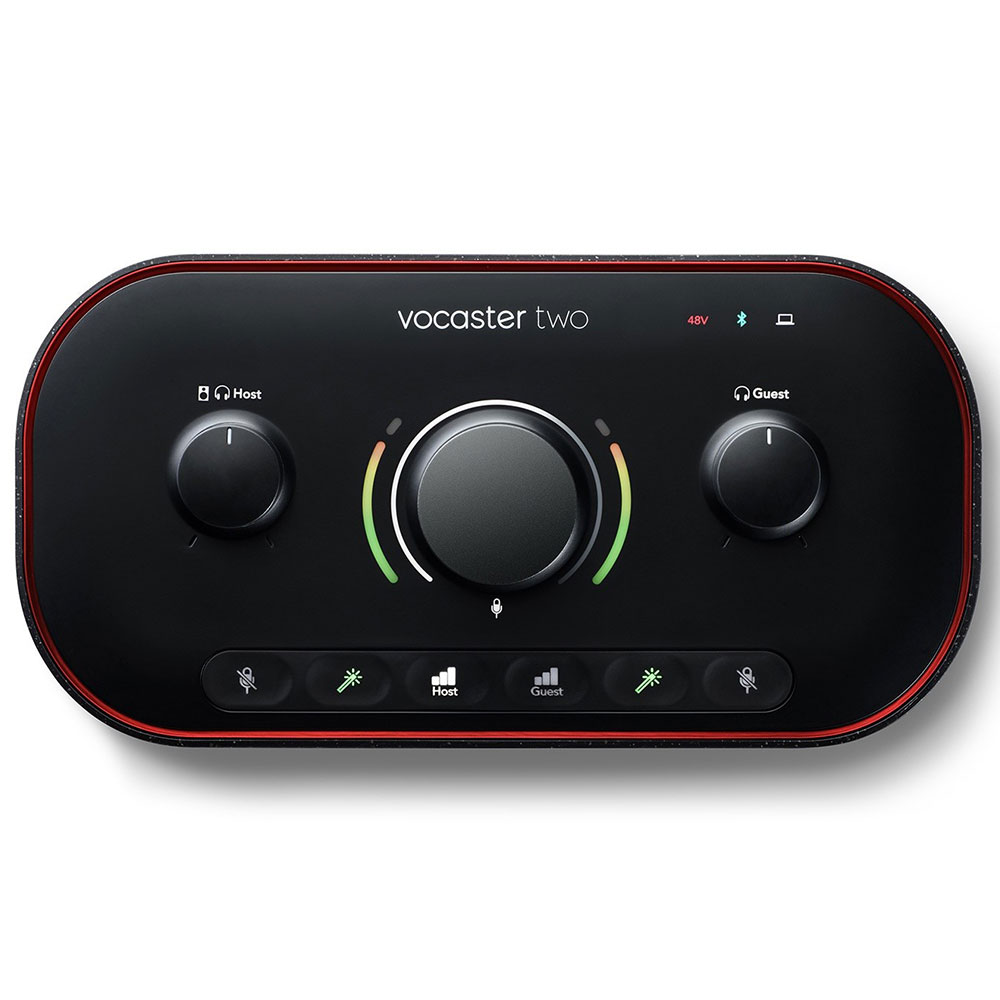
Podcasting workflows are varied: some creators want a simple USB-to-computer solution for one mic, others need multi-host handling, phone call integration, and easy live streaming setups. The RØDECaster Pro II is a dedicated podcast workstation — multiple mic inputs with great preamps, on-board recording, and powerful ergonomics for live shows. For streamers who prefer a compact two-channel interface with streaming-friendly features, Focusrite’s Vocaster series provides vocal-first processing and easy routing. Both approaches save time and reduce complexity compared with building a mixer + interface rig. The Podcast Consultant+1
Who should buy: Podcast hosts, livestreamers, interviewers.
Main downside: Hardware mixers/all-in-one units trade flexibility for simplicity — pro studios may prefer modular interfaces and a separate mixer.
Best pro/producer choice: Universal Audio Apollo Twin X
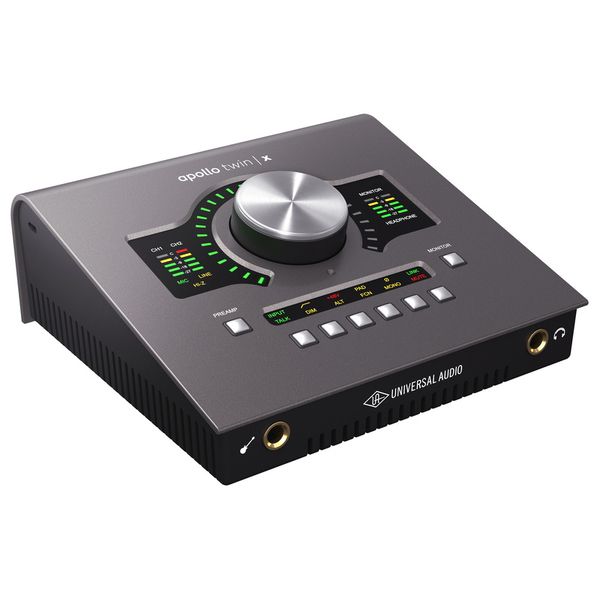
If you want industry-grade converters plus integrated UAD DSP for real-time plugin processing, the Apollo Twin X remains a top choice in 2025. It’s used by pros who track with near-zero latency while running UA’s emulations (compressors, preamps, tape machines) in real time. The build, driver stability, and sound quality justify the premium for people who rely on those UAD plugins as part of their sound. If your budget allows and you care about professional color and processing, Apollo is hard to beat.
Who should buy: Producers, mixing engineers, pro home studios.
Main downside: Price; UAD ecosystem is proprietary (but powerful) and adds to cost.
Best budget/value choices: MOTU M2 / Behringer, and Audient options
Budget options in 2025 are surprisingly good. The MOTU M2 and M4 stand out for their class-leading converters and on-device metering — features rarely found at their price point. For absolute tight budgets, Behringer’s U-Phoria line and Audient’s entry interfaces deliver clean sound with fewer bells and whistles. If you’re building your first studio, value models give clean audio and low latency without breaking the bank. SOUNDREF+1
Who should buy: Beginners, podcasters on a tight budget, mobile recordists.
Main downside: Fewer inputs and fewer advanced features.
Best for more I/O / hybrid setups: PreSonus Quantum HD and MOTU UltraLite
If you need expanded I/O, better clocking, and the option for multiple mic preamps, consider the PreSonus Quantum HD series or MOTU UltraLite mk5 family. The Quantum HD line brought Thunderbolt/USB-C performance and more flexible routing, making it a solid pick for small project studios that occasionally need to track full bands. MOTU’s UltraLite line has matured into a compact powerhouse for hybrid setups — great for those who want lots of I/O in a small box.
Who should buy: Small studios, multi-instrument sessions, hybrid video/audio creators.
Practical tips: matching mics, monitors, and workflow
-
Mic pairing: Dynamic mics (SM7B, Shure SM58) usually need lots of clean gain — look for interfaces with >60dB gain, or plan a Cloudlifter/inline preamp if your interface lacks gain. Condensers require phantom power; check the interface has 48V per input.
-
Headphone mixes & latency: If you need near-zero latency monitoring while recording, pick an interface with a dedicated hardware monitor mix or DSP monitoring (Apollo, MOTU, many Focusrite models). Descript
-
Loopback for streaming: Streaming software loves devices that can create loopback/virtual channels (to send game audio + mic to OBS). Many modern interfaces include this; for streaming, verify “multi-channel USB loopback” in specs.
What to avoid (common mistakes)
-
Buying purely on brand or price, cheap preamps can introduce noise that ruins recordings, even if converters are advertised as having high bit depth.
-
Ignoring driver reviews — a great spec sheet means nothing if drivers are jittery on your OS. Check recent driver updates for your platform.
-
Overbuying I/O you’ll never use — extra inputs sound nice, but add cost and complexity.
Final verdict — what to buy (by use case)
-
Bedroom musician/solo singer: Focusrite Scarlett 2i2 (4th Gen) — balance of sound, price, and simplicity.
-
Podcaster/solo streamer: RØDECaster Pro II or Vocaster Two — choose RØDECaster if you want hardware recording + multi-host features; Vocaster if you prefer Focusrite’s streamlined path to streaming.
-
Streamer who plays and talks (game + mic): An interface with loopback (Focusrite Vocaster, MOTU with loopback) or compact mixer-like RØDE.
-
Producer/pro home studio: Universal Audio Apollo Twin X (or RME Babyface Pro if you want rock-solid drivers and ultra-stable performance without DSP).
-
Budget beginner: MOTU M2 / Behringer UMC / Audient iD series.
Short buying checklist (copy/paste)
-
How many mic inputs do you actually need?
-
Does it supply enough gain for your mic(s)? (>60dB for quiet dynamics like SM7B)
-
Do you need a loopback for streaming? (Yes → look for “loopback” feature.)
-
Is it bus-powered or requires an external PSU? (Mobile vs stationary)
-
Does the manufacturer have recent driver updates for your OS? (Check reviews)
-
Do you want onboard DSP? (UAD, onboard compressors, etc.)
Closing notes
2025’s audio-interface landscape is healthier than ever: companies focused on solid driver support and added smart features (loopback, DSP, better metering). For most home studios and content creators, the Focusrite Scarlett 2i2 (4th Gen) is the sensible, expert-tested sweet spot — but the right choice ultimately depends on your mic choice, the number of inputs you need, and whether you prefer hardware simplicity (podcasting consoles) or modular flexibility (separate interface + mixer). For deeper reading, pro tests and roundups from MusicRadar, dedicated podcast guides, and studio-gear reviewers are excellent next stops
Nothing Headphone (1) Review: Stylish Design, Strong Features, But Quirky Trade-Offs
Written by Sounds Space
Overview
Nothing has finally jumped into the over-ear / full-size noise-cancelling headphone market with the Headphone (1). It’s their first “big cans” offering, following earlier success with earbuds. They partnered with KEF, a well-regarded UK audio specialist, for the sound tuning. TechRadar+3KEF US+3SoundGuys+3
The Headphone (1) sells itself on a mix of strong specs, bold design, a lot of customisation, and some trade-offs. If you like features and statement style but are a bit more forgiving in perfection, these are a tempting package. But there are quirks.
Key Specs & Features
To start, here are the essentials:
| Spec | What you get |
|---|---|
| Drivers | 40 mm dynamic drivers, custom tuned with KEF KEF US+2SoundGuys+2 |
| Frequency range | 20 Hz – 40,000 Hz KEF US+1 |
| Connectivity | Bluetooth 5.3 (supports multipoint / dual-device), USB-C, 3.5 mm wired connection included SoundGuys+2PhoneArena+2 |
| Codecs | SBC, AAC, LDAC are supported SoundGuys+2PhoneArena+2 |
| Noise cancellation / transparency | Adaptive ANC with multiple strength levels; transparency mode works decently; physical controls for toggling modes KEF US+3TechRadar+3SoundGuys+3 |
| Battery life | Up to ~35 hours with ANC on; up to ~80 hours with ANC off (numbers vary with codec & usage) TechRadar+3SoundGuys+3KEF US+3 |
| Quick charge | 5 minutes charging gives something like ~5 hours playback (ANC off) SoundGuys+1 |
| Weight / Comfort | Around 329 g, with memory foam ear-cups; good clamping force; headband has some padding but some reviews note it's a bit thin in places. SoundGuys+2The Guardian+2 |
| Water / Dust Resistance | IP52 rating (light dust and water resistance) — good for sweat / light rain, though not for heavy exposure. SoundGuys+1 |
| Design & Controls | Transparent “caps” / see-through aesthetic; a roller (wheel) on the right cup for volume, a paddle / switch for track skip, physical on/off toggle; a button that can be customised. KEF US+3PhoneArena+3SoundGuys+3 |
What It Does Well
These are the highlights — what makes the Headphone (1) shine.
-
Design & Aesthetic Statement
If nothing else, these headphones attract attention. The semi-transparent portions reveal internal components (or at least look like they do), and the shape / finish is bold. If you enjoy gadgets that are also fashion / design pieces, these hit that mark. SoundGuys+2PhoneArena+2 -
Rich Feature Set
Very few in this class give you all of: USB-C wired audio, 3.5mm jack, high-res LDAC, dual-device Bluetooth, spatial audio with head tracking, good app support with EQ customisation. It’s a loaded package technically. SoundGuys+2PhoneArena+2 -
Battery Life
The real world battery life with ANC on is solid, often exceeding the claimed 35 hours in many tests. With ANC off, the potential for up to ~80 hours is impressive if you can live with wire-free usage and occasional charging. SoundGuys+2KEF US+2 -
Good ANC + Transparency
While not perfect, the ANC is very usable. It significantly cuts down low-end and midrange ambient noise (traffic, engines, chatter). Transparency mode works well enough for letting in ambient sound; though there are quirks (your own voice may sound boomy to you etc.). SoundGuys+2TechRadar+2 -
Physical Controls
Many people dislike touch-controls for headphones because they can be unreliable or accidentally triggered. The Headphone (1)’s use of real, tactile controls (wheel, switch, buttons) is widely praised. PhoneArena+2SoundGuys+2
The Quirks / What Might Be a Compromise
No product is perfect, and these headphones come with trade-offs. Depending on your priorities, some may be deal-breakers.
-
Sound Out-of-the-Box Needs Tweaking
The default tuning is described by many reviews as mid-forward (vocals present, clarity), but not massively exciting in the highs, some unevenness, a bit more bass than some prefer. If you’re an audiophile or want a very flat / reference sound, you’ll probably spend time in the EQ settings to get things exactly to your taste. SoundGuys+1 -
Weight & Comfort for Long Sessions
At 329g, these are not lightweight. Some people report that after long hours (say during travel or headset-on duty) the weight and the padding (particularly in the headband) become noticeable. If comfort and wearing them for many hours straight is essential, that’s something to test in person. The Guardian+1 -
ANC vs Sound Trade-off
When ANC is active, there are some reviewers who say the sound becomes slightly narrower, or loses a bit of clarity—some “punch” and “air” get a bit suppressed. For music where detail and dynamism in the top-end matters, this matters. If you often use ANC, be aware you’re trading something. The Guardian+2SoundGuys+2 -
Not Truly “Flagship Premium” in Some Areas
Compared to entrenched top competitors (Sony, Bose, Apple), these may not surpass them in certain refined metrics: ultra-fine detail, finishing, some materials, perhaps replacement parts / long term support. For example, the replaceability of ear pads is a question, and while they are removable, the availability (at least at launch) of replacements is uncertain. WIRED+1 -
Looks Are Bold, Which May Not Be to Everyone
As expected, the transparent design and large earcups are eye-catching. Some people love that. Others might find them too showy or simply prefer something more understated. Also, lighter colors (white / silver) draw more attention (and will show dirt etc.). The Guardian+1
Who They’re Best For
Putting together strengths and compromises, here are the types of users who will probably get the most out of the Nothing Headphone (1), and those who might want to consider alternatives:
| Good fit if you… | Maybe look elsewhere if you… |
|---|---|
| • Like design / aesthetics as much as sound. Want something that stands out. | • Want ultra-subtle / minimal / understated gear. |
| • Appreciate physical controls, and want tactile feedback rather than touch only. | • Hate heavy gear or have a small head / lightweight sensitivity. |
| • Want long battery life, multiple connection options (wired & wireless), spatial audio etc. | • Prioritize top-tier ANC performance or absolute audio fidelity out-of-the-box. |
| • Don’t mind tweaking EQ or adjusting to get your preferred sound signature. | • Want flat / reference sound with minimal adjustment needed. |
| • Use them for mixed activities: commuting, some gym / outdoors (light), travel, office etc. | • Need ruggedness / high-water protection, or extremely light headphones for extended daily usage without fatigue. |
Verdict
All things considered, the Nothing Headphone (1) is a very strong debut over-ear product, especially given the competition. It hits many marks:
-
Great battery life
-
Very usable ANC
-
Rich feature set and connectivity
-
Bold and memorable design
-
Physical controls you actually want to use
But it also comes with quirks: it’s heavy, the sound isn’t perfectly balanced with ANC on, and if you don’t care about looks or you want something very subtle, some competitors might appeal more.
If I were you and looking for premium wireless over-ears in this price/feature space, I'd definitely have these on the shortlist—but I would try them in person, especially for comfort, and be ready to dive into the EQ settings to get maximum satisfaction.
Key Competitors
-
Sony WH-1000XM5 / XM6
-
Bose QuietComfort Ultra Headphones
Spec-by-Spec & Feature Comparison
| Feature | Nothing Headphone (1) | Sony WH-1000XM5 / XM6 | Bose QuietComfort Ultra |
|---|---|---|---|
| Price point | ~$299 MSRP Tom's Guide+2Tom's Guide+2 | Higher (US$ ~399-450) Tom's Guide+2Tom's Guide+2 | Even higher (~US$429) Tom's Guide+2SoundGuys+2 |
| Battery life | Up to ~35 hrs with ANC on; up to ~80 hrs with ANC off (varies by codec) RecordingNOW.com+3SoundGuys+3Tom's Guide+3 | Sony XM6: ~30-40 hrs with ANC on/off in typical cases; XM5 similar in many real-world tests RecordingNOW.com+2Tom's Guide+2 | Bose QC Ultra: significantly less life (≈ 24 hrs with ANC) Tom's Guide+1 |
| Weight / Comfort | Heavier (~329g) which may mean more fatigue over long sessions; decent padding but harder head clamp reported by some Tom's Guide+2RecordingNOW.com+2 | Sony models tend to be lighter and more refined for long wear; better ergonomics generally noted HomeTheaterReview+2SoundGuys+2 | Bose QC Ultra is lighter than the Nothing, with more plush cushioning etc. SoundGuys+1 |
| Noise Cancellation (ANC) | Strong, usable in many environments; probably “above average” but not the absolute top in windy / harsh ambient noise; some loss of clarity with ANC engaged. SoundGuys+2Aaron x Loud and Wireless+2 | Sony is generally considered the benchmark: excellent ANC, especially for lower-frequency, engine noise, etc. Performs better in many “difficult” noise situations. HomeTheaterReview+2SoundGuys+2 | Bose has a long history with some of the best ANC. QC Ultra is among the top in blocking ambient noise, especially in lower and middle frequencies. SoundGuys+1 |
| Sound / Out-of-Box Tuning | Darker signature by default; heavy bass and lower mids, treble and vocals may feel recessed unless adjusted with EQ. Good “fun” listening once tweaked. SoundGuys+2Aaron x Loud and Wireless+2 | Sony tends to have a more balanced, polished sound out of the box; more “neutral” / more familiar tuning that needs less user tweaking. SoundGuys+2HomeTheaterReview+2 | Bose also leans toward more balanced, premium sound; tends to preserve clarity, mids, and treble a bit more without needing huge adjustments. SoundGuys+1 |
| Features / Extras | Very generous: USB-C wired audio mode, 3.5 mm jack, LDAC support, adjustable EQ (parametric), environmental / ambient / pass-through modes, IP52 rating, physical controls (roller, switch, etc.) SoundGuys+3Aaron x Loud and Wireless+3Tom's Guide+3 | Sony has some advanced software features (adaptive modes, app customisation, etc.), low-latency modes in newer models, well-tuned microphones, etc. But often lacks water resistance rating. SoundGuys+1 | Bose adds premium ANC, immersive audio (“immersive mode” etc.), good spatial audio, good mic performance, traditional Bose comfort. May lack some unique touches like transparent design or USB-C audio (depending on region/model). SoundGuys+2Tom's Guide+2 |
What Each Does Best & Trade-Offs
| If you care most about... | Best Pick | Why / What You Sacrifice |
|---|---|---|
| Top-tier noise cancellation (especially for travel, airplanes, noisy public transport, windy outdoors) | Sony WH-1000XM5/XM6 or Bose QuietComfort Ultra | You’ll pay more; battery life might be less (especially with ANC at higher strength); possibly fewer rugged / water-resistance features. |
| Long battery life + versatile connectivity + value | Nothing Headphone (1) | Sound out of box may need tweaking; heavier weight; may not match the ultra-refined finish or ANC of the Sony/Bose flagships. |
| Immediate sound quality, minimal fuss | Sony or Bose | You’ll pay more, and design features / “cool factor” are more restrained; less uniqueness in appearance. |
| Physical controls, design / uniqueness | Nothing Headphone (1) | You give up some refinement in noise cancellation at extreme conditions; bulk / heft / maybe less polish in fit. |
| Comfort over long sessions | Likely Sony or Bose | Nothing’s weight and clamp might become tiring after many hours; you’ll need to test in person. |
Final Thoughts: Which Should You Pick?
Here are some “user-profiles” to help you decide:
-
If you want a stylish, feature-rich headphone and don’t mind tweaking → Nothing Headphone (1) is a great value. Lots of bang for buck: decent ANC, excellent battery, rich features. If you like the look & enjoy tuning EQ / personalising sound, it’s very compelling.
-
If you travel a lot / want excellent isolation → Sony (or Bose) edges it. They’ve been doing this longer, and in harsh noise environments, they still tend to perform better with ANC and microphone clarity.
-
If comfort all day / long sessions matter → Again, Sony / Bose probably wins: lighter, more refined cushioning, better padding etc.
-
If price is a concern → Nothing gives much of the premium feel & many premium features for less money. It’s the strongest contender “just under top-tier” currently.
The Future of AI in Music: Will Artificial Intelligence Replace Artists?
Written by Sounds Space
The Future of AI in Music: Will Artificial Intelligence Replace Artists?
Introduction
Artificial Intelligence (AI) has rapidly moved from being a futuristic concept to an everyday reality. In industries like healthcare, finance, and transportation, AI has already proven to be a disruptive force. But one of the most fascinating—and controversial—frontiers of AI is its role in the music industry.
Over the past few years, we’ve seen AI models compose symphonies, generate beats, replicate iconic voices, and even perform live concerts in virtual spaces. Some celebrate this as the dawn of a new creative revolution, while others fear it marks the beginning of the end for human musicians.
This blog explores the current state of AI in music, its benefits and drawbacks, and the ultimate question: Will AI replace artists, or will it become a powerful tool that enhances human creativity?
A Brief History of AI in Music
AI in music isn’t as new as it seems. As far back as the 1950s, researchers experimented with algorithms to generate melodies. In the 1990s, programs like Experiments in Musical Intelligence (EMI) by David Cope could mimic the style of famous composers like Bach and Mozart.
Fast forward to today, and AI has gone mainstream:
-
OpenAI’s Jukebox can generate full songs in the style of famous artists.
-
Suno, Aiva, and Boomy allow anyone to create professional-sounding tracks in minutes.
-
Endlesss and Amper Music let producers use AI as a collaborative partner in real-time.
-
Deepfake voice AI can replicate singers so well that some recordings are nearly indistinguishable from originals.
This evolution shows a clear trajectory: AI is not just a tool for experimentation anymore—it’s a full-fledged participant in music creation.
How AI Is Changing Music Creation
1. Songwriting and Composition
AI can generate melodies, harmonies, and lyrics based on prompts. Tools like ChatGPT for lyrics and AI composition platforms for melodies make it possible for anyone to produce a song without prior training.
2. Music Production
AI-powered plugins analyze a mix and automatically adjust EQ, compression, and mastering. Services like LANDR offer instant AI mastering, allowing indie musicians to release polished tracks affordably.
3. Personalized Music
Streaming services like Spotify and YouTube already use AI for recommendations. Now, AI can compose personalized soundtracks for workouts, studying, or relaxation, adapting in real time to listener preferences.
4. Performance and Virtual Artists
Virtual pop stars like Hatsune Miku (powered by vocal synthesis) and AI-driven performers are gaining global fanbases. Even “AI DJs” are appearing on radio stations and in clubs, mixing tracks live.
The Benefits of AI in Music
-
Accessibility for All
AI lowers the barrier to entry, allowing anyone—even without musical training—to create songs. This democratization of music creation empowers hobbyists, independent artists, and even businesses looking for custom soundtracks. -
Collaboration, Not Competition
Many musicians use AI as a creative partner. For example, a producer might generate dozens of chord progressions and then select one to refine. This speeds up workflows while keeping human input at the center. -
Efficiency and Speed
What once took hours in a studio can now take minutes. AI mastering, beat-making, and lyric suggestions save time and costs. -
New Creative Possibilities
AI can generate sounds humans might never think of. Hybrid genres and experimental tracks are being born from AI’s unpredictable creativity. -
Market Expansion
AI-generated background music for videos, podcasts, and video games is booming, creating new revenue streams for platforms and composers alike.

The Controversies and Concerns
While AI brings innovation, it also raises serious ethical, economic, and creative concerns.
1. Authenticity
Can a song generated by AI truly be considered “art”? Music has always been deeply tied to human emotion and experience. Some argue that AI-generated songs lack the soul and authenticity that come from human struggles, triumphs, and lived stories.
2. Job Displacement
Just as automation disrupted manufacturing, AI may threaten careers in the music industry. Session musicians, composers for ads, and even mix engineers could see demand shrink as AI alternatives rise.
3. Copyright Issues
AI models are trained on vast datasets, often including copyrighted material. If an AI generates a track that sounds like a famous artist, who owns the rights? The creator? The AI company? Or no one?
4. Deepfake Voices
The rise of AI voice cloning has led to controversies. In 2023, AI-generated tracks featuring “fake” Drake and The Weeknd went viral. This sparked lawsuits and debates about consent, ownership, and exploitation of an artist’s likeness.
5. Homogenization of Music
Some critics argue that AI may lead to “cookie-cutter” music. If everyone uses the same AI tools, will all songs start to sound alike?
Case Studies: AI in Action
1. Grimes’ AI Experiment
Canadian singer Grimes embraced AI by allowing fans to use her AI-cloned voice in their songs, splitting royalties 50/50. This showed a potential business model where AI can expand, rather than replace, an artist’s brand.
2. Endel – Personalized AI Music
Endel creates adaptive soundscapes for focus, relaxation, and sleep. It even signed a deal with Warner Music, showing how AI-generated music can integrate into the mainstream industry.
3. AI Drake & The Weeknd Song
In 2023, a viral AI-generated track mimicked Drake and The Weeknd’s voices. While fans loved it, Universal Music Group pushed for its removal, citing copyright infringement. This case became a landmark moment in the AI music debate.
Will AI Replace Artists?
The big question: Is AI the future artist, or just another instrument?
Most experts agree that AI will not fully replace human musicians, but it will reshape the role of artists. Here’s why:
-
Human Emotion Is Irreplaceable
Audiences connect with stories, emotions, and lived experiences. AI cannot replicate the heartbreak in Adele’s ballads, the raw rage in punk rock, or the cultural context of hip-hop. -
Artists as Curators
Instead of writing every note, future musicians may act as curators—guiding, editing, and shaping AI-generated ideas into meaningful works. -
Hybrid Creativity
Just as electronic instruments didn’t eliminate guitars, AI will likely become another tool in the studio. The artists who adapt will thrive, while those who resist may struggle. -
New Roles in Music
Musicians may evolve into “AI conductors,” shaping unique collaborations between human inspiration and machine output.
The Future Landscape of Music
1. AI as a Creative Partner
We may see more artists openly collaborating with AI, crediting it as a co-producer. Albums might include tracks partially composed by machines but refined by humans.
2. Rise of Virtual Stars
The success of virtual influencers and vocaloid singers suggests that fully AI-generated celebrities may become mainstream. However, their longevity will depend on whether audiences form emotional attachments.
3. Music for Every Moment
AI could create truly personalized soundtracks—music that adapts to your mood, location, or even heart rate. Imagine a playlist that changes dynamically as you jog, meditate, or celebrate.
4. Legal and Ethical Frameworks
Governments and music organizations will need to establish clear rules around copyright, royalties, and AI-generated content to prevent exploitation.
5. Global Collaboration
AI may enable musicians from across the world to collaborate seamlessly, breaking language and cultural barriers through universal machine-generated sounds.
Conclusion
Artificial Intelligence is transforming the music industry in ways both thrilling and unsettling. While AI can compose, perform, and even replicate human voices, it cannot replace the emotional depth, storytelling, and cultural impact of real artists.
Instead of fearing replacement, musicians should view AI as an evolving instrument—much like the electric guitar or synthesizer once were. Those who embrace and adapt will likely find themselves on the cutting edge of a new musical revolution.
So, will AI replace artists? Unlikely. But it will challenge our definition of artistry, redefine the music business, and forever change how we create and consume music.
The future of music isn’t humans or AI—it’s humans with AI.