

TIDAL Cracks Down on AI-Generated Music: What the New Policy Means for Artists, Streaming, and the Future of Music
The music industry has reached another defining moment in its ongoing relationship with artificial intelligence.
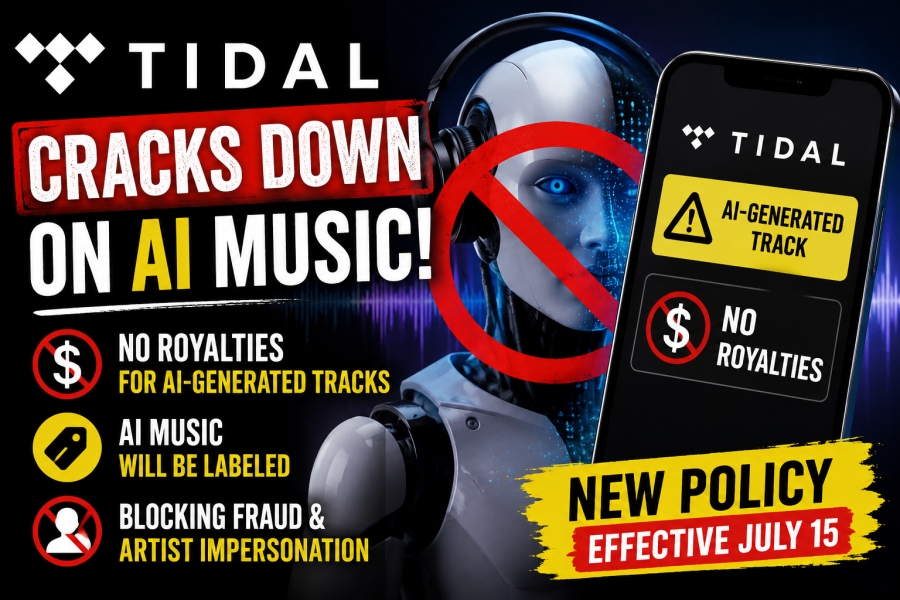
In a landmark move, TIDAL has announced a new policy that will fundamentally change how AI-generated music is treated on its platform. Beginning July 15, tracks identified as being entirely AI-generated will be clearly labeled and will no longer earn royalties. In addition, TIDAL has confirmed it will actively block AI-generated content used for fraud, impersonation, or other deceptive purposes.
This is one of the strongest policy decisions made by a major music streaming platform since AI-generated music began flooding digital services.
The announcement has sparked debate across the music industry. Artists see it as a positive step toward protecting creativity, while AI developers argue it raises new questions about innovation and fairness.
Regardless of which side of the debate you fall on, one thing is certain: TIDAL's decision could reshape how streaming platforms handle AI-generated music for years to come.
What Is TIDAL's New AI Music Policy?
Under the new rules, TIDAL will introduce several significant changes designed to distinguish human-created music from fully AI-generated works.
These include:
-
Clearly labeling tracks that are entirely AI-generated.
-
Removing royalty payments from fully AI-generated songs.
-
Blocking AI-generated content used for fraud or artist impersonation.
-
Expanding systems designed to detect misleading or deceptive uploads.
The platform has made it clear that its objective is not simply to regulate AI technology, but to ensure that artists and listeners know exactly what they are hearing while protecting legitimate creators from abuse.
This approach reflects growing concerns throughout the music business about transparency and authenticity.
Why TIDAL's Decision Matters
Artificial intelligence has rapidly transformed music production over the past few years.
Anyone can now generate songs using AI tools in just a few minutes. While this has opened exciting creative possibilities, it has also introduced significant challenges.
Streaming services have seen a dramatic increase in AI-generated uploads, many of which imitate the voices or styles of famous artists.
This creates several problems:
-
Fraudulent releases pretending to be real artists.
-
Confusion for listeners.
-
Reduced visibility for independent musicians.
-
Royalty pools are becoming diluted by thousands of AI-generated tracks.
TIDAL's new policy directly addresses these concerns by ensuring that royalty payments continue to prioritize human creators.
Protecting Human Creativity
Perhaps the biggest message behind TIDAL's announcement is that creativity still matters.
Professional musicians spend years developing songwriting skills, vocal techniques, instrumental ability, and production knowledge.
AI systems, by contrast, generate music by processing enormous amounts of existing material.
Many artists argue that this should not be rewarded in the same way as original human creativity.
By removing royalties from fully AI-generated tracks, TIDAL is sending a clear signal that the value of genuine artistic expression remains central to its platform.
The Growing AI Music Debate
Artificial intelligence has become one of the most controversial topics in modern music.
Supporters argue AI can:
-
Speed up production.
-
Help with songwriting.
-
Inspire new creative ideas.
-
Lower barriers for beginners.
-
Expand musical experimentation.
Critics argue AI may:
-
Replace working musicians.
-
Encourage copyright infringement.
-
Flood streaming platforms with low-quality music.
-
Reduce income for genuine artists.
-
Blur the line between original work and imitation.
TIDAL's decision attempts to strike a balance by allowing AI-generated music to exist while preventing it from competing financially with human-created works.
The Impact on Artist Royalties
Royalty distribution has already been one of the biggest challenges facing the streaming industry.
Most platforms divide subscription revenue among millions of tracks.
If AI-generated music continues growing at its current pace, it could significantly reduce the amount paid to human musicians.
TIDAL's new policy prevents this scenario by excluding fully AI-generated tracks from royalty payments.
This helps preserve the royalty pool for artists creating original music.
For independent musicians, this could become a significant long-term benefit.
Stopping AI Impersonation
One of the most serious concerns surrounding AI music is artist impersonation.
Recent years have seen numerous fake songs using AI-generated voices that closely resemble major artists.
Some listeners have struggled to distinguish genuine releases from artificial ones.
TIDAL says it will actively block uploads involving:
-
Voice cloning.
-
Artist impersonation.
-
Fraudulent releases.
-
Misleading metadata.
This protects both artists and fans while helping maintain trust in the platform.
Could Other Streaming Platforms Follow?
The biggest question now is whether other streaming services will introduce similar policies.
Major platforms including Spotify, Apple Music, Amazon Music and YouTube Music have all faced increasing pressure regarding AI-generated content.
If TIDAL's approach proves successful, it could encourage wider industry adoption.
Possible future developments include:
-
Mandatory AI labels across platforms.
-
Separate AI music categories.
-
Different royalty structures.
-
Stronger identity verification.
-
More advanced AI detection systems.
TIDAL may simply be the first domino to fall.
What This Means for Independent Artists
Independent musicians may be among the biggest winners.
Many smaller artists have expressed concern that AI-generated uploads make discovery even more difficult.
By reducing the financial incentive to mass-upload AI-generated tracks, TIDAL could improve visibility for genuine musicians.
Independent creators who invest time, money, and passion into their music stand to benefit from a healthier streaming ecosystem.
What This Means for AI Developers
AI music companies are unlikely to disappear.
Instead, they may begin focusing on:
-
Licensed AI training.
-
Creative collaboration tools.
-
Production assistance.
-
Songwriting support.
-
Educational applications.
Rather than replacing artists entirely, AI may increasingly become a creative assistant.
This collaborative approach could reduce many of the concerns currently facing the industry.
Copyright Is Becoming the Next Major Battleground
TIDAL's announcement comes at a time when governments and music organizations around the world are debating AI copyright laws.
Many artist groups argue AI companies should not train their systems using copyrighted music without permission.
Several legal cases are already underway globally.
Future regulations could determine:
-
What data AI models can learn from.
-
Whether artists must give permission.
-
How creators are compensated.
-
Who owns AI-generated music.
These legal decisions will shape the future of the music industry for decades.
The Future of Streaming
Streaming services have continually evolved.
They have introduced:
-
Lossless audio.
-
Spatial audio.
-
Lyrics.
-
Podcasts.
-
Music videos.
AI governance may become the next major competitive feature.
Platforms that successfully balance innovation with artist protection may gain greater trust among musicians and subscribers alike.
What Artists Should Do Now
Whether you're an established musician or an emerging independent artist, the industry is changing rapidly.
Now is the time to:
-
Register your copyrights.
-
Protect your brand identity.
-
Monitor unauthorized AI impersonations.
-
Understand your distribution agreements.
-
Stay informed about evolving AI policies.
The better prepared artists are, the easier it will be to adapt as new technologies emerge.
Final Thoughts
TIDAL's decision represents one of the boldest actions yet in the ongoing debate surrounding artificial intelligence and music.
Rather than banning AI outright, the platform has chosen a more balanced approach—allowing AI-generated music to exist while ensuring that royalty payments continue to reward human creativity and preventing deceptive uses such as artist impersonation.
This policy could become a blueprint for the wider streaming industry.
As AI technology continues advancing, every major platform will eventually face the same questions:
How should AI-generated music be identified?
Who deserves royalties?
How can artists be protected from impersonation?
How do we encourage innovation without undermining creativity?
The answers to these questions will define the next chapter of the global music industry.
One thing is already becoming clear.
Artificial intelligence is here to stay.
But thanks to decisions like TIDAL's, human creativity may remain at the very heart of music.
