

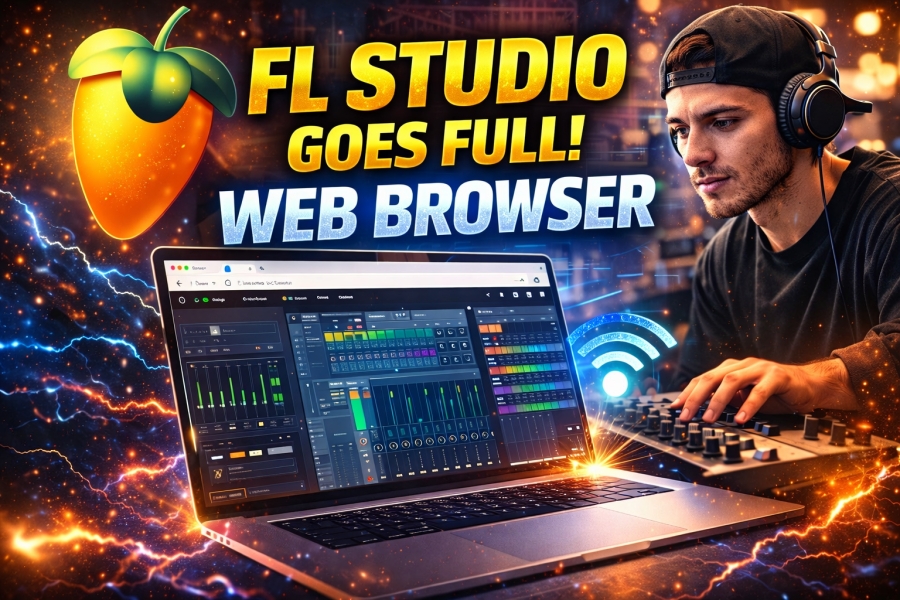
FL Studio Goes Completely Web Browser Mode: The Future of Music Production Has Arrived
For decades, music production has been tied to one simple idea: powerful software installed on powerful computers. If you wanted to produce at a professional level, you needed a fast machine, a licensed DAW, plugins installed locally, and hours spent configuring everything before creativity even began.
But in 2025, that model is being challenged — hard.
The idea of FL Studio running entirely in a web browser is no longer science fiction or marketing hype. It represents a fundamental shift in how music is created, shared, and monetized. And whether you’re an FL Studio veteran or a curious producer watching from the sidelines, one thing is clear:
👉 Music production is moving to the cloud.
This article breaks down what it really means for FL Studio to go full web-based, why it matters, what producers gain (and lose), and how this move could reshape the entire music industry.
From Desktop DAW to Browser-Based Studio
FL Studio has always been known for pushing boundaries. From its early days as FruityLoops to becoming one of the most widely used DAWs in the world, it has consistently attracted producers who value speed, creativity, and accessibility.
But a browser-based FL Studio takes that philosophy to a whole new level.
Instead of downloading and installing a massive application, producers would:
-
Open a browser
-
Log in to an account
-
Start producing instantly
No installations. No system limitations. No waiting.
This mirrors what we’ve already seen in other creative industries — design tools, video editors, even game engines — all moving into the browser. Music production was simply the next frontier.
Why This Shift Is Happening Now
The timing isn’t random.
Several technological trends have aligned to make browser-based DAWs not just possible, but practical:
1. Cloud Computing Has Matured
Servers today are powerful enough to handle real-time audio processing, rendering, and collaboration. Latency, once the biggest enemy of cloud audio, is being aggressively optimized.
2. Web Audio Technology Has Evolved
Modern browsers now support advanced Web Audio APIs that allow:
-
Real-time synthesis
-
MIDI input
-
Low-latency playback
-
Complex signal routing
What was once limited to basic audio playback can now support near-DAW-level functionality.
3. Producers Want Flexibility
Today’s producers aren’t tied to one location. They work:
-
On laptops
-
On shared machines
-
On different operating systems
-
On the move
A browser-based FL Studio means your studio follows you everywhere.
What “Completely Web Browser Mode” Really Means
This isn’t about a “lite” demo version.
A full browser-based FL Studio would likely include:
-
A cloud-hosted DAW engine
-
Real-time audio processing on servers
-
Project files stored securely online
-
Plugin-like instruments built into the platform
-
Cross-device project access
In simple terms: FL Studio becomes a service, not just software.
The Biggest Advantages for Producers
Let’s be honest — if this didn’t offer major benefits, it wouldn’t be happening. Here’s why producers are paying attention.
1. Produce Anywhere, Instantly
No installation means:
-
No waiting
-
No compatibility issues
-
No hardware restrictions
You could start a beat on:
-
A café laptop
-
A school computer
-
A borrowed device
-
Even a tablet (eventually)
Your studio is just a login away.
2. Cross-Platform Freedom
Mac. Windows. Linux. ChromeOS.
A browser-based FL Studio kills platform wars instantly. If your browser runs, your DAW runs.
This alone could dramatically expand FL Studio’s global user base.
3. Seamless Collaboration
Collaboration is where web-based DAWs truly shine.
Imagine:
-
Two producers working on the same project in real time
-
Changes syncing instantly
-
No exporting stems
-
No “send me the latest version” messages
Music creation becomes closer to how Google Docs works — shared, live, and fluid.
4. Automatic Updates, Zero Hassle
No more:
-
Manual updates
-
Plugin version conflicts
-
Broken installs
Everything updates server-side. Every user always has the latest version — instantly.
5. Lower Barrier for New Producers
For beginners, installing a DAW can feel overwhelming.
A browser-based FL Studio removes friction:
-
Try before committing
-
Learn instantly
-
No expensive hardware required
This opens the door for millions of new creators worldwide.
The Role of AI in Browser-Based FL Studio
Here’s where things get really interesting.
A cloud-based DAW is the perfect environment for deep AI integration.
Expect features like:
-
AI-assisted chord generation
-
Smart melody suggestions
-
Auto-arrangement tools
-
AI mixing and mastering
-
Style-based beat generation
Because processing happens in the cloud, AI models can be far more powerful than anything running locally.
This transforms FL Studio from a tool into a creative partner.
What About Plugins? The Big Question
Plugins are the heart of modern production — so what happens to them?
A browser-based FL Studio would likely rely on:
-
Built-in instruments and effects
-
Cloud-hosted equivalents of popular plugins
-
Subscription-based plugin access
-
AI-powered replacements for traditional tools
While some third-party plugins may struggle to adapt initially, history shows that developers always follow the users.
Where the producers go, the plugins will follow.
Potential Downsides (Let’s Be Real)
No revolution comes without trade-offs.
1. Internet Dependency
No connection = no studio.
For producers in regions with unstable internet, this could be a serious limitation. Offline modes may exist, but cloud-first systems always rely heavily on connectivity.
2. Latency Concerns
Even with modern optimizations, ultra-low-latency performance for live recording is still a challenge in cloud environments.
This could impact:
-
Vocal tracking
-
Live instruments
-
Real-time performance recording
Hybrid solutions may emerge to solve this.
3. Subscription Model Fatigue
Browser-based software often means subscriptions.
While subscriptions lower entry costs, some producers still prefer one-time purchases and ownership.
FL Studio’s traditional “lifetime free updates” model has been a huge part of its identity — and changing that would be controversial.
4. Creative Control Concerns
Some producers fear cloud platforms could:
-
Limit customization
-
Restrict file access
-
Lock users into ecosystems
These concerns are valid — and how Image-Line handles them will matter greatly.
How This Could Change the Music Industry
If FL Studio successfully goes fully browser-based, the ripple effects will be massive.
1. Faster Music Creation Cycles
Lower friction means more music — faster.
Expect:
-
More releases
-
Faster trend cycles
-
Shorter production timelines
The industry will move even more quickly than it already does.
2. Global Collaboration Becomes Normal
Artists from different countries, cultures, and genres will collaborate effortlessly.
This could lead to:
-
New hybrid genres
-
Faster cultural exchange
-
More diverse music landscapes
3. Education Gets a Massive Boost
Music schools, online courses, and educators will benefit enormously.
Students won’t need:
-
Powerful computers
-
Complex installations
They’ll just open a browser and start learning.
4. The Rise of the “Always-On Producer.”
When your DAW lives in the cloud, you’re never disconnected from creativity.
Ideas don’t get lost.
Projects don’t get stuck on one machine.
Momentum never dies.
Is This the End of Desktop DAWs?
Not at all.
Desktop DAWs aren’t going anywhere — at least not soon.
Instead, we’re likely to see a hybrid future:
-
Browser-based DAWs for flexibility, collaboration, and speed
-
Desktop DAWs for deep control, offline work, and heavy processing
Producers will choose tools based on workflow, not ideology.
Why FL Studio Is Perfectly Positioned for This Move
FL Studio’s user base is:
-
Young
-
Tech-savvy
-
Experiment-friendly
-
Open to new workflows
Many FL users already:
-
Produce quickly
-
Use loop-based creativity
-
Embrace unconventional methods
That makes FL Studio an ideal candidate to lead this transition.
Final Thoughts: A New Era Begins
FL Studio going completely web browser mode isn’t just a technical upgrade — it’s a philosophical shift.
It says:
-
Music production should be accessible
-
Creativity shouldn’t be locked to hardware
-
Collaboration should be effortless
-
Tools should adapt to artists — not the other way around
We are watching the early stages of a transformation that could redefine how music is made for the next generation.
The studio is no longer a place.
It’s no longer a computer.
It’s no longer even software.
👉 It’s a browser tab.
And the future just hit “open project.”
