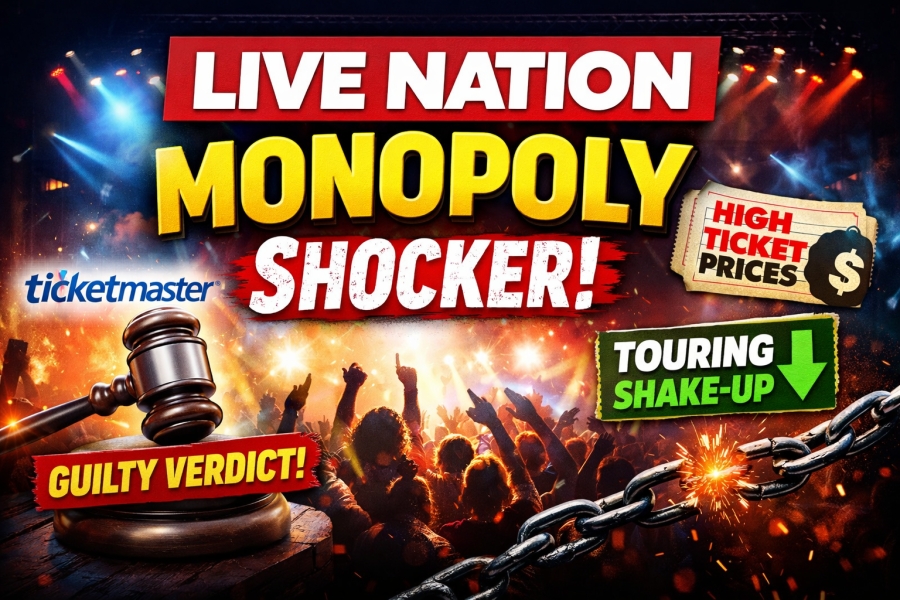
⚖️ Live Nation Monopoly Ruling: A Turning Point for the Global Music Industry
The global music industry may be on the brink of its most significant structural shift in decades. A recent jury ruling found Live Nation guilty of operating as an illegal monopoly—sending shockwaves through artists, promoters, venues, and fans alike. At the center of this legal storm is its controversial relationship with Ticketmaster, a company it merged with in 2010, effectively consolidating control over both ticketing and live event promotion.
This decision doesn’t just challenge a single corporation—it challenges the very foundation of how live music operates today. If enforced with meaningful structural changes, this ruling could reshape ticket pricing, artist touring strategies, and open the floodgates for independent promoters and emerging talent.
In this deep dive, we’ll explore what the ruling means, how it could impact the live music ecosystem, and why this moment could redefine the future of the industry.
🎟️ The Rise of a Giant: How Live Nation Took Control
To understand the magnitude of this ruling, you need to understand how Live Nation became so powerful.
Live Nation didn’t just grow—it integrated. By merging with Ticketmaster, it gained control over:
- Ticket distribution
- Venue ownership and partnerships
- Artist promotion and tour management
This vertical integration meant that one company could control:
➡️ Where artists perform
➡️ How tickets are sold
➡️ How much do fans pay
Critics have argued for years that this level of control creates an uneven playing field, effectively squeezing out competition and limiting options for both artists and fans.
⚖️ The Monopoly Ruling Explained
The jury’s decision concluded that Live Nation engaged in anti-competitive practices that stifled competition and maintained its dominance unfairly.
Key allegations included:
- Pressuring venues to use Ticketmaster exclusively
- Retaliating against venues that worked with competitors
- Bundling services to eliminate alternative providers
In simple terms, the ruling suggests that Live Nation didn’t just win the market—it rigged it.
💸 Why This Matters: Ticket Prices Could Finally Change
One of the biggest frustrations for fans globally has been the skyrocketing cost of concert tickets.
From dynamic pricing to hidden fees, the system has often felt opaque and exploitative.
If this ruling leads to structural changes:
- Competing ticketing platforms could emerge
- Fees could become more transparent
- Pricing models may become more consumer-friendly
👉 The result?
Fans could finally see fairer pricing and better access to live events.
🎤 A New Era for Artists: More Touring Freedom
For artists—especially emerging and mid-tier acts—this ruling could be transformative.
Under the current system:
- Touring routes are often dictated by Live Nation-controlled venues
- Promoters have limited negotiation power
- Smaller artists struggle to access major stages
If Live Nation’s grip loosens:
- Artists may gain greater control over where and how they tour
- Independent venues could become viable again
- New promoters could enter the space
This creates a more diverse and competitive touring ecosystem.
🏟️ Independent Promoters: The Biggest Winners?
Perhaps the most exciting outcome of this ruling is the opportunity it creates for independent promoters.
For years, smaller players have struggled to compete against Live Nation’s scale and influence.
Now, we could see:
- A rise in boutique festival organizers
- Local promoters gaining traction
- More niche and culturally specific events
👉 This shift could lead to a more creative and diverse live music landscape, where innovation thrives over standardization.
🌍 Global Impact: Beyond the U.S.
While the ruling originates in the United States, its impact could ripple across the globe.
Live Nation operates internationally, meaning:
- Regulatory bodies in other countries may follow suit
- Similar investigations could emerge in Europe, Asia, and beyond
- Global touring structures could evolve
This isn’t just an American issue—it’s a global industry reset.
🔄 The Ticketmaster Question: What Happens Next?
Because Ticketmaster is so deeply integrated into Live Nation’s operations, its future is uncertain.
Potential outcomes include:
- Forced divestment (breaking the companies apart)
- Regulatory oversight on pricing and practices
- Increased competition from new platforms
If Ticketmaster loses its dominant position, we could see a new wave of ticketing innovation, including:
- Blockchain-based ticketing
- Direct-to-fan sales platforms
- Artist-controlled distribution systems
🚀 Technology Disruption Meets Legal Change
This ruling comes at a time when technology is already disrupting the music industry.
From Web3 to AI-driven fan engagement, artists are exploring new ways to connect directly with audiences.
Combine that with reduced monopoly power, and you get:
- More direct-to-fan ticket sales
- Better data ownership for artists
- Stronger fan communities
👉 The future may be decentralized, transparent, and artist-first.
🎶 What This Means for Emerging Artists
If you’re an up-and-coming artist, this ruling could open doors that were previously closed.
Opportunities include:
- Easier access to venues
- More negotiating power with promoters
- Greater visibility through independent events
However, it also means:
- More competition
- The need for stronger branding
- A focus on building a loyal fanbase
The barrier to entry may lower, but success will still require strategy.
💼 Industry Power Shift: Labels vs Live Sector
For years, the live music sector has overtaken recorded music as the industry’s primary revenue driver.
This ruling could rebalance power:
- Labels may regain influence
- Independent ecosystems may grow
- Artists may operate more autonomously
The industry could move toward a more balanced and decentralized structure.
⚠️ Challenges Ahead: It Won’t Be Instant
While the ruling is significant, change won’t happen overnight.
Potential hurdles include:
- Appeals and legal delays
- Resistance from established players
- Complex restructuring processes
Live Nation is a massive entity, and dismantling or regulating it will take time.
👉 Expect a multi-year transformation, not an overnight revolution.
🔮 The Future of Live Music: A More Open Ecosystem?
If this ruling leads to meaningful reform, the live music industry could become:
- More competitive
- More transparent
- More artist-friendly
- More innovative
Instead of a centralized system dominated by one player, we could see a network of diverse, interconnected ecosystems.
🧠 Final Thoughts: A Rare Opportunity for Change
Moments like this don’t come often in the music industry.
The ruling against Live Nation isn’t just a legal decision—it’s a cultural and economic inflection point.
If handled correctly, it could:
- Empower artists
- Benefit fans
- Encourage innovation
- Break down long-standing barriers
But if mishandled, it could simply reshape power without truly redistributing it.
👉 The real question is not whether change is coming—it’s who will benefit most from it.
🚀 What You Should Do (If You’re in the Industry)
Whether you’re an artist, producer, promoter, or entrepreneur, now is the time to:
- Pay attention to industry shifts
- Build direct relationships with fans
- Explore independent distribution and event opportunities
- Position yourself early in emerging ecosystems
Because one thing is clear:
The live music industry is about to change—and those who move early will have the biggest advantage.
